
Cherry Scones
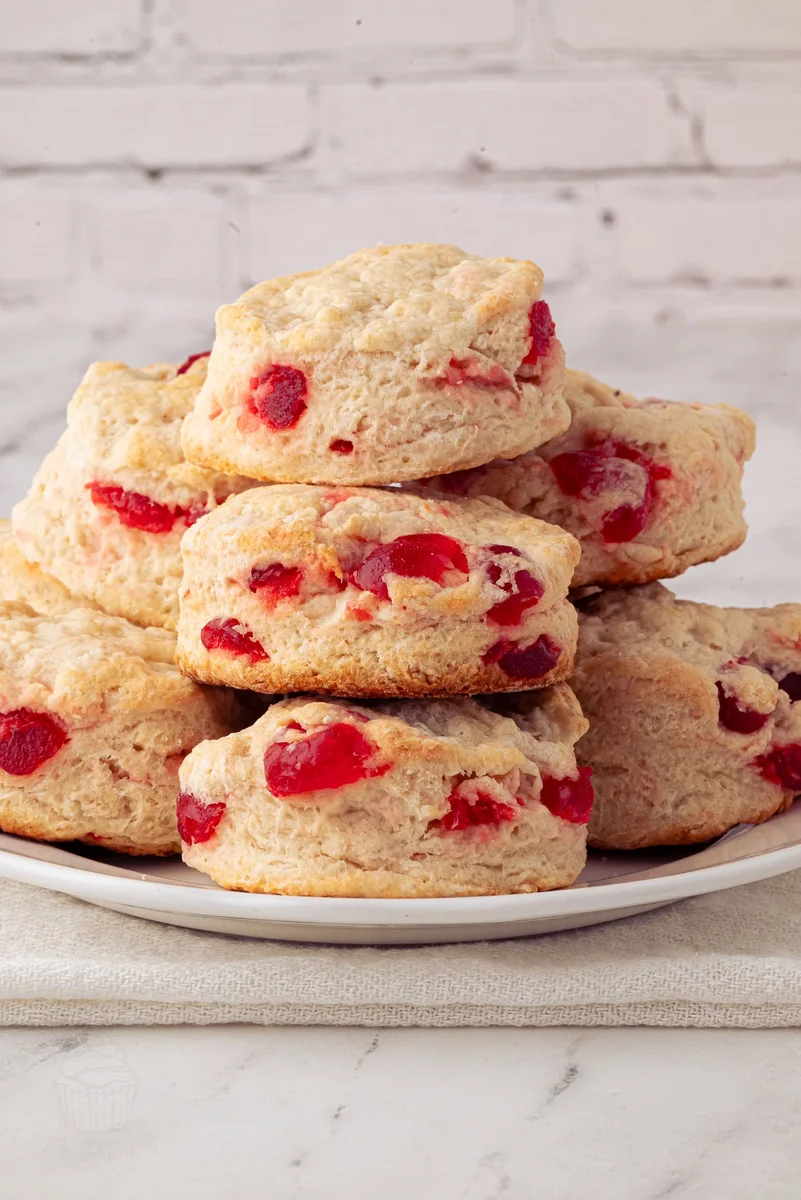
These British cherry scones are soft, lightly sweet bakes dotted with glacé cherries. Serve them warm or cooled with jam and cream for a classic tea-time treat.
Ingredients
- 450 gself-raising flour
- 1 pinchsalt
- 10 ml (2 tsp)baking powder
- 50 gcaster sugar
- 50 gblock margarine or butter, cold and cubed
- 100 gglacé cherries, halved
- 200 mlmilk
- 100 mlplain yoghurt (dairy, soya or coconut)
Instructions
- 1
Heat the oven
Preheat the oven to 220°C, or 200°C for a fan oven (Gas Mark 7; 425°F). Grease two baking sheets with a little butter and set them aside.
- 2
Sift the dry ingredients
Sift the flour, salt and baking powder into a large bowl, holding the sieve up to aerate the ingredients.
- 3
Add the sugar
Stir the caster sugar gently into the sifted ingredients.
- 4
Rub in the fat
Rub the cold margarine or butter into the dry ingredients with your fingertips, lifting the mixture as you work. Continue until it has a sandy texture.
- 5
Add the cherries
Stir in the halved cherries, then make a well in the centre of the mixture.
- 6
Mix the dough
Whisk the milk and yoghurt together and pour them into the well. Use your hands to bring everything together gently into a soft, slightly sticky dough.
- 7
Shape the dough
Turn the dough onto a floured work surface and knead it gently to bring it together. Stretch it to about 2 cm thick.
- 8
Cut the scones
Cut out the scones with a cutter and place them on the greased baking sheets. A smaller cutter will make more scones. Gather and reshape the scraps as needed to use all the dough.
- 9
Rest and brush
Leave the scones on the trays for about 10 minutes, then brush their tops with a little extra milk.
- 10
Bake the scones
Bake in the preheated oven for 10 minutes. If making smaller scones, watch them closely as they may need less time.
- 11
Cool or serve
Once cool enough to handle, move the scones to a wire rack to cool completely, or enjoy them while still warm.
What are cherry scones?
Scones are a familiar part of British tea-time baking, typically made from a simple flour-based dough and served with a spread or topping. This version adds glacé cherries for little pockets of sweetness in a tender, lightly sweetened bake.
The recipe uses both milk and yoghurt in the dough. Together they help bring the flour mixture into a soft dough while keeping the flavour mild enough for jam and cream.
Nutrition and macros by portion
The nutrition label shows one serving as written: 270 calories, 7g protein, 52g carbs, 6g fat.
| Portion | Adjustment | kcal | Protein | Carbs | Fat |
|---|---|---|---|---|---|
| Lighter | Smaller scone, less cream | 189 kcal | 5g | 36g | 4g |
| This serving | As written | 270 kcal | 7g | 52g | 6g |
| Hungry | Larger scone portion | 405 kcal | 11g | 78g | 9g |
Most of the carbohydrates come from the flour, sugar and glacé cherries; the butter or margarine supplies much of the fat, while the flour, milk and yoghurt contribute protein. Pair a scone with fresh fruit and keep the jam and cream portions modest to balance the plate.
Choosing the fat
Cold butter: Cut it into small cubes and rub it in with your fingertips until the mixture looks sandy. Keeping it cold helps avoid a greasy dough.
Block margarine: This is the listed alternative to butter. Use it cold and cubed, just as you would butter.
Handle the dough gently
Bring the liquid and dry ingredients together by hand with a light touch. The dough should be soft and slightly sticky, rather than firm or heavily worked.
Knead only enough to bring the dough together on the floured surface. Too much handling can make the scones less tender.
Cut and reshape
Even thickness: Stretch the dough to about 2 cm before cutting so the scones bake at a similar rate. Press the cutter straight down for neat shapes.
Scraps: Gather them gently and reshape to use the remaining dough. Repeated handling can toughen the later scones, so work efficiently.
Check for doneness
The recipe gives a 10-minute bake at 220°C, or 200°C in a fan oven. Smaller scones may be ready sooner, so keep an eye on them towards the end of baking.
The tops should look lightly coloured and the scones should feel set. Let them cool on a wire rack, or serve once they are comfortable to handle.
Serving ideas
Serve the scones plain, with jam and cream as suggested, or with a little butter while they are still warm. A pot of tea makes a natural accompaniment.
For a balanced plate, pair one scone with fresh fruit and choose a modest amount of jam and cream.
Recipe notes & tips
- Measure the dough to about 2 cm thick so the scones bake evenly.
- Keep the butter or block margarine cold until you rub it into the flour.
- Use a light touch when combining and kneading the dough.
- Flour the work surface and cutter lightly to help prevent sticking.
- Watch smaller scones closely because they may need less than 10 minutes.
- Leave space between the scones on the baking sheets so they are easy to lift out.
Variations
- Citrus note: Add finely grated orange zest to complement the glacé cherries.
- Mixed fruit: Replace some of the glacé cherries with another dried fruit.
- Spiced dough: Add a small pinch of mixed spice to the sifted dry ingredients.
- Different shape: Use a smaller cutter for more, smaller scones and check them early.
- Dairy-free option: Use the listed soya or coconut yoghurt and a suitable milk and block margarine.
Common mistakes to avoid
- Warm fat: It can make the mixture greasy; start with cold, cubed butter or margarine.
- Overworking the dough: This can make the scones tough; knead only until it comes together.
- Uneven thickness: Scones may bake inconsistently; stretch the dough to about 2 cm.
- Skipping the rest: The recipe calls for about 10 minutes on the tray before brushing and baking.
- Leaving small scones too long: They can overbake; check them closely during the 10-minute bake.
- Forgetting to grease the sheets: The scones may stick; prepare both baking sheets before shaping.
How to store
Once completely cool, store the scones in an airtight container at room temperature and eat within 2 days for the best texture. Warm them briefly in a low oven before serving; avoid reheating them for too long, as they can dry out.
Frequently asked questions
Can I use butter instead of margarine?
Yes. The recipe allows either cold block margarine or butter, cubed.
Can I use a smaller cutter?
Yes. A smaller cutter will make more scones, but they may bake in less than 10 minutes, so keep a close watch.
Why is the dough slightly sticky?
That is the intended texture. Turn it onto a floured surface and handle it gently while shaping.
Can I prepare the dough in advance?
The method is written for shaping and baking the dough straight away. For the best texture, bake it soon after mixing.
What should I serve with cherry scones?
Serve them warm or cooled with jam and cream, or enjoy them plain with tea.
How do I know when they are baked?
Bake for 10 minutes as directed and look for lightly coloured, set tops. Smaller scones may need less time.
Cook it from the original
This recipe comes from bakingwithgranny.co.uk. Their page has the author’s own photos, notes and tips — the best place to cook it from.
Open the recipe on bakingwithgranny.co.uk