
Rhubarb Scones
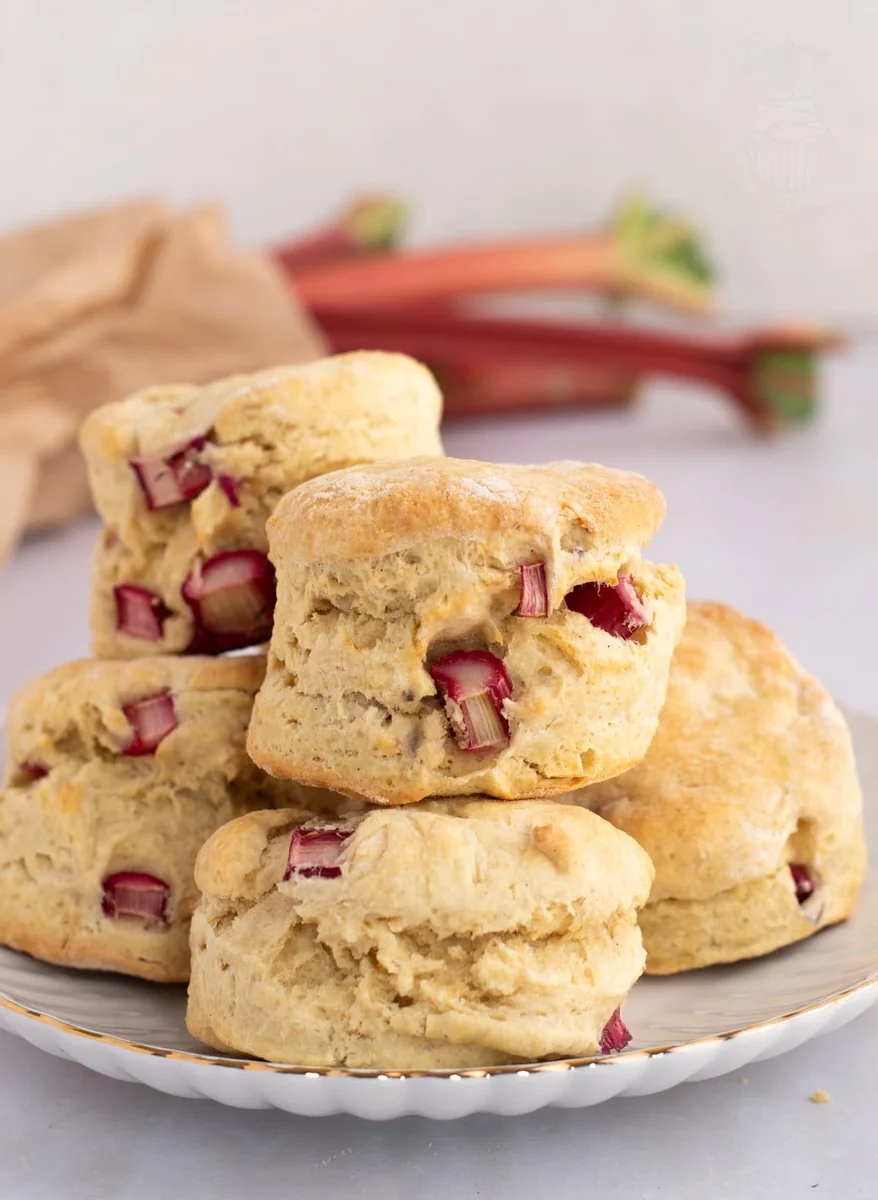
These British-style rhubarb scones bring together tender, lightly sweet dough, tart pieces of rhubarb and a gentle hint of vanilla. They’re a lovely way to use fresh rhubarb and are especially good served warm.
Ingredients
- 450 gSelf-raising flour
- PinchSalt
- 2 tspBaking powder
- 50 gBlock margarine or butter, cold and cubed
- 50 gCaster sugar
- 200 mlMilk
- 100 mlPlain yoghurt (dairy, soya or coconut)
- 1/2 tspVanilla extract (optional)
- 100 gFresh rhubarb, chopped
Instructions
- 1
Heat the oven
Preheat the oven to 220°C, or 200°C for a fan-assisted oven. Lightly grease two baking sheets with a little butter and set them aside.
- 2
Sift the dry ingredients
Sift the flour, salt and baking powder into a large bowl, holding the sieve up to aerate the ingredients. Stir in the sugar gently.
- 3
Rub in the fat
Use your fingertips to rub the cold margarine or butter into the dry ingredients, lifting the mixture as you work. Continue until it has a sandy consistency.
- 4
Make the dough
Make a well in the centre. Whisk the milk, yoghurt and vanilla together, then pour the mixture into the well and mix briefly. Add the rhubarb, then gently bring everything together with your hands into a soft, slightly sticky dough.
- 5
Shape the dough
Turn the dough onto a floured work surface and gently knead it together. Stretch it to about 2–3 cm thick.
- 6
Cut the scones
Cut out the scones with a cookie cutter and place them on the greased baking sheets. A smaller cutter will make more scones. Gather and reshape the dough as needed to use it all.
- 7
Rest and brush
Leave the scones on the trays to rest for about 10 minutes, then brush their tops with a little extra milk.
- 8
Bake the scones
Bake in the preheated oven for 10 minutes. If you’ve made smaller scones, watch them closely as they may need less time.
- 9
Cool the scones
Once cool enough to handle, transfer the scones to a wire rack to cool completely, or enjoy them warm.
What are rhubarb scones?
Scones are a familiar part of British baking, often served with tea and split open to add a topping. This version folds fresh rhubarb into a simple scone dough for a sweet-tart bite.
The yoghurt and optional vanilla give the dough a soft, gently flavoured quality that pairs well with the sharp fruit. It’s a straightforward bake for making use of a generous crop of rhubarb.
Nutrition and macros by portion
The nutrition label shows one serving as written: 238 calories, 6g protein, 41g carbs, 5g fat.
| Portion | Adjustment | kcal | Protein | Carbs | Fat |
|---|---|---|---|---|---|
| Lighter | Serve with fruit | 167 kcal | 4g | 29g | 4g |
| This serving | As written | 238 kcal | 6g | 41g | 5g |
| Hungry | Have a larger scone | 357 kcal | 9g | 62g | 8g |
Flour and sugar provide most of the carbohydrates, while the margarine or butter contributes much of the fat. Flour, milk and yoghurt supply most of the protein. Balance a scone with fruit and yoghurt, or serve it alongside a protein-rich savoury option.
Choosing the ingredients
Self-raising flour: it provides the base and much of the lift. The extra baking powder is part of this recipe, so include it along with the flour.
Cold fat: use block margarine or butter, cut into cubes. Keeping it cold helps it rub into the flour without making the mixture greasy.
Rhubarb: chop it into small pieces so it can be distributed through the dough. Fresh rhubarb brings tartness to the lightly sweet scones.
Keep the dough light
Rubbing in: work the fat into the flour with your fingertips and lift the mixture as you go. Stop when it looks sandy rather than pressing it into a dense paste.
Bringing it together: add the rhubarb after briefly mixing in the wet ingredients. Handle the dough gently and knead only enough to bring it together.
Shape without overworking
Thickness: stretch the dough to 2–3 cm before cutting so the scones have enough depth to rise. Keep the work surface lightly floured to make shaping easier.
Leftovers: gather the offcuts gently and reshape them to use the dough. Reworking them too much can make the later scones less tender.
Check for doneness
Timing: bake the scones for 10 minutes at the stated temperature, keeping a closer eye on smaller ones. The recipe gives time as the main doneness guide, so check them at the end of baking.
Cooling: move them to a wire rack once they are cool enough to handle. They can also be eaten warm, straight after baking.
Serving ideas
Serve the scones warm or at room temperature with butter, or with yoghurt for a simple accompaniment. Their rhubarb and vanilla notes also suit a spoonful of custard.
For a tea-time spread, pair them with fresh fruit or a savoury sandwich. Split them open just before serving for the best texture.
Recipe notes & tips
- Measure the rhubarb after chopping so the pieces are easy to mix through the dough.
- Keep the butter or block margarine cold until you rub it into the flour.
- Use a light touch when mixing and kneading to avoid making the dough heavy.
- Flour the cutter lightly if the dough sticks as you cut the scones.
- Keep an eye on smaller scones, as they may bake in less than 10 minutes.
- Enjoy the scones warm, or let them cool fully on a wire rack.
Variations
- Skip the vanilla: leave it out for a plainer, more direct rhubarb flavour.
- Change the yoghurt: use dairy, soya or coconut yoghurt as listed in the recipe.
- Use butter: choose cold block butter instead of block margarine for the fat.
- Make smaller scones: use a smaller cutter and check them before the 10-minute mark.
- Add a topping: serve with custard for a nod to the rhubarb-and-custard flavour.
Common mistakes to avoid
- Warm fat: it can make the mixture greasy; start with cold, cubed margarine or butter.
- Heavy handling: too much kneading can make the scones dense; bring the dough together gently.
- Too much flour: excess flour can dry the dough; flour the surface lightly rather than working lots into it.
- Thick rhubarb pieces: large chunks can be awkward in the dough; chop the rhubarb before adding it.
- Overbaking: smaller scones may need less time; keep a close eye on them in the oven.
- Skipping the rest: leave the cut scones on the tray for about 10 minutes before brushing and baking.
How to store
Once completely cool, store the scones in an airtight container at room temperature and eat within 2 days. Warm them briefly in the oven before serving; avoid storing them while still warm, as trapped steam can soften them.
Frequently asked questions
Can I use butter instead of margarine?
Yes. The recipe allows either block margarine or butter; use it cold and cubed.
Can I leave out the vanilla?
Yes, the vanilla is optional. The scones will still have rhubarb flavour without it.
Can I use a dairy-free yoghurt?
Yes. The recipe lists soya and coconut yoghurt as alternatives to dairy yoghurt.
How thick should I make the dough?
Stretch it to about 2–3 cm thick before cutting out the scones.
How do I know when the scones are baked?
Bake them for 10 minutes as directed, checking smaller scones closely because they may need less time.
Can I eat the scones warm?
Yes. The recipe suggests either letting them cool completely on a wire rack or enjoying them once they are cool enough to touch.
Cook it from the original
This recipe comes from bakingwithgranny.co.uk. Their page has the author’s own photos, notes and tips — the best place to cook it from.
Open the recipe on bakingwithgranny.co.uk