
Beluga Bolognese
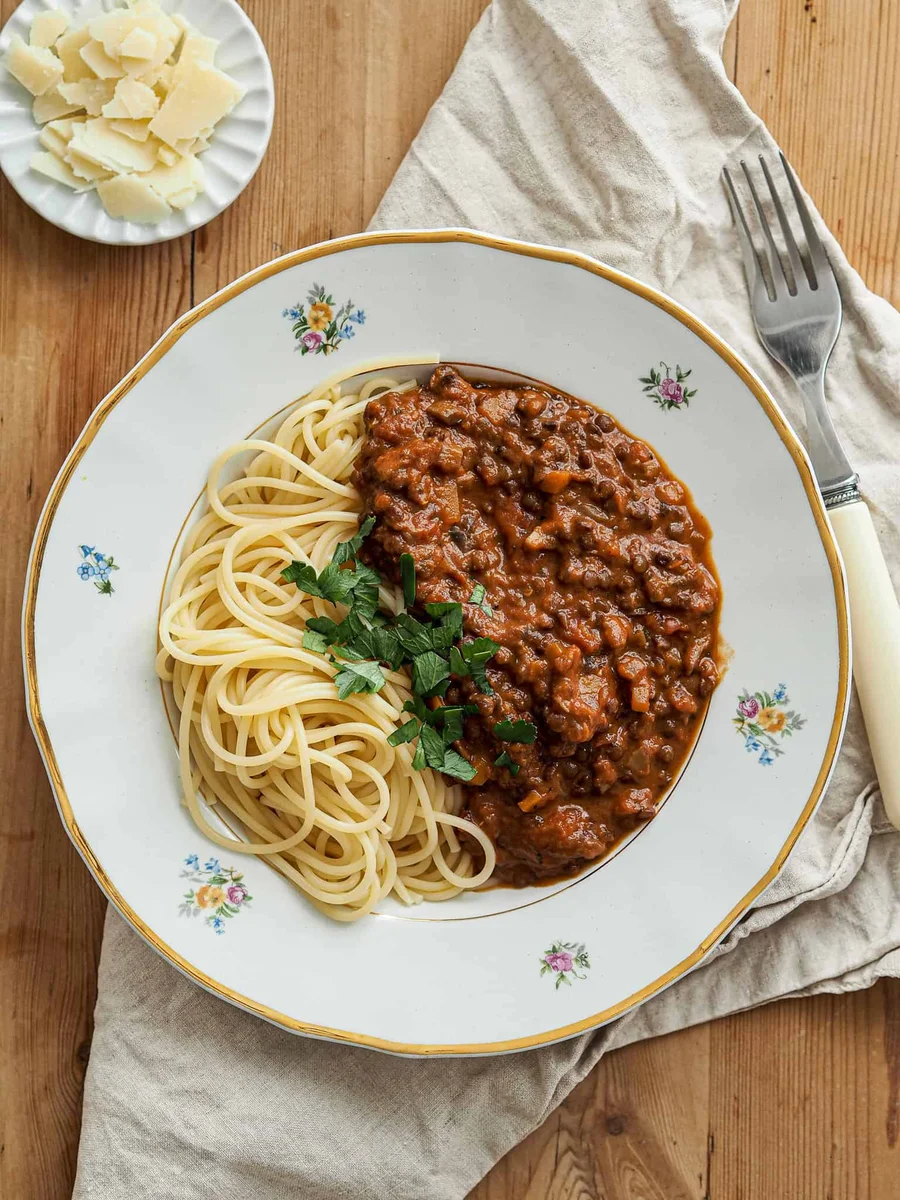
Beluga Bolognese is a rich tomato sauce with beluga lentils, mushrooms and herbs, served with spaghetti. It makes a generous, comforting meal and is just as handy to cook ahead as it is for supper on the day.
Ingredients
- 1 largeonion
- 4 clovesgarlic
- 50 ml (½ dl)olive oil
- 1 largecarrot
- 200 gbrown mushrooms
- 2 tbsptomato purée
- 1 tspdried thyme
- 1 tspdried basil
- 150 ml (1½ dl)red wine
- 2 canschopped tomatoes
- 300 ml (3 dl)water
- 200 ml (2 dl)cooking cream (use oat cream for a vegan version)
- 2bay leaves
- 1 cubevegetable stock
- 200 ml (2 dl)dried beluga lentils
- 1 tspsugar
- to tastesalt and pepper
- 400 gspaghetti
- to tastefresh parsley or other herbs
- to tasteParmesan
Instructions
- 1
Warm the oil
Heat the olive oil in a large saucepan over a medium heat.
- 2
Add the onion
Finely chop the onion and garlic, then add them to the pan.
- 3
Dice the carrot
Stir the onion and garlic. Meanwhile, peel and finely dice the carrot, then add it to the pan.
- 4
Add mushrooms
Prepare the mushrooms in the same way, then add them. Season with salt and pepper, adjusting to taste as you cook.
- 5
Cook the vegetables
Cook, stirring, for about 5; the recipe does not specify a time unit.
- 6
Add tomato purée
Stir in the tomato purée and dried herbs, then let them simmer for a couple of minutes.
- 7
Simmer the sauce
Add the red wine, chopped tomatoes, water, stock cube, cooking cream, sugar and lentils. Reduce the heat slightly and simmer for about 40 minutes, until the lentils are soft. You can let the sauce simmer for longer if you like.
- 8
Blend lightly
Remove the bay leaves and use a stick blender to blend the sauce a few times, stopping while it still has texture. You can skip this step if you prefer.
- 9
Serve with pasta
Serve the sauce with cooked pasta and, if you like, add toppings.
What is Beluga Bolognese?
This is a plant-forward take on Bolognese, using small, dark beluga lentils in place of minced meat. The recipe takes its inspiration from the familiar Italian-style tomato sauce, with no specific regional origin given here.
Mushrooms add savoury depth, while cream rounds out the tomatoes and wine. A brief blend gives the sauce a more cohesive texture without losing the lentils and vegetables.
Nutrition and macros by portion
The nutrition label shows one serving as written: 745 calories, 31g protein, 112g carbs, 22g fat.
| Portion | Adjustment | kcal | Protein | Carbs | Fat |
|---|---|---|---|---|---|
| Lighter | Less pasta, more mushrooms | 522 kcal | 22g | 78g | 15g |
| This serving | As written | 745 kcal | 31g | 112g | 22g |
| Hungry | Larger pasta portion | 1118 kcal | 47g | 168g | 33g |
Most of the carbohydrates come from the spaghetti and lentils, while olive oil and cooking cream provide much of the fat. The lentils, pasta and mushrooms contribute protein. For a more balanced plate, serve a generous portion of vegetables alongside the pasta.
The ingredients that build flavour
Onion, garlic and carrot: finely chopping them helps them cook evenly in the oil and form a flavourful base.
Mushrooms and tomato purée: the mushrooms bring a full, earthy note, while the purée deepens the tomato flavour as it cooks briefly with the herbs.
Wine and tomatoes: red wine adds acidity and aroma; the chopped tomatoes provide the sauce’s main body.
Getting the lentils tender
Beluga lentils go into the sauce dry, so they need the full simmering time to soften. Keep the heat low enough for a gentle simmer and stir from time to time so the lentils do not catch on the bottom.
Check a few lentils towards the end. If they are still firm, continue simmering until tender; add a little water if the sauce becomes too thick before they are ready.
Keep some texture
Remove both bay leaves before blending. Use a stick blender briefly, moving it through the sauce a few times rather than puréeing the whole pan.
The finished sauce should still show lentils and small pieces of vegetables. If you skip blending, the sauce will be chunkier but still work well with the pasta.
Season and balance
Salt and pepper: the recipe leaves these to taste, so season in stages and taste again after the sauce has simmered.
Sugar: a small amount helps balance the acidity of the tomatoes, but taste the sauce before serving and adjust only if needed.
Timing and serving
The sauce simmers for about 40 minutes, with extra time welcome if you want the lentils softer or the flavours more blended. The listed total time is 60 minutes.
Cook the spaghetti to your preferred tenderness and serve it with the sauce. Finish with fresh parsley or other herbs and Parmesan; for a vegan version, use oat cream and omit or replace the cheese.
Recipe notes & tips
- Chop the vegetables finely so they cook evenly and blend smoothly into the sauce.
- Stir the sauce occasionally during its long simmer, especially as it thickens.
- Taste for salt and pepper near the end, after the stock and tomatoes have cooked down.
- Keep the blender moving briefly rather than puréeing the sauce completely.
- Cook the spaghetti separately and combine it with the sauce just before serving.
Variations
- Make it vegan: Use oat cream and leave out the Parmesan or choose a suitable alternative.
- Add greens: Stir in a handful of spinach near the end and cook until wilted.
- Use another pasta: Serve the sauce with your preferred pasta shape instead of spaghetti.
- Boost the herbs: Finish with extra fresh parsley or another soft herb.
- Make it richer: Add a little extra cooking cream to the finished sauce.
Common mistakes to avoid
- Blending until smooth: Stop after a few passes so the lentils and vegetables keep their texture.
- Cooking too fast: Keep the sauce at a gentle simmer so the lentils have time to soften without the base catching.
- Skipping the lentil check: Taste a few before serving and continue simmering if they are still firm.
- Adding all the seasoning at once: Season gradually, then taste again after the sauce has reduced.
- Forgetting the bay leaves: Remove both leaves before using the stick blender.
How to store
Cool leftover sauce and refrigerate it in a covered container for up to 3 days. Reheat gently in a saucepan, adding a splash of water if it has thickened; store cooked pasta separately where possible.
Frequently asked questions
Can I make the sauce ahead?
Yes. The description notes that it can taste even better the next day. Refrigerate it once cooled and reheat gently before serving.
Do the beluga lentils need soaking?
The recipe adds the dried lentils directly to the sauce and does not call for soaking. Simmer them for about 40 minutes, checking that they are soft before serving.
Can I make this recipe vegan?
Use oat cream instead of cooking cream and leave out the Parmesan or use a vegan alternative.
Can I skip blending the sauce?
Yes. Blending is optional; without it, the sauce will have a more distinct, chunky texture.
What should I do if the sauce gets too thick?
Stir in a little water while it simmers or when reheating, until it reaches the consistency you want.
How can I tell when the sauce is ready?
The lentils should be soft, and the sauce should be thick enough to cling to the pasta while retaining some texture.
Cook it from the original
This recipe comes from beetrootbakery.dk. Their page has the author’s own photos, notes and tips — the best place to cook it from.
Open the recipe on beetrootbakery.dk