
Easy Fougasse Recipe
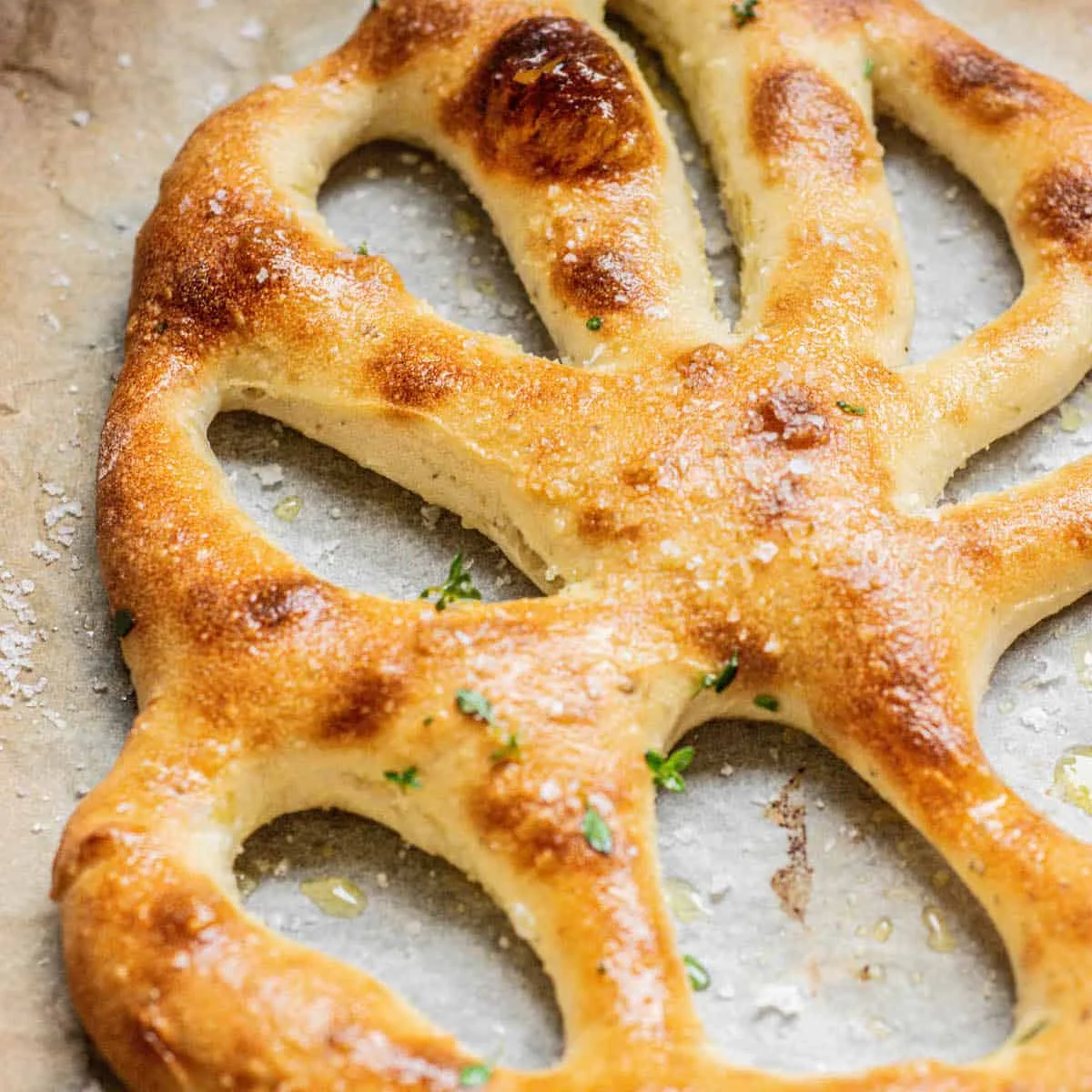
Fougasse is a French flatbread with a crisp, golden crust and a soft, chewy middle, scented with herbs and olive oil. Its leaf-like cuts make it easy to tear and share, whether alongside soup or as a savoury snack.
Ingredients
- 240 glukewarm water
- 1 teaspooninstant yeast
- 312 gplain flour
- 1/2 tablespoonextra-virgin olive oil
- 1 teaspoondried herbes de Provence or Italian herbs
- 1 teaspoonsalt
- 50 gextra-virgin olive oil
- 1 tablespoonfresh thyme or rosemary, finely chopped (optional)
- to tasteflaky salt
Instructions
- 1
Mix the dough
Stir the water and yeast together in a large bowl. Add the flour, herbs, salt and olive oil, then mix with a fork or rubber spatula until a sticky, shaggy dough forms.
- 2
Fold the dough
Over 1 1/2 hours, complete three sets of stretches and folds, about 30 minutes apart. For each set, stretch one side of the dough over itself, turn the bowl and repeat around all sides. Cover the bowl with a lid or clean tea towel between sets.
- 3
Shape the dough
Turn the dough out onto a well-floured surface. Dust its top with flour and gently press it into a square with your fingertips.
- 4
Divide the dough
Cut the dough in half with a dough scraper or sharp knife. Set each half on a separate piece of baking parchment.
- 5
Cut the ends
Position one piece vertically in front of you. Using the short edge of a dough scraper or a pizza wheel, make two small cuts in both the top and bottom sections, taking care not to let the cuts meet. Gently stretch the dough to open the cuts.
- 6
Make leaf cuts
Cut 3–4 diagonal slits on each side, then stretch them open to form a leaf shape. Repeat with the second piece of dough.
- 7
Rest and heat
Leave the shaped dough to rest for 30–45 minutes, until slightly puffy. Heat the oven to 230°C.
- 8
Brush with oil
Mix the olive oil and herbs in a small bowl. Gently brush half of the mixture over the fougasse, or dab it on carefully if brushing might deflate the dough.
- 9
Bake the bread
Bake one fougasse at a time for about 12 minutes, until deep golden brown.
- 10
Finish and serve
Once baked, brush the fougasse with the remaining olive oil mixture and sprinkle with flaky salt.
What is fougasse?
Fougasse is a French flatbread, often recognised by the leaf-like slashes cut into its surface. Its shape helps the bread bake with plenty of crisp edges while leaving a tender centre.
This version uses dried herbs in the dough and fresh thyme or rosemary in the finishing oil. The two-stage use of olive oil adds aroma inside and a savoury sheen on the crust.
Nutrition and macros by portion
The nutrition label shows one serving as written: 183 calories, 4g protein, 30g carbs, 5g fat.
| Portion | Adjustment | kcal | Protein | Carbs | Fat |
|---|---|---|---|---|---|
| Lighter | Use less finishing oil | 128 kcal | 3g | 21g | 4g |
| This serving | As written | 183 kcal | 4g | 30g | 5g |
| Hungry | Serve a larger piece | 275 kcal | 6g | 45g | 8g |
The flour supplies most of the carbohydrates, while olive oil contributes most of the fat; the bread itself provides a modest amount of protein. Pair a portion with a protein-rich food and vegetables, such as soup with beans or a salad with cheese, to make a more balanced plate.
Build strength with folds
Sticky dough: the mixture is meant to feel shaggy and tacky at first, rather than firm enough to knead easily. Stretching and folding develops structure while keeping the handling gentle.
Even intervals: complete three sets over 1 1/2 hours, about 30 minutes apart. Keep the bowl covered between sets so the dough does not dry out.
Cut the leaf pattern
Central opening: make the short cuts near the top and bottom without joining them, then pull them apart slightly. This preserves the shape while creating open spaces in the baked bread.
Side slashes: make 3–4 diagonal cuts on each side and stretch them open. Leave room between the cuts so they remain distinct as the dough rests and bakes.
Handle the dough gently
Floured surface: use enough flour to prevent sticking as you shape the square, but avoid working extra flour into the dough. A scraper can help lift and divide it cleanly.
Oil coating: dab the herb oil on if a brush drags at the soft dough. A light touch helps keep the shaped bread from losing its air.
Watch the bake
Puffy dough: after the 30–45 minute rest, the shaped pieces should look a little fuller. The recipe gives that appearance as the cue to proceed.
Golden crust: bake each fougasse for about 12 minutes at 230°C, looking for a deep golden colour. Bake them one at a time as directed.
Serve it with
Soup or salad: tear the warm bread into pieces to accompany a bowl of soup or a simple salad. Its chewy centre is also handy for mopping up a sauce.
Sharing board: serve the two loaves with olives, cheese or roasted vegetables for a casual spread. Add the flaky salt just after baking for a crisp, savoury finish.
Recipe notes & tips
- Keep the dough covered between folds to stop its surface drying out.
- Flour the work surface well before turning out the sticky dough.
- Open the slashes gently so the dough does not tear beyond the intended cuts.
- Dab on the herb oil if brushing starts to flatten the shaped dough.
- Bake the fougasse one at a time for the stated 12 minutes.
- Add the flaky salt after baking, while the oil is still on the crust.
Variations
- Change the herbs: use Italian herbs instead of herbes de Provence in the dough.
- Choose fresh herbs: finish with finely chopped thyme or rosemary, as preferred.
- Skip the fresh herbs: leave them out for a simpler olive-oil finish.
- Add a garlic note: mix finely grated garlic into the finishing oil.
- Serve with cheese: offer soft cheese alongside the bread for a richer snack.
Common mistakes to avoid
- Skipping the folds: the dough misses its planned strengthening; complete all three sets about 30 minutes apart.
- Joining the cuts: the leaf openings can become one large gap; keep the top and bottom cuts separate.
- Leaving slashes closed: the pattern is less distinct; gently stretch each cut open before resting.
- Brushing too firmly: the shaped dough may deflate; dab the oil on with a light touch.
- Baking both together: the method calls for one loaf at a time; bake each fougasse separately.
- Rushing the rest: the dough may not become slightly puffy; allow 30–45 minutes before baking.
How to store
Cool completely, then store in an airtight container at room temperature for up to 2 days. Reheat briefly in a 180°C oven until warmed through; the crust is best on the day it is baked.
Frequently asked questions
Can I use dried herbs instead of fresh thyme or rosemary?
Yes. The fresh herbs are optional, so you can leave them out or use a small pinch of dried herbs in the finishing oil.
Why is the dough so sticky?
This recipe starts with a soft, sticky dough. Flour the work surface and your hands as needed, and use a scraper to help handle it.
How do I know when the dough is ready to bake?
After its 30–45 minute rest, the shaped dough should look slightly puffy. Bake until the crust is deep golden brown, about 12 minutes.
Can I prepare both loaves at once?
Shape both pieces and let them rest, but bake one fougasse at a time as the method directs.
Can I make the dough ahead?
The supplied method uses a 1 1/2-hour folding period followed by a 30–45 minute rest, and does not specify an overnight rise. For best results, follow that schedule rather than assuming a chilled proof.
Cook it from the original
This recipe comes from bakingwithbutter.com. Their page has the author’s own photos, notes and tips — the best place to cook it from.
Open the recipe on bakingwithbutter.com