
Katla Macher Jhol Recipe In Bengali | গরমের দিনের জন্য কম তেল মশলা দিয়ে বানিয়ে নিন কাতলা মাছের ঝোল
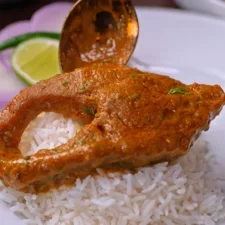
Katla macher jhol is a Bengali fish curry with lightly fried katla, potatoes and a gently spiced tomato gravy. This version uses a fresh ginger, garlic and green chilli paste, with optional coconut milk for a softer, rounder finish.
Ingredients
- 1 kgkatla fish, cut into pieces
- As neededturmeric powder
- To tastesalt
- 150 mlmustard oil
- 3 mediumpotatoes
- 15–20 clovesgarlic
- A fewgreen chillies
- A littlefresh coriander
- A littlewater, for blending
- 15 gginger
- 1 tspwhole cumin seeds
- As neededonion paste
- 1½ tspturmeric powder
- 1 tspKashmiri chilli powder
- 3tomatoes, made into a paste
- A littleground coriander
- A littleground black pepper
- As neededwater, for the gravy
- To tastesalt, for the gravy
- A little (optional)coconut milk
- A littlefresh coriander, to finish
- A fewgreen chillies, to finish
Instructions
- 1
Season the fish
Coat the katla pieces with a little turmeric and salt, then add a little mustard oil and rub it in until evenly covered. Set the fish aside to rest.
- 2
Fry the fish
Heat mustard oil in a pan. Add a little turmeric and salt to the oil, then fry the fish pieces one by one. Turn each piece once the first side is lightly coloured and fry the other side; remove them when both sides are lightly fried, without browning them deeply. Repeat with the remaining fish.
- 3
Fry the potatoes
Cut three medium potatoes into long pieces and coat them with a little salt and turmeric. Fry over a medium-high heat until lightly coloured, then lift them out; they do not need to cook through at this stage.
- 4
Blend the paste
Put 15–20 garlic cloves, about 15 g ginger, a few green chillies and a little coriander into a blender. Add a little water and blend to a smooth paste.
- 5
Cook the onion
Use the same oil used to fry the fish, keeping the total mustard oil for 1 kg of fish at 150 ml; use less if desired. Add 1 teaspoon whole cumin seeds and stir, then add the onion paste. Fry, stirring, until the onion is well cooked.
- 6
Fry the spices
Add the ginger, garlic, chilli and coriander paste to the pan. Stir in 1½ teaspoons turmeric and 1 teaspoon Kashmiri chilli powder. Cook until the raw smell of the ginger and garlic has gone.
- 7
Cook the tomatoes
Add the paste made from three tomatoes and cook until the raw tomato smell has gone. Stir in a little ground coriander and ground black pepper.
- 8
Simmer the potatoes
Add the lightly fried potatoes and stir to coat them in the masala. Pour in enough water for the gravy and salt to taste, then simmer over a low heat until the potatoes are fully cooked.
- 9
Finish the curry
Once the potatoes are tender and the masala is cooked, stir in a little coconut milk if using. Add the fried fish and simmer until the gravy has thickened to your liking.
- 10
Add the garnish
Stir in a little fresh coriander and a few green chillies. Serve the katla curry hot with rice.
What is katla macher jhol?
Macher jhol is a Bengali fish curry, usually served with rice as a home-style meal. Katla, a freshwater carp, is prized for its substantial pieces and works well in a lightly spiced gravy.
This version first fries the fish and potatoes, then simmers them in a tomato and onion masala. A little coconut milk is optional, lending a mellower finish without taking the curry far from its simple, savoury character.
Nutrition and macros by portion
The nutrition label shows one serving as written: 610 calories, 40g protein, 20g carbs, 40g fat.
| Portion | Adjustment | kcal | Protein | Carbs | Fat |
|---|---|---|---|---|---|
| Lighter | Use less mustard oil | 427 kcal | 28g | 14g | 28g |
| This serving | As written | 610 kcal | 40g | 20g | 40g |
| Hungry | Add extra potato | 915 kcal | 60g | 30g | 60g |
The fish supplies most of the protein, while the potatoes and rice served alongside provide much of the meal's carbohydrate. Mustard oil contributes most of the fat, with a smaller additional amount if coconut milk is used. For a balanced plate, serve one portion of curry with a moderate amount of rice and add a vegetable side.
Choosing the fish and potatoes
Katla: Ask for the fish to be cut into curry-sized pieces, and pat them dry before seasoning so they are easier to fry. Handle them carefully when turning, as the pieces can break apart.
Potatoes: Cut them into long pieces of roughly similar size so they cook at a similar pace. The initial fry is just to colour the outside; they finish cooking in the gravy.
Build the masala in stages
Aromatics: Fry the onion paste until thoroughly cooked before adding the ginger, garlic, chilli and coriander paste. Keep stirring as the moisture cooks off, and wait for the raw smell to fade.
Tomatoes: Cook the tomato paste until it no longer smells raw, then add the ground spices. This sequence helps the gravy taste integrated rather than sharply tomatoey or raw.
Frying without breaking the fish
Oil temperature: Let the mustard oil heat before adding the fish, but avoid letting it smoke heavily. The small amount of turmeric and salt added to the oil is part of this recipe's frying method.
Turning: Fry until each side is only lightly coloured, then turn the fish once. Lift it out gently and avoid stirring it roughly once it goes back into the gravy.
Watch the potato and gravy
Potato doneness: Simmer gently until a knife or fork slides into a potato piece without resistance. If the liquid reduces before the potatoes are tender, add a little more water.
Gravy texture: The curry is ready when the potatoes are cooked and the gravy has thickened to your preference. Add the fish near the end so it warms through without prolonged vigorous boiling.
Adjust the chilli and coconut milk
Green chillies: The recipe uses chillies both in the blended paste and as a final addition. Use fewer or remove the seeds for a milder curry, or leave them whole for a gentler chilli aroma.
Coconut milk: It is optional, so the curry can be made without it. If using it, stir in a small amount after the potatoes are tender and bring the gravy back to a gentle simmer.
Serve it with rice
Steamed rice is the natural partner for this loose, savoury gravy and helps make it a complete meal. Serve the fish and potatoes alongside plenty of sauce.
A simple vegetable side, such as lightly cooked greens, can add freshness and contrast. Keep additional accompaniments mild so they do not overwhelm the fish.
Recipe notes & tips
- Dry the fish well before seasoning to help it fry rather than splutter.
- Fry the fish only until lightly coloured; it will warm through again in the gravy.
- Cut the potatoes into similarly sized pieces so they become tender together.
- Stir the onion and spice pastes regularly to prevent them catching on the pan.
- Add the gravy water gradually so you can control how thick the curry becomes.
- Keep the curry at a gentle simmer after adding the fish to help the pieces stay intact.
Variations
- Skip the coconut milk: Leave it out for a more direct tomato-and-spice gravy.
- Milder heat: Use fewer green chillies in the paste and omit the finishing chillies.
- More coriander: Add extra fresh coriander at the end for a brighter herbal note.
- Thicker gravy: Use a little less water and simmer until the sauce reduces to your liking.
- Serve with rice: Pair the curry with plain steamed rice to soak up the gravy.
Common mistakes to avoid
- Over-frying the fish: Deep browning can make it firm; remove it once both sides are lightly coloured.
- Turning the fish repeatedly: The pieces may break; let one side fry before turning once.
- Adding potatoes too late: They need time to cook through; add them before the water and simmer until tender.
- Leaving the masala raw: Cook the onion, ginger-garlic paste and tomatoes until their raw smells fade.
- Boiling hard after adding fish: Vigorous bubbling can break up the pieces; keep the curry at a gentle simmer.
- Adding too much water: The gravy can become thin; pour it in gradually and reduce it if needed.
How to store
Cool leftovers promptly and store them in a covered container in the fridge for up to 2 days. Reheat gently in a pan until piping hot, adding a splash of water if the gravy has thickened; handle the fish carefully as it can flake.
Frequently asked questions
Can I make this curry without coconut milk?
Yes. Coconut milk is optional, and the curry can be finished without it.
How do I know when the potatoes are cooked?
They should be tender when pierced with a knife or fork. If they are still firm, simmer a little longer and add water if the gravy is reducing too much.
Can I use another fish instead of katla?
Yes, use a firm fish that can hold together in a curry. Cooking time may vary depending on the size and thickness of the pieces.
How can I make the curry less hot?
Use fewer green chillies in the blended paste and leave out the chillies added at the end. Kashmiri chilli powder mainly contributes colour, but you can reduce it too.
Can I reduce the mustard oil?
Yes. The method notes that you can use less than 150 ml. Use enough to fry the fish and potatoes, and cook the masala carefully so it does not stick.
What should I serve with katla macher jhol?
Serve it hot with plain steamed rice. A mild vegetable side also works well.
Cook it from the original
This recipe comes from atanurrannagharrecipe.com. Their page has the author’s own photos, notes and tips — the best place to cook it from.
Open the recipe on atanurrannagharrecipe.com