
Pollo a la Provenzal
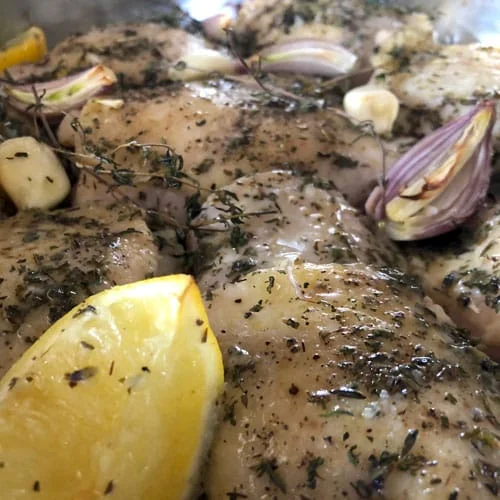
Pollo a la Provenzal is oven-roasted chicken with Provençal herbs, garlic, shallots, lemon and dry vermouth. The chicken is lightly floured before roasting, helping it brown while the pan juices carry the aromatic flavours.
Ingredients
- 8 pieceschicken (thighs, whole legs or a whole chicken)
- 2 teaspoonssalt (kosher or regular)
- 1 teaspoonfreshly ground black pepper
- 60 g (½ cup)plain flour
- 60 ml (4 tablespoons), divided into 45 ml and 15 mlolive oil
- 1 tablespoon, or to tasteHerbes de Provence
- 1lemon, cut into quarters
- 8–10 clovesgarlic, unpeeled
- 6shallots, halved, or 1 large onion
- 80 ml (⅓ cup)dry vermouth, optional
- A few sprigsfresh thyme
Instructions
- 1
Season the chicken
Trim any excess fat from the chicken. Season both sides with the salt and pepper.
- 2
Coat with flour
Dip the chicken pieces in the flour, then shake off any excess.
- 3
Arrange in pan
Pour 45 ml (3 tablespoons) of the olive oil into a large, deep ovenproof pan and arrange the chicken in it.
- 4
Prepare shallots
Peel the shallots and cut them in half.
- 5
Add aromatics
Sprinkle the Herbes de Provence over the chicken. Arrange the shallots, garlic cloves and lemon quarters around the pieces.
- 6
Pour in vermouth
Pour the dry vermouth over the chicken, if using.
- 7
Finish with thyme
Add a few sprigs of thyme and drizzle over the remaining 15 ml (1 tablespoon) of olive oil.
- 8
Roast the chicken
Roast in an oven preheated to 205°C (400°F) for 30 minutes.
- 9
Baste the chicken
Using oven gloves, carefully remove the pan and set it on a heatproof surface. Spoon or brush the juices from the bottom of the pan over the chicken to help it brown. If there are not enough juices, lightly brush the chicken with a little oil. Return the pan to the oven.
- 10
Finish roasting
Cook for a further 25 minutes, or until the chicken is crisp and well browned. For a deeper colour, place it under the grill for 1–2 minutes.
What is Pollo a la Provenzal?
The name refers to chicken prepared in a Provençal style, with herbs, garlic and olive oil—flavours associated with the Provence region of France. This oven-roasted version adds lemon and shallots, with dry vermouth as an optional aromatic addition.
Flouring the seasoned chicken before it goes into the pan encourages a browned exterior, while the surrounding ingredients flavour the roasting juices.
Nutrition and macros by portion
The nutrition label shows one serving as written: 430 calories, 35g protein, 11g carbs, 27g fat.
| Portion | Adjustment | kcal | Protein | Carbs | Fat |
|---|---|---|---|---|---|
| Lighter | Less oil, more vegetables | 301 kcal | 25g | 8g | 19g |
| This serving | As written | 430 kcal | 35g | 11g | 27g |
| Hungry | Add a larger portion | 645 kcal | 53g | 17g | 41g |
The chicken provides most of the protein and fat, while the flour contributes most of the carbohydrate; the olive oil adds further fat. Pair a piece with plenty of vegetables and a moderate serving of potatoes, rice or bread for a balanced plate.
Choose the chicken pieces
Piece size: The recipe allows thighs, whole legs or a whole chicken. Use pieces of a similar size where possible so they cook at roughly the same rate.
Skin and fat: Trim excess fat as directed, but keep the skin on if you want the crisp finish described in the method.
Get the flour coating right
Light coating: Turn each piece in the flour, then shake away what does not cling. A thick layer can stay pasty rather than browning evenly.
Pan space: Arrange the chicken in a single layer in a wide ovenproof pan. If the pieces are crowded, they are more likely to steam than crisp.
Build the Provençal flavour
Herbs and garlic: Herbes de Provence season the chicken, while whole garlic cloves roast alongside it and mellow in flavour. Leave the cloves unpeeled as specified.
Citrus and shallots: Tuck the lemon quarters and halved shallots around the chicken so they roast in the pan juices. Dry vermouth is optional, but adds another aromatic note.
Baste safely
Hot pan: The pan handle will be hot when you take it from the oven, so use oven gloves and set it on a heatproof surface.
Pan juices: Spoon or brush the juices over the chicken after the first 30 minutes. This step helps the surface brown; use a light brush of oil if the pan has too little juice to baste with.
Check the finish
Colour and texture: After the additional 25 minutes, look for crisp skin and a well-browned surface. The recipe gives a visual cue rather than a separate internal temperature.
Extra browning: If the chicken needs more colour, use the grill for just 1–2 minutes and watch it closely.
Serve with something simple
Pan juices: Spoon the roasting juices over the chicken when serving, along with some of the softened shallots and roasted garlic.
On the side: Serve with potatoes, rice or crusty bread to catch the juices, and add a green salad or simply cooked vegetables for freshness.
Recipe notes & tips
- Pat the chicken dry before seasoning if its surface is wet, so the flour coating adheres more evenly.
- Shake off excess flour to avoid a heavy coating in the oven.
- Cut the shallots in half as directed so they soften and roast alongside the chicken.
- Keep the pan on a heatproof surface while basting; its handle stays hot after leaving the oven.
- Watch closely if using the grill, as the chicken can darken quickly in the final 1–2 minutes.
Variations
- Use an onion: Replace the six shallots with one large onion, as the recipe allows.
- Skip the vermouth: Leave it out for a version without alcohol; the recipe marks it as optional.
- Adjust the herbs: Add Herbes de Provence to taste rather than using the full tablespoon.
- Add more lemon: Serve with extra lemon wedges for a brighter finish.
- Choose mixed pieces: Use thighs and whole legs together, keeping their sizes as similar as practical.
Common mistakes to avoid
- Leaving excess flour on: The coating can turn heavy; shake each piece well before arranging it in the pan.
- Crowding the pan: The chicken may not brown as well; use a pan wide enough to arrange the pieces in one layer.
- Skipping the baste: The surface may brown less evenly; spoon the pan juices over the chicken after 30 minutes.
- Handling the pan bare-handed: The handle is hot; use oven gloves and a heatproof surface.
- Walking away under the grill: The chicken can overbrown; check it frequently during the final 1–2 minutes.
How to store
Refrigerate leftovers in a covered container within 2 hours and eat within 3 days. Reheat until steaming hot throughout, in the oven or microwave; add a splash of water if the pan juices have thickened.
Frequently asked questions
Can I leave out the vermouth?
Yes. It is listed as optional, so you can omit it and follow the rest of the method.
Can I use a whole chicken?
Yes, the ingredients list allows a whole chicken. The stated cooking time may not suit a whole bird of every size, so check that it is thoroughly cooked before serving.
Can I use a regular onion instead of shallots?
Yes. The recipe gives one large onion as an alternative to six shallots; cut it into pieces that can roast alongside the chicken.
How do I get the chicken more golden?
Baste it after the first 30 minutes, then finish roasting for 25 minutes. If needed, use the grill for 1–2 minutes and keep a close eye on it.
What can I serve with Provençal chicken?
Potatoes, rice or crusty bread work well for the juices. Add a green salad or vegetables for a fresh contrast.
Cook it from the original
This recipe comes from antojandoando.com. Their page has the author’s own photos, notes and tips — the best place to cook it from.
Open the recipe on antojandoando.com