
Egg Chowmein Recipe | সহজ ঘরোয়া উপায়ে এগ চাউমিন
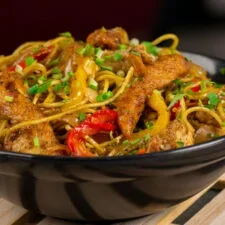
This egg chowmein combines noodles, vegetables and strips of omelette with a homemade chilli sauce. It makes a colourful, savoury meal for four, with the heat adjustable to your taste.
Ingredients
- ½capsicum (green, red or yellow)
- 2 tspgarlic, chopped
- 5fresh green chillies
- 10fresh green chillies
- 1 largeonion
- 100 mlneutral oil
- 10dried chillies
- 1 tspginger, chopped
- 1 tspgarlic, chopped
- 2eggs
- to tastesalt
- ⅓ tspground black pepper
- ½ tspneutral oil
- 2 tspvinegar
- to tastesalt
- 1 tspsugar
- as neededwater
- to tastesalt
- a littleneutral oil
- 250 gegg chowmein noodles
- 30 mlneutral oil
- ½carrot
- 2 tsplight soy sauce
- 1 tspdark soy sauce
- 2 tspgreen chilli sauce
- 1 tspvinegar
- to tastesalt
- ½ tspground black pepper
- the prepared amountfried omelette strips
- to tastespring onion, chopped
Instructions
- 1
Prepare vegetables
Cut the capsicum into thin strips. Chop 2 teaspoons of garlic, slice the large onion into strips and cut the fresh chillies lengthways. Green capsicum alone can be used if preferred.
- 2
Make chilli paste
Warm 100 ml oil in a pan. Add 10 dried chillies, 1 teaspoon chopped ginger and 1 teaspoon chopped garlic. Fry until the aromatics are well cooked, then take the pan off the heat and let the mixture cool. Blend to a paste.
- 3
Mix the eggs
Crack 2 eggs into a bowl. Add salt to taste and ⅓ teaspoon ground black pepper, then beat well.
- 4
Cook the omelette
Spread ½ teaspoon oil over a non-stick pan and pour in the egg mixture. Tilt the pan to spread it evenly. After 30–40 seconds, turn the omelette over and cook briefly; avoid browning it too much.
- 5
Slice the omelette
Transfer the omelette to a chopping board, roll it up and cut it into long strips. Scrambled egg can be used instead if you prefer.
- 6
Reduce chilli paste
Put the chilli paste in a pan and bring it to the boil over high heat, allowing excess water to evaporate.
- 7
Finish the sauce
Stir in 2 teaspoons vinegar, salt to taste and 1 teaspoon sugar. Cook and stir for 1–2 minutes. The sauce is ready when the oil separates. The full batch is not needed for the chowmein; cool any remainder and refrigerate it in a container.
- 8
Heat noodle water
Put water in a saucepan with salt to taste and 1 teaspoon neutral oil. Warm the water.
- 9
Cook the noodles
When the water is slightly warm, add the noodles. Keep the heat at medium and cook until they are just tender; do not separate them by hand beforehand.
- 10
Drain the noodles
Lift the cooked noodles out with tongs and transfer them to an oiled dish. Gently loosen and spread them apart with the tongs.
- 11
Stir-fry vegetables
Lightly oil a wok or other pan, then add 30 ml oil. Add chopped garlic and fry briefly. Add the onion, capsicum and carrot, including the remaining capsicum as needed. If your pan is small, cook in two batches.
- 12
Season the noodles
When the vegetables are fried, add the noodles. Toss gently with 2 teaspoons light soy sauce, 1 teaspoon dark soy sauce, 2 teaspoons green chilli sauce, sliced fresh chillies, 1 teaspoon vinegar, ½ teaspoon ground black pepper and salt to taste.
- 13
Add egg and serve
Add the omelette strips and chopped spring onion, then toss once more. Serve with some of the prepared chilli sauce on top.
What is egg chowmein?
Chow mein is a Chinese-style noodle dish that has become popular in many South Asian home kitchens. This version brings together egg noodles, stir-fried vegetables and strips of omelette.
Homemade chilli paste gives the dish its distinctive heat, while soy sauce and vinegar add savoury and sharp notes. The recipe also makes more chilli sauce than the noodles need, so add it gradually.
Nutrition and macros by portion
The nutrition label shows one serving as written: 520 calories, 17g protein, 67g carbs, 20g fat.
| Portion | Adjustment | kcal | Protein | Carbs | Fat |
|---|---|---|---|---|---|
| Lighter | Use less stir-frying oil | 364 kcal | 12g | 47g | 14g |
| This serving | As written | 520 kcal | 17g | 67g | 20g |
| Hungry | Serve a larger portion | 780 kcal | 26g | 101g | 30g |
The noodles provide most of the carbohydrates, while the eggs contribute protein and some fat. Oil used for the sauce and stir-frying is the main source of fat, though the amount consumed depends on how much sauce and cooking oil remains in the pan. Pair a serving with extra vegetables for a more balanced plate.
The chilli sauce
Aromatics first: frying dried chillies with ginger and garlic softens their raw edge before they are blended. Let the mixture cool a little before blending.
Reduce gently: boiling the paste drives off excess water, and the later addition of vinegar, salt and sugar rounds out its flavour. Stop when oil separates, and keep the extra sauce aside rather than adding it all to the noodles.
Keep the omelette tender
Quick cooking: spread the beaten egg in a lightly oiled non-stick pan and turn it after 30–40 seconds. The method aims for a cooked but lightly coloured omelette.
Neat strips: roll the omelette before slicing to make long pieces that are easy to fold through the noodles. Add them near the end so they keep their shape.
Cook noodles with care
Before boiling: the recipe advises adding the noodles to warm, salted water with a little oil rather than trying to pull them apart dry. Cook over medium heat until tender.
After draining: lift the noodles out with tongs and gently loosen them in an oiled dish. This helps keep them from clumping before they reach the wok.
Stir-fry in batches
Vegetable order: briefly fry the garlic, then add onion, capsicum and carrot. Keep the pieces in thin strips so they cook quickly and mix easily with the noodles.
Small pan: if the wok or pan is crowded, follow the recipe’s suggestion to cook in two batches. Toss the noodles gently with the sauces, then add the egg and spring onion at the end.
Adjust the heat
Fresh chillies add direct heat, while the homemade paste brings deeper chilli flavour. Start with fewer sliced chillies or less chilli sauce if you want a milder result.
The recipe lists both five and ten fresh chillies, so treat the amount as adjustable to your preference. Add the sauce at the table for more control over each serving.
What to serve alongside
The noodles can be served as a meal on their own, with extra spring onion scattered over the top. A simple side of lightly cooked vegetables or a crisp salad can add contrast.
Keep any extra chilli sauce separate so diners can choose how much to add. If serving with another savoury dish, taste before adding extra salt to the noodles.
Recipe notes & tips
- Cut the vegetables into similarly sized strips so they cook at a similar rate.
- Let the chilli mixture cool before blending it into a paste.
- Cook the omelette only until set so it stays tender.
- Use tongs to lift and loosen the noodles gently after cooking.
- Add the homemade chilli sauce a little at a time, since the full batch is not needed.
- If your pan is small, stir-fry the noodles and vegetables in batches.
Variations
- Green capsicum: use only green capsicum if that is what you have.
- Milder noodles: reduce the fresh chillies and add chilli sauce sparingly.
- Scrambled egg: cook the beaten eggs as soft curds instead of making an omelette.
- Different noodles: use another type of noodle if egg chowmein noodles are unavailable.
- Single soy sauce: use one type of soy sauce if you do not have both light and dark.
- Extra vegetables: add more thinly sliced carrot or capsicum to the stir-fry.
Common mistakes to avoid
- Overcooking the omelette: turn it after 30–40 seconds and avoid browning it heavily.
- Adding all the chilli sauce: the recipe makes extra, so season the noodles gradually.
- Separating dry noodles by hand: add them to the warm water as directed, then loosen them after cooking.
- Crowding a small pan: cook the noodles in two batches so they can be tossed properly.
- Breaking up the egg strips: add them at the end and toss gently.
- Over-salting: taste after adding soy sauce and chilli sauce before adding more salt.
How to store
Refrigerate leftover chowmein in a covered container and eat within 2 days. Reheat until piping hot in a pan with a small splash of water, stirring gently. Cool leftover chilli sauce and refrigerate it separately; the source suggests it can keep for one to one-and-a-half months, but use a clean container and discard it if its appearance or smell changes.
Frequently asked questions
Can I use a different type of noodle?
Yes. The recipe says that noodles other than egg noodles can be used; cook them according to their packet directions and drain before stir-frying.
Do I need to use green, red and yellow capsicum?
No. The recipe notes that green capsicum alone works too. Use the amount you have and slice it thinly.
How much chilli sauce should I add?
Add it gradually to taste. The recipe makes more sauce than is needed for the chowmein, so you do not have to use the whole batch.
Can I make the egg as scrambled egg?
Yes. The recipe suggests scrambled egg as an alternative to the thin omelette; fold it through near the end.
Why cook the noodles in batches?
A small pan can become crowded, making it harder to toss the noodles evenly. Two batches give the ingredients more room to mix.
Can I prepare the chilli sauce ahead?
Yes. Cool the extra sauce and refrigerate it in a clean, covered container. Use a clean spoon whenever you take some out.
Cook it from the original
This recipe comes from atanurrannagharrecipe.com. Their page has the author’s own photos, notes and tips — the best place to cook it from.
Open the recipe on atanurrannagharrecipe.com