
Country rolls
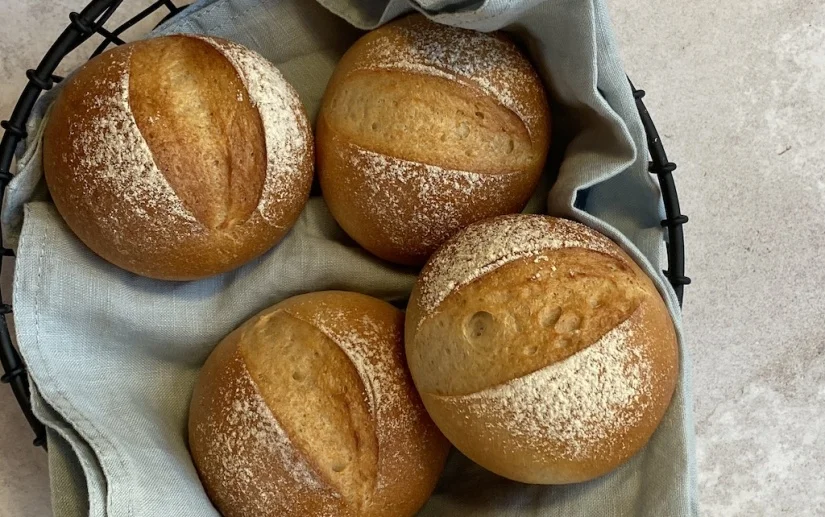
These country rolls are soft, round yeast rolls made with a blend of wheat and rye flour, yoghurt and malt. The long-enough rests and steamy bake help give them a tender crumb and a crisp, well-coloured crust.
Ingredients
- 200 glukewarm water
- 100 gnatural yoghurt, at room temperature
- 400 gtype 700 wheat flour
- 100 gtype 960 rye flour
- 10 gsalt
- 10 gbaking malt
- 10 gfresh yeast
Instructions
- 1
Mix and knead
Put the lukewarm water and room-temperature yoghurt in a mixing bowl. Add both flours, the salt, baking malt and fresh yeast. Knead for 5–10 minutes until smooth, then cover and leave to rest for about 30 minutes.
- 2
Shape the rolls
Divide the dough into 12 pieces and shape each into a smooth, round ball. Dust the balls with rye flour and leave them to rest for about 15 minutes.
- 3
Slash and bake
Score the rolls with a sharp knife. Bake in a preheated oven at 210°C for about 18 minutes, with plenty of steam.
What are country rolls?
These small rolls, known as Weckerl in the recipe's German, combine wheat flour with a smaller amount of rye. That blend gives them a mild, wheaty base with a hint of rye character.
This version uses yoghurt in the dough and baking malt for flavour and colour. The rolls are shaped individually, so they are handy to serve alongside a meal or fill for lunch.
Nutrition and macros by portion
The nutrition label shows one serving as written: 521 calories, 16g protein, 109g carbs, 2g fat.
| Portion | Adjustment | kcal | Protein | Carbs | Fat |
|---|---|---|---|---|---|
| Lighter | Serve fewer rolls | 365 kcal | 11g | 76g | 1g |
| This serving | As written | 521 kcal | 16g | 109g | 2g |
| Hungry | Add another roll | 782 kcal | 24g | 164g | 3g |
Most of the carbohydrates come from the wheat and rye flours, while the yoghurt contributes a little protein and fat; the flours also provide most of the protein. At three rolls per serving, pair them with a protein-rich filling and vegetables to make a more balanced plate.
Choosing the flour
Wheat flour: The recipe specifies type 700, a regional flour designation. Use the stated type if available, or a suitable bread-making wheat flour.
Rye flour: Type 960 is used in the dough, with a little more for dusting. Keep the dusting light so it does not mask the scored tops.
Kneading and resting
Knead the dough for 5–10 minutes, stopping when it looks smooth rather than rough and uneven. The recipe does not specify a mixer speed, so follow your mixer's guidance if using one.
Cover the dough during its 30-minute rest, then allow the shaped rolls another 15 minutes. These rests give the dough time to relax before baking.
Shaping and scoring
Smooth balls: Work each of the 12 portions into a taut, rounded ball. Keep the portions similar in size so they bake at roughly the same rate.
Sharp blade: Score each roll just before baking, using a confident cut. A clean slash gives the expanding dough somewhere to open as it bakes.
Why steam matters
The method calls for plenty of steam in the oven, which helps keep the crust flexible while the rolls expand. Use a reliable, oven-safe method for creating steam and take care when opening the oven, as hot steam can burn.
Bake at 210°C for about 18 minutes in a preheated oven. The rolls should be well coloured; ovens can vary, so check them towards the end of the stated time.
Serving the rolls
Serve the rolls warm or cooled with butter, cheese or a savoury spread. Their wheat-and-rye flavour also works well alongside soup or a salad.
The recipe makes 12 rolls for 4 servings, or 3 rolls per serving. For a mixed plate, pair them with a protein-rich topping and vegetables.
Recipe notes & tips
- Use water that feels lukewarm rather than hot when you mix the dough.
- Bring the yoghurt to room temperature so it blends more easily with the water.
- Cover the dough during both rests to stop its surface drying out.
- Dust the shaped balls with rye flour rather than kneading extra flour into them.
- Score the rolls with a sharp knife just before they go into the oven.
- Use caution when handling steam around a hot oven.
Variations
- Extra rye: Replace some of the wheat flour with rye flour, keeping in mind that the dough texture may change.
- Seeded tops: Sprinkle seeds over the rolls after dusting them with rye flour.
- Caraway: Add caraway to the dough for a savoury, aromatic note.
- Roll shapes: Shape the portions into short ovals instead of round balls.
- Sandwich rolls: Split cooled rolls and fill them with cheese, vegetables or another savoury filling.
Common mistakes to avoid
- Hot water: It can harm the yeast; use lukewarm water as specified.
- Rushed kneading: The dough may remain rough; knead for the full 5–10 minutes until smooth.
- Uncovered resting: The surface can dry out; cover the dough and shaped rolls while they rest.
- Uneven portions: Rolls may bake at different rates; divide the dough into 12 similar-sized pieces.
- Blunt scoring: The cuts may drag rather than open cleanly; use a sharp knife.
- Skipping steam: The crust may form differently; provide plenty of steam during the bake as directed.
How to store
Once completely cool, store the rolls in a bread bag or airtight container at room temperature and eat within 1–2 days for the best texture. Refresh them briefly in a warm oven; freeze extras for longer storage and thaw before reheating.
Frequently asked questions
How many rolls does this recipe make?
It makes 12 rolls, which is 3 per serving when divided among 4 servings.
Can I use dried yeast instead of fresh yeast?
The recipe specifies 10 g fresh yeast. If substituting dried yeast, use the conversion stated on its packaging.
What is type 700 wheat flour?
It is the flour type named in the original recipe. If it is not available, choose a bread-making wheat flour with similar use and expect the dough to vary slightly.
What does baking malt do?
It is included in the dough for its baking flavour and contribution to colour. Keep to the stated 10 g if using it.
How do I create steam in the oven?
Use an oven-safe steam method suitable for your oven, following its instructions. Take care when opening the door because hot steam can escape.
Can I freeze the rolls?
Yes. Freeze them once completely cool, then thaw and briefly warm them in the oven before serving.
Cook it from the original
This recipe comes from backenmitchristina.at. Their page has the author’s own photos, notes and tips — the best place to cook it from.
Open the recipe on backenmitchristina.at