
Baked Whole Fish - Asian Style
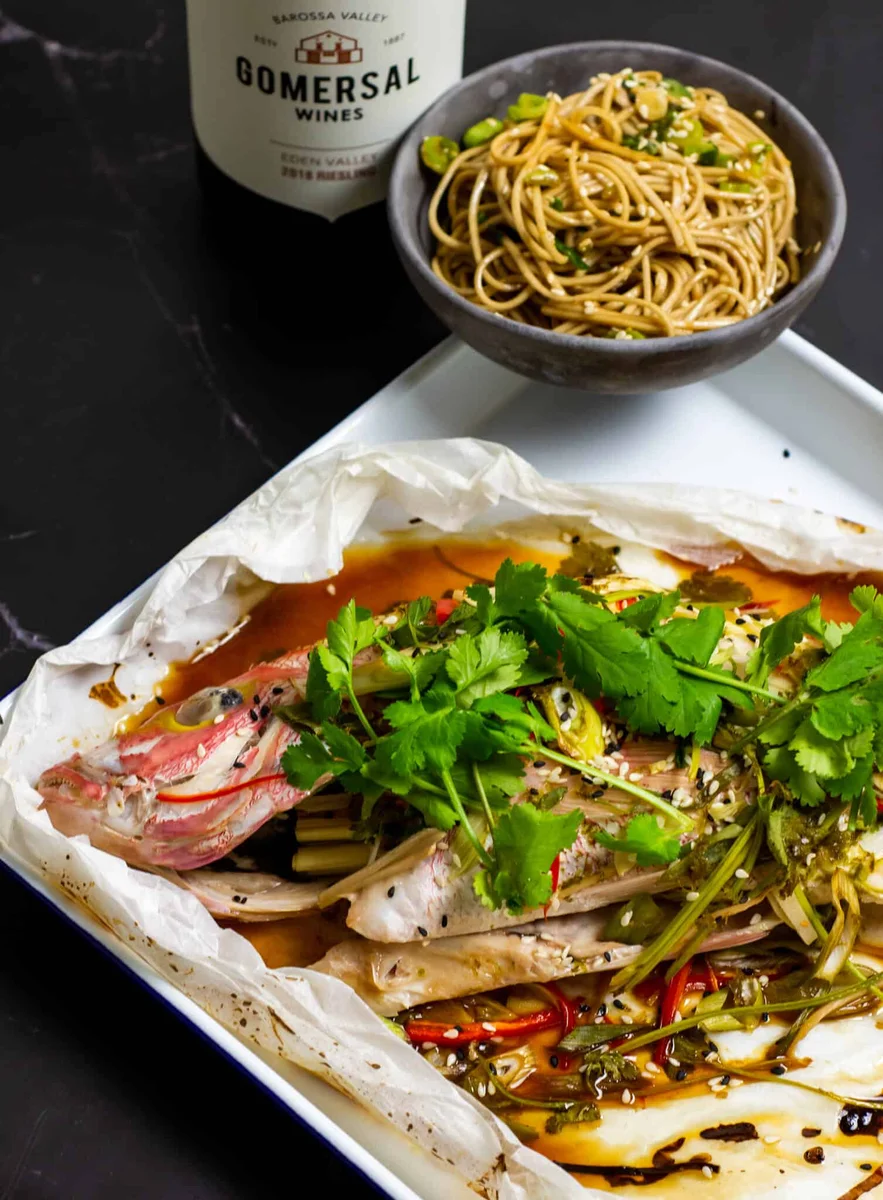
A whole fish is baked in a sealed parchment parcel with lemongrass, ginger, chilli and a soy-lime dressing, then served with sesame soba noodles. It is a straightforward way to bring fragrant, savoury flavours to the table with little fuss.
Ingredients
- 500 gwhole fish (see tips)
- 1lemongrass stalk, peeled and cut (see tips)
- 1 thumb-sized pieceginger, cut into matchsticks
- 2 clovesgarlic, chopped
- 2red chillies, cut into matchsticks
- 1 handfulcoriander stalks, with the leaves reserved for later
- 1spring onion, sliced at an angle
- 1 tbspsoy sauce
- 2 tbspwhite wine
- 1lime, zested
- 1 bunch (usually 90 g)soba noodles
- 1 tspsesame oil
- 2spring onions, finely chopped
- 1 tbspsesame seeds, toasted (see tips)
- 2 tbspsoy sauce
- 1 inch (about 2.5 cm) pieceginger, grated
- 1 tsprice vinegar
- 1 tspsugar
- to tastecoriander leaves
- to tastesesame seeds
- to tastelime wedges
Instructions
- 1
Mix the dressing
Stir together the soy sauce, white wine and lime zest, then set the mixture aside.
- 2
Make the filling
Mix the spring onion, garlic, chillies, ginger and half of the coriander stalks together; set aside.
- 3
Prepare parchment
Cut two pieces of parchment paper about 5–7.5 cm larger than the fish.
- 4
Score the fish
Make three cuts in the flesh on each side of the fish.
- 5
Layer the fish
Put half of the ginger and chilli mixture on one piece of parchment and set the fish on top. Cover the fish with the remaining mixture.
- 6
Stuff the fish
Put the lemongrass and the remaining half of the coriander stalks inside the fish.
- 7
Seal the parcel
Pour the soy and wine mixture over the fish, then place the second piece of parchment over it. Crumple and fold the edges together until the parcel is sealed.
- 8
Bake the fish
Bake at 180°C for 20–25 minutes. When cooked, spoon some of the steaming liquid over the fish and add the garnish.
- 9
Cook the noodles
Boil the noodles according to the packet instructions, then refresh them as directed in the tips.
- 10
Toss the noodles
Heat the sesame oil in a frying pan and fry the spring onions over a medium heat for 30 seconds. Add the sauce and noodles, then add the sesame seeds and toss everything in the pan.
What is Asian-style baked whole fish?
This recipe takes the simple idea of baking a whole fish and pairs it with flavours used across a wide range of Asian cuisines, including soy, ginger, chilli, lemongrass and sesame. It is not tied to one specific regional tradition; its appeal is the balance of fragrant aromatics and savoury dressing.
The parchment parcel keeps the fish surrounded by its own steam and the liquid poured over it. Soba noodles make a quick, nutty-tasting accompaniment.
Nutrition and macros by portion
The nutrition label shows one serving as written: 1496 calories, 126g protein, 204g carbs, 26g fat.
| Portion | Adjustment | kcal | Protein | Carbs | Fat |
|---|---|---|---|---|---|
| Lighter | Smaller noodle portion | 1047 kcal | 88g | 143g | 18g |
| This serving | As written | 1496 kcal | 126g | 204g | 26g |
| Hungry | Larger noodle portion | 2244 kcal | 189g | 306g | 39g |
The soba noodles are the main source of carbohydrates, while the fish provides most of the protein. Sesame oil and sesame seeds contribute fat, with smaller amounts also coming from the fish. For a more balanced plate, serve with a side of vegetables or salad.
Get the aromatics ready
Ginger and chilli: Cut the first ginger piece and the chillies into matchsticks so they can be spread over the fish. Reserve half the coriander stalks for the cavity, as the recipe directs.
Lemongrass: Peel away the tougher outer layer and cut the stalk as indicated in the recipe tips. Its citrusy fragrance flavours the fish as it bakes.
Make a secure parchment parcel
Room to fold: Cut the parchment 5–7.5 cm larger than the fish on every side, leaving enough overhang to crumple together. The recipe uses a second sheet over the top.
Seal the edges: Fold and crumple the paper all the way around so steam and cooking liquid stay inside. Handle the parcel carefully when it comes out of the oven, as it will contain hot steam.
Check the fish for doneness
Timing: Bake the parcel at 180°C for 20–25 minutes, following the recipe's stated range. The exact time can vary with the fish's shape and thickness.
Texture: Open the parcel cautiously and check that the flesh is opaque and separates easily from the bone at its thickest part. Spoon over some of the steaming liquid before garnishing.
Finish the soba noodles
Refresh: Boil the soba according to its packet instructions, then refresh it as directed in the recipe tips. Drain it well so excess water does not dilute the sauce.
Toss: Fry the spring onions in sesame oil for 30 seconds over a medium heat, then add the sauce and noodles. Finish by tossing in the sesame seeds so the noodles are coated.
Serve with fresh garnishes
Garnish: Add coriander leaves and sesame seeds to the fish, and serve lime wedges alongside. A squeeze of lime gives the rich, savoury flavours a bright finish.
On the plate: Serve the fish with the noodles while both are warm. If you would like a fresher contrast, add a simple side of crisp salad leaves or sliced vegetables.
Recipe notes & tips
- Choose a whole fish that fits comfortably on the parchment, and ask the fishmonger to clean it if needed.
- Peel the tough outer layer from the lemongrass before cutting it.
- Toast sesame seeds in a dry pan, stirring, until fragrant; keep a close eye on them because they can brown quickly.
- Fold the parchment edges firmly together to help keep the parcel sealed during baking.
- Open the parcel away from your face to avoid the hot steam.
- Refresh the cooked soba as directed on its packet or in the original recipe tips.
Variations
- Adjust the chilli: Use fewer chillies for a gentler heat or add more if you prefer it hotter.
- Change the fish: Use another whole fish of a similar size, adjusting the cooking time to suit its thickness.
- Add greens: Serve with steamed greens or crisp salad vegetables alongside.
- Use extra lime: Add a little more lime at the table for a sharper finish.
- Make it gluten-free: Choose suitable gluten-free noodles and soy sauce, checking their labels.
Common mistakes to avoid
- Loose parcel: Fold and crumple the parchment edges all the way around to retain the steam.
- Overcooked fish: Check the fish at the lower end of the 20–25-minute range, especially if it is thin.
- Uneven cooking: Score both sides of the fish as directed so the flesh cooks more evenly.
- Wet noodles: Drain the refreshed soba well before adding it to the pan.
- Burnt sesame seeds: Toast them over a moderate heat and remove them as soon as they smell fragrant.
How to store
Refrigerate leftover fish and noodles in separate airtight containers within two hours of cooking, and use within 1–2 days. Reheat gently until piping hot; the fish is best reheated covered so it does not dry out.
Frequently asked questions
What fish can I use?
Use a whole fish of about 500 g that is suitable for baking. Ask your fishmonger to clean it and recommend an appropriate variety if you are unsure.
How do I know when the fish is cooked?
The flesh should be opaque and come away from the bone easily at the thickest part. If it needs more time, reseal the parcel and continue baking, checking again shortly.
Can I prepare the fish parcel ahead?
You can prepare the aromatics and dressing in advance, but assemble and bake the parcel close to serving time. Keep prepared ingredients covered in the fridge.
Can I use a different type of noodle?
Yes. Cook another noodle according to its packet instructions and drain it well before tossing it with the sauce. The flavour and texture will differ from soba.
What does refreshing the noodles mean?
It means cooling or rinsing the boiled noodles as directed by the recipe or packet, usually to stop them cooking further and reduce sticking. Drain them well before frying.
Can I make the fish less spicy?
Yes. Reduce the number of chillies or remove their seeds before cutting them. The ginger, lemongrass and soy dressing will still add plenty of flavour.
Cook it from the original
This recipe comes from anotherfoodblogger.com. Their page has the author’s own photos, notes and tips — the best place to cook it from.
Open the recipe on anotherfoodblogger.com