
Khamang Dhokle from Marathwada
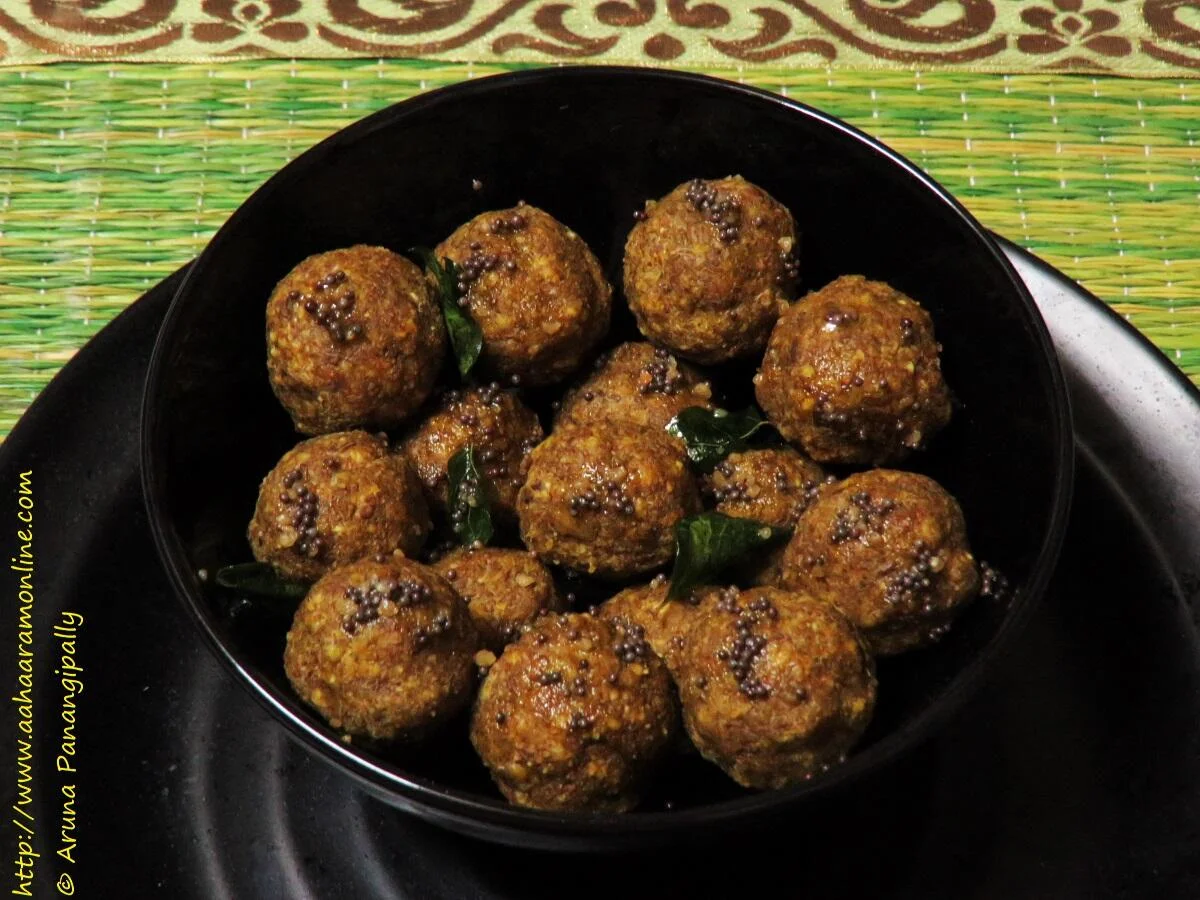
Khamang Dhokle are coarse kala chana flour balls, steamed until tender and finished with a fragrant mustard-seed and curry-leaf tempering. This Marathwada dish is traditionally eaten mixed with hot rice and ghee, making it a warming, savoury meal.
Ingredients
- 200 g (about ⅔ cup)kala chana (black chickpeas)
- 1 tspcumin seeds
- 2 tspred chilli powder
- ½ tspturmeric powder
- ¾ tspasafoetida
- 1 tspmustard seeds
- 2 tbspoil
- 5–6curry leaves (optional)
- to tastesalt
- as neededhot water
Instructions
- 1
Grind the chickpeas
Grind the kala chana to a coarse flour with a texture similar to thick semolina.
- 2
Warm the oil
Heat 1 tablespoon of oil.
- 3
Heat the water
Warm about ⅔ cup of water.
- 4
Prepare the steamer
Bring the water in a steamer to a boil.
- 5
Mix the dough
Combine the bharda, turmeric, red chilli powder, salt, cumin, ½ teaspoon asafoetida and the hot oil.
- 6
Add hot water
Gradually add hot water, mixing with a spoon until the mixture begins to come together.
- 7
Knead the mixture
Leave it for a couple of minutes, then knead it into a ball.
- 8
Shape the balls
Divide the mixture into 16 equal portions and roll each into a ball.
- 9
Steam the dhokle
Steam the balls for 10 minutes, then turn off the heat.
- 10
Heat the tempering oil
Heat the remaining 1 tablespoon of oil.
- 11
Crackle the seeds
Add the mustard seeds and let them crackle.
- 12
Add leaves and hing
Add ¼ teaspoon asafoetida and the curry leaves, then mix well.
- 13
Pour over dhokle
Pour the tempering over the steamed dhokle.
- 14
Serve with rice
Break the Khamang Dhokle into pieces and mix with hot rice topped with ghee.
What are Khamang Dhokle?
Khamang Dhokle are a traditional dish from Marathwada in Maharashtra, made from coarsely ground kala chana, or black chickpeas. The name bharda refers to the coarse flour that gives the steamed balls their distinctive texture.
Here, the dough is shaped into small portions, steamed and dressed with a simple tempering. The earthy chickpeas, warm spices and aromatic curry leaves make a savoury accompaniment for hot rice and ghee.
Nutrition and macros by portion
The nutrition label shows one serving as written: 249 calories, 11g protein, 32g carbs, 10g fat.
| Portion | Adjustment | kcal | Protein | Carbs | Fat |
|---|---|---|---|---|---|
| Lighter | Use less tempering oil | 174 kcal | 8g | 22g | 7g |
| This serving | As written | 249 kcal | 11g | 32g | 10g |
| Hungry | Serve with rice and ghee | 374 kcal | 16g | 47g | 15g |
Most of the carbohydrates and protein come from the kala chana, while the oil used in the dough and tempering supplies most of the fat. Serve a moderate portion with hot rice and ghee, and add vegetables to round out the plate; rice and ghee are not included in the estimate below.
The coarse chickpea flour
Bharda: grind the kala chana only until it resembles thick semolina. A fine powder would make a different, denser dough, while a coarse grind gives the dhokle their characteristic bite.
Check the grind before adding liquid; the pieces should be small and fairly even so the mixture can come together and cook through consistently.
Getting the dough right
Hot oil: mixing it into the flour and spices helps distribute the seasoning through the bharda.
Hot water: add it gradually and stir as you go, since the amount needed depends on the grind. Let the mixture stand for a couple of minutes before kneading, as directed, then bring it together into a ball.
Shaping and steaming
Portions: divide the dough into 16 equal pieces and roll them into balls so they steam at a similar rate.
Steaming: start with boiling water and steam for 10 minutes. The method gives no further doneness test, so keep the lid on during cooking and avoid extending the time without checking.
A fragrant tempering
Mustard seeds: let them crackle in the hot oil before adding the asafoetida and curry leaves. This order follows the method and lets the seeds release their aroma into the oil.
Curry leaves: they are optional, but add a fresh, distinctive fragrance. Pour the tempering over the dhokle so the oil and spices coat the pieces.
How to serve them
Rice and ghee: the traditional serving idea is to break the dhokle into pieces and mix them with hot rice topped with ghee. The soft rice makes a gentle contrast to the coarse, substantial chickpea balls.
For a fuller plate, serve alongside a vegetable dish or a simple salad; keep the rice hot so it combines easily with the dhokle.
Recipe notes & tips
- Grind the kala chana in short bursts and check the texture often to avoid making it too fine.
- Add the hot water little by little because the coarse flour may absorb it differently from batch to batch.
- Keep the portions similar in size so they steam evenly.
- Have the steamer boiling before adding the shaped dhokle.
- If using curry leaves, add them carefully to the hot oil as they may splutter.
Variations
- Adjust the heat: use less red chilli powder for a milder batch.
- Skip the curry leaves: leave them out if you do not have any, as they are optional.
- Change the serving: break the dhokle into hot rice and finish with ghee, as traditionally served.
- Make smaller portions: divide the mixture into more balls, keeping them a similar size for even steaming.
Common mistakes to avoid
- Grinding too finely: stop when the kala chana resembles coarse semolina rather than smooth flour.
- Adding water too quickly: pour it in gradually and mix so the dough does not become difficult to shape.
- Skipping the resting pause: wait a couple of minutes before kneading, as the method directs.
- Uneven shaping: divide into 16 equal portions so the dhokle cook at a similar rate.
- Adding the tempering too early: prepare it after steaming, then pour it over the dhokle while warm.
How to store
Refrigerate leftovers in an airtight container for up to 3 days. Reheat gently with a splash of water, or warm them in a steamer until hot; the texture may be firmer after chilling.
Frequently asked questions
What is bharda?
Bharda is coarsely ground kala chana, or black chickpeas, used here to make the dough. It should have a texture like thick semolina rather than a fine powder.
Can I use ready-made chickpea flour?
The recipe relies on a coarse grind of kala chana, so ordinary fine chickpea flour will give a different texture. If using it, expect the dough and result to differ from the traditional bharda version.
How much water should I add?
Add hot water gradually until the mixture starts to come together. The recipe does not specify an exact amount, so stop once the dough can be kneaded into a ball.
How do I know when the dhokle are done?
Steam them for 10 minutes as directed. The recipe does not give another doneness cue, so keep the pieces evenly sized and use the stated steaming time.
What should I serve with Khamang Dhokle?
The suggested traditional way is to break them into pieces and mix them with hot rice topped with ghee. A vegetable side can also make the meal more varied.
Can I leave out the curry leaves?
Yes. They are marked as optional; the mustard seed and asafoetida tempering will still flavour the dhokle.
Cook it from the original
This recipe comes from aahaaramonline.com. Their page has the author’s own photos, notes and tips — the best place to cook it from.
Open the recipe on aahaaramonline.com