
Khalle Ambe Gotsu | Uppu Manga Gojju | Uppu Mavinikai Gozzu
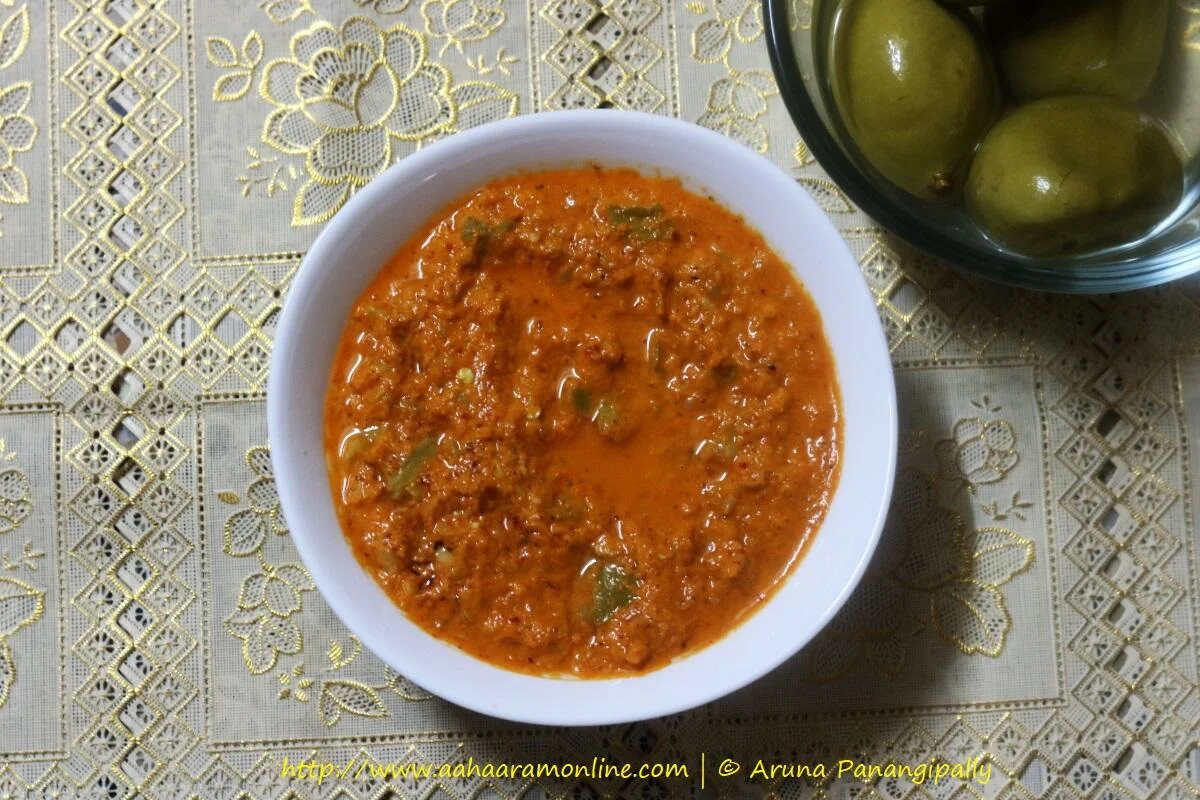
Khalle Ambe Gotsu is a coarse, tangy chutney made with brined mango, coconut, chillies and garlic. Serve it alongside hot rice and papad when you want a salty, spicy accompaniment with plenty of texture.
Ingredients
- 1 smallbrined mango (khalle ambo; see notes)
- 45 g (½ cup)grated coconut
- 2Kashmiri red chillies
- 2hot red chillies
- 3 clovesgarlic
- 1 tbspcoconut oil
Instructions
- 1
Soak the mango
Take the pickled mango out of its brine and soak it in plain water.
- 2
Roast the chillies
Heat about ½ tsp of the coconut oil and roast both kinds of red chilli until they begin to change colour.
- 3
Grind the paste
Grind the coconut, garlic and roasted chillies together to make a coarse paste.
- 4
Transfer the paste
Spoon the ground paste into a large bowl.
- 5
Add the mango
Lift the whole brined mango out of the water and add it to the paste.
- 6
Mix by hand
Squish the mango into the coconut paste with your hands, mixing in both the flesh and skin. Remove and discard any seed you find.
- 7
Thin with water
Add water until the gotsu has the consistency of a thick but flowing chutney.
- 8
Spoon into a bowl
Transfer the Khalle Ambe Gotsu, also called Uppu Manga Gojju, to a serving bowl.
- 9
Finish with oil
Drizzle the remaining coconut oil over the gojju.
- 10
Serve with rice
Serve with hot rice and papad.
What is Khalle Ambe Gotsu?
Khalle Ambe Gotsu, also known as Uppu Manga Gojju or Uppu Mavinikai Gojju, is a GSB-style chutney built around brined mango. Its salty, sour fruit is mashed into a coarse coconut mixture with garlic and red chillies.
This version keeps the mango unground, so its skin and pulp become part of the chutney’s texture. The result is a bold accompaniment traditionally served here with hot rice and papad.
Nutrition and macros by portion
The nutrition label shows one serving as written: 80 calories, 2g protein, 3g carbs, 7g fat.
| Portion | Adjustment | kcal | Protein | Carbs | Fat |
|---|---|---|---|---|---|
| Lighter | Use less coconut oil | 56 kcal | 1g | 2g | 5g |
| This serving | As written | 80 kcal | 2g | 3g | 7g |
| Hungry | Serve a larger portion | 120 kcal | 2g | 5g | 11g |
Most of the carbohydrates come from the coconut and mango, while coconut and coconut oil provide most of the fat. The recipe contains little protein, so serve a portion with a protein-rich dish alongside the rice and papad to make the meal more balanced.
The brined mango
Mango: The brined fruit supplies the dish’s defining sourness and salt. Soaking it briefly in plain water is part of the method; the amount of salt that remains will depend on the mango and its brine.
Skin and pulp: Mash both into the paste for a rustic, uneven texture. Take care to remove any seed before serving.
Roast the chillies gently
Oil: Use about ½ tsp of the measured coconut oil to roast the chillies, saving the rest for the finishing drizzle. Keep the heat moderate and watch closely, as small chillies can darken quickly.
Chillies: Kashmiri chillies contribute colour, while the other red chillies bring heat. The recipe uses both, so the finished chutney has more than one kind of chilli flavour.
Keep the paste coarse
Grinding: Process the coconut, garlic and chillies only until they form a coarse paste. A very smooth blend would lose the contrast that makes this chutney feel substantial.
Mango: Add the soaked mango after grinding and mash it into the paste by hand. This keeps the fruit’s texture distinct from the coconut base.
Adjust the consistency
Water: Add it gradually, mixing as you go, until the chutney is thick but still flows from a spoon. The recipe does not specify an amount because the fruit and coconut may vary in moisture.
Texture: Aim for a moist, spoonable mixture rather than a stiff mash or a thin sauce. Stop adding water as soon as it reaches that point.
Serve it with
Rice: Hot rice is the suggested partner and gives the sharp, salty chutney a mild base. Serve the gotsu alongside or spoon a little over each portion.
Papad: Add papad for a crisp contrast to the soft, coarse chutney. Because the mango is brined, taste before adding any extra salt at the table.
Recipe notes & tips
- Taste the brined mango after soaking to judge how salty the chutney is likely to be.
- Use a coarse grind so the coconut does not become a smooth purée.
- Roast the chillies only until they begin to change colour.
- Remove any mango seed you encounter while mashing.
- Add water a little at a time to avoid thinning the chutney too far.
- Keep some of the coconut oil back for the finishing drizzle.
Variations
- Adjust the heat: Use fewer hot red chillies for a milder chutney.
- Lean on Kashmiri chillies: Use more Kashmiri chillies and fewer hot ones for gentler heat.
- Make it coarser: Mash the mango lightly to leave larger pieces in the chutney.
- Make it thinner: Mix in a little more water until it flows more easily.
- Serve as a side: Pair it with a meal of rice and other savoury dishes.
Common mistakes to avoid
- Over-roasting the chillies: They can turn bitter; take them off the heat as soon as they begin to change colour.
- Grinding until smooth: The chutney loses its coarse character; stop while the paste still has texture.
- Adding too much water: The gotsu can become runny; add water gradually and check the consistency.
- Leaving in a mango seed: It is unpleasant to bite into; remove and discard any seed while mixing.
- Adding salt without tasting: Brined mango can already be salty; taste the finished mixture first.
How to store
Refrigerate leftovers in a covered container and use within 2–3 days. Stir before serving; if it has thickened, mix in a little water, and serve chilled or let it come towards room temperature.
Frequently asked questions
What does Khalle Ambe Gotsu mean?
It is a chutney made with brined mango, also called Uppu Manga Gojju or Uppu Mavinikai Gojju. The names refer to a preparation centred on salty, preserved mango.
Can I use fresh mango instead of brined mango?
Fresh mango will not have the same salty, fermented flavour as brined mango. The recipe is designed around the brined fruit, so fresh mango would make a different chutney.
How much water should I add?
No fixed amount is given. Add it gradually until the chutney is thick but flowing.
Should the mango skin be included?
Yes. The method calls for mashing both the pulp and the skin into the coconut paste, while discarding any seed.
How can I make the chutney less hot?
Use fewer of the hot red chillies. Keep in mind that the recipe also includes Kashmiri red chillies.
What should I serve with it?
Serve it with hot rice and papad, as suggested in the recipe.
Cook it from the original
This recipe comes from aahaaramonline.com. Their page has the author’s own photos, notes and tips — the best place to cook it from.
Open the recipe on aahaaramonline.com