
Andhra Kobbari Garelu | Rice Flour & Coconut Vada | Tengai Vada
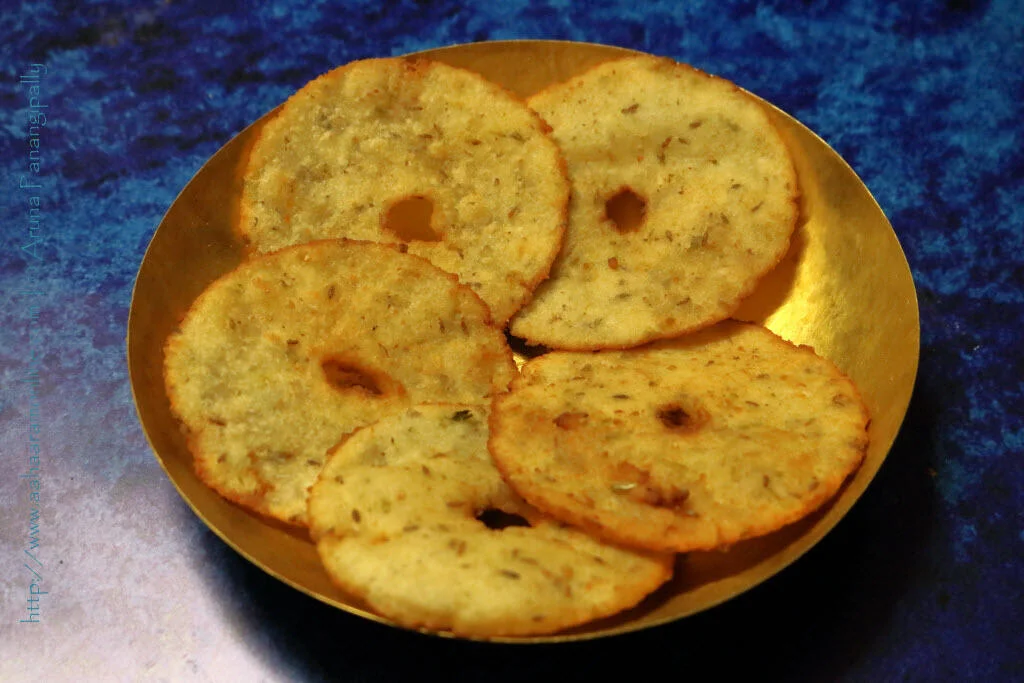
Kobbari garelu are Andhra-style rice-flour and coconut vadas, crisp outside and soft within. They make a satisfying savoury snack, especially served hot with a tangy pickle or cool yoghurt.
Ingredients
- 100 grice flour
- 60 ggrated coconut
- 6–8green chillies
- 1 tbspcumin seeds
- 120 ml (½ cup)boiling water
- to tastesalt
- as neededoil, for deep-frying
Instructions
- 1
Prepare the water
Bring 120 ml (½ cup) water to the boil, then keep it simmering on the hob.
- 2
Pound the spices
Pound the green chillies and cumin seeds together to make a coarse paste.
- 3
Mix the ingredients
In a large bowl, combine the rice flour, chilli-and-cumin paste, grated coconut and salt.
- 4
Make the dough
Add the hot water gradually, stirring with a spoon until you have a firm dough.
- 5
Cool the dough
Leave the dough for a couple of minutes so it cools slightly.
- 6
Knead until smooth
Grease your palms and quickly knead the warm dough into a smooth ball. If it feels too soft, work in a little more rice flour.
- 7
Rest the dough
Cover the dough and leave it to rest for 10 minutes.
- 8
Shape the portions
Divide the dough into 8 equal portions and roll each one into a ball.
- 9
Oil the sheet
Grease a plastic sheet with a few drops of oil.
- 10
Flatten each vada
Set one dough ball on the sheet and flatten it into a 10 cm (4-inch) circle.
- 11
Make the centre hole
Use your index finger to make a small hole in the centre of the circle.
- 12
Heat the frying oil
Heat enough oil over a medium flame to deep-fry the vadas, with enough depth to keep them from sticking to the bottom of the kadai.
- 13
Check the temperature
Drop a tiny piece of dough into the oil. It should sink, then rise slowly to the surface and sizzle; that indicates the oil is ready.
- 14
Fry the first side
Carefully slide in one vada at a time and fry until the edges turn light brown.
- 15
Turn and finish
Flip the vada and fry until both sides are pale golden brown.
- 16
Drain the vadas
Lift the vada from the oil and let the excess oil drain away.
- 17
Serve while hot
Serve hot with Avakai pickle or dahi.
What are kobbari garelu?
Kobbari garelu are savoury fried snacks from Andhra Pradesh, made with rice flour and coconut. They belong to the wider family of Indian vadas, but this version uses a simple rice-flour dough rather than a lentil batter.
Coconut brings a little sweetness and texture, while chilli and cumin give the dough its savoury warmth. The hot-water dough helps form a firm disc that fries crisp at the edges and stays softer inside.
Nutrition and macros by portion
The nutrition label shows one serving as written: 120 calories, 2g protein, 14g carbs, 6g fat.
| Portion | Adjustment | kcal | Protein | Carbs | Fat |
|---|---|---|---|---|---|
| Lighter | Use less absorbed oil | 84 kcal | 1g | 10g | 4g |
| This serving | As written | 120 kcal | 2g | 14g | 6g |
| Hungry | Serve a larger portion | 180 kcal | 2g | 21g | 9g |
Rice flour supplies most of the carbohydrates, while coconut and absorbed frying oil contribute most of the fat; the recipe contains relatively little protein. Serve a portion with dahi and vegetables to make the plate more balanced.
The chilli and cumin paste
Coarse paste: pounding the chillies and cumin together distributes their flavour through the dough without making the mixture completely smooth. Use fewer chillies for a gentler heat, or the full amount for a punchier snack.
Getting the dough right
Hot water: add it gradually and stir with a spoon first, as the mixture will be hot. The dough should hold together firmly rather than spread or feel loose.
Quick knead: after a short cooling pause, grease your palms and knead while the dough is still warm. Add a little extra rice flour only if it is too soft to shape.
Shaping without sticking
Oiled sheet: a few drops of oil on the plastic sheet help the dough release after flattening. Make each disc about 10 cm across and keep it even in thickness so it fries consistently.
Centre hole: make a small opening with your finger. Handle the shaped vada gently when sliding it into the oil.
Frying and doneness
Oil check: a tiny dough scrap should sink briefly and then rise slowly, sizzling at the surface. If it stays at the bottom, the oil is not ready; if it races up and browns quickly, reduce the heat.
Colour cue: fry one at a time until the edges are light brown, then turn and cook until both sides are pale golden. Drain each one after lifting it out.
Serving ideas
Serve the garelu hot, when the outside is at its crispest. Avakai, a tangy Andhra mango pickle, is the traditional-style accompaniment suggested here; plain dahi offers a cooler contrast.
For a more substantial plate, pair them with a simple salad or vegetables. Keep accompaniments separate until serving to preserve the fried crust.
Recipe notes & tips
- Measure the water and add it gradually so the dough stays firm.
- Grease your hands before kneading the warm dough.
- Keep the shaped discs similar in size and thickness for even frying.
- Test the oil with a tiny piece of dough before frying the vadas.
- Fry one vada at a time so it has room to cook without sticking.
- Drain the fried vadas well and serve them hot.
Variations
- Adjust the heat: use 6 chillies for a milder batch or 8 for more bite.
- Coarser coconut: use freshly grated coconut for more texture in each vada.
- Serve with pickle: pair the hot vadas with a tangy mango pickle.
- Add a cool dip: serve with plain dahi alongside the fried snacks.
Common mistakes to avoid
- Adding all the water at once: pour it in gradually so the dough does not become too soft.
- Kneading while too hot: pause for a couple of minutes, then knead quickly with greased palms.
- Skipping the oil test: check with a tiny dough piece before adding a vada.
- Using oil that is too cool: wait until the test piece rises slowly and sizzles.
- Making uneven discs: flatten each portion to a similar thickness so they cook evenly.
- Crowding the kadai: fry one vada at a time to keep it from sticking.
How to store
These are best eaten freshly fried. Cool leftovers, store them in an airtight container in the fridge for up to 2 days, and reheat in an oven or air fryer until hot and crisp; they may soften during storage.
Frequently asked questions
Can I make the dough ahead?
The method calls for a 10-minute covered rest. For the best texture, shape and fry the dough soon after that rest rather than storing it for later.
How do I know when the oil is ready?
Drop in a tiny piece of dough. It should sink, then rise slowly to the top and sizzle.
What if my dough is too soft?
Work in a little rice flour until the dough is firm enough to shape. Add it gradually to avoid making the dough dry.
Can I make these less spicy?
Yes. Use 6 green chillies rather than 8, or use smaller chillies if yours are particularly hot.
What can I serve with kobbari garelu?
Serve them hot with Avakai pickle or dahi, as suggested in the recipe.
Can I cook these without deep-frying?
This method is designed for deep-frying, so another cooking method will give a different texture. For the intended crisp outside and soft centre, follow the oil-frying method.
Cook it from the original
This recipe comes from aahaaramonline.com. Their page has the author’s own photos, notes and tips — the best place to cook it from.
Open the recipe on aahaaramonline.com