
Duck Crostinis
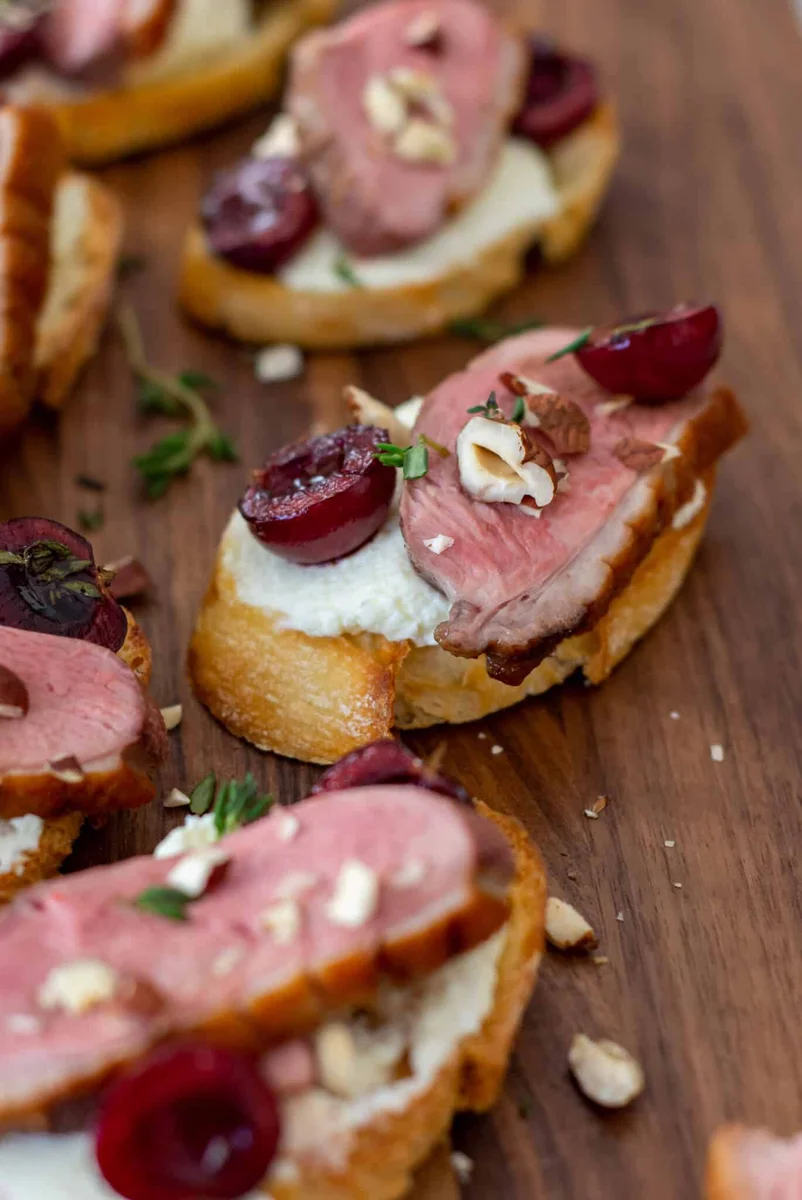
These duck crostinis pair crisp baguette with seared duck, roasted balsamic cherries and a soft goat’s cheese mousse. They make an elegant party canapé that can be assembled just before serving.
Ingredients
- 2duck breasts
- 1 tbsp, plus extra for garnishthyme
- 24 slicesbaguette
- 24 (approximately 200 g)cherries
- 200 ggoat’s cheese
- 100 mlcream
- 4 tbspmilk
- 2 tbspbalsamic vinegar
- 50 ghazelnuts
- 5 tbspolive oil
Instructions
- 1
Prepare the crostini
Cut the baguette into 24 slices. Brush both sides of each slice with the remaining oil and sprinkle with a pinch of salt.
- 2
Bake the crostini
Arrange the slices on a baking tray and bake at 180°C for 5 minutes. Turn them over and bake for another 3–5 minutes, until crisp. The crostini can be made well ahead.
- 3
Score the duck
With a sharp knife, score the duck skin diagonally, taking care not to cut into the meat.
- 4
Season the duck
Season the duck generously with salt. You do not need to add oil.
- 5
Render the skin
Set the duck skin-side down in a cold pan over low heat. Cook without moving it for 8 minutes.
- 6
Sear the other side
Turn the duck and cook flesh-side down for 2 minutes.
- 7
Finish cooking
Transfer the duck, skin-side up, to a wire rack set over a baking tray. Cook for a further 3–4 minutes, or until the internal temperature reaches 52°C.
- 8
Save the duck fat
Keep the fat rendered in the pan for another use, such as roasting potatoes.
- 9
Rest and slice
Leave the duck to rest for 8–10 minutes, then cut each breast into 12 thin slices.
- 10
Pit the cherries
Remove the stones from the cherries using a cherry pitter.
- 11
Season the cherries
Halve the cherries and toss them with 1 tbsp olive oil, salt, pepper, balsamic vinegar and 1 tbsp chopped thyme.
- 12
Roast the cherries
Place the cherries on a lined baking tray and roast at 180°C for 6–8 minutes.
- 13
Toast the hazelnuts
Toast the hazelnuts in a dry frying pan for 1–2 minutes.
- 14
Chop the hazelnuts
Take the hazelnuts out of the pan and chop them.
- 15
Mix the cheese
Stir the goat’s cheese and milk together until smooth.
- 16
Whip the cream
Whip the cream to soft peaks, then fold it into the goat’s cheese mixture.
- 17
Assemble the crostini
Spoon some goat’s cheese mousse onto each crostini. Top with cherries and a slice of duck, then scatter over the chopped hazelnuts.
What are duck crostinis?
Crostini are small toasted slices of bread associated with Italian antipasti. This version tops baguette with duck, fruit, cheese and nuts for a rich, savoury-sweet canapé.
The recipe brings together crisp bread, rosy sliced duck, roasted cherries and airy goat’s cheese mousse. The contrasting textures make each bite feel complete without needing a large portion.
Nutrition and macros by portion
The nutrition label shows one serving as written: 193 calories, 9g protein, 18g carbs, 10g fat.
| Portion | Adjustment | kcal | Protein | Carbs | Fat |
|---|---|---|---|---|---|
| Lighter | Use less mousse | 135 kcal | 6g | 13g | 7g |
| This serving | As written | 193 kcal | 9g | 18g | 10g |
| Hungry | Serve extra crostini | 290 kcal | 14g | 27g | 15g |
The baguette and cherries provide most of the carbohydrates, while the olive oil, duck skin, cream, goat’s cheese and hazelnuts contribute much of the fat. Duck and goat’s cheese provide protein. Serve alongside salad or crisp vegetables for a fresh contrast.
The baguette base
Even slices: Cut the baguette into slices of similar thickness so they toast at about the same rate. Brush both sides lightly with oil for crisp edges.
Make ahead: The crostini can be baked in advance, as the method notes. Keep them dry until you are ready to add the toppings.
Cooking the duck
Start cold: Putting the duck skin-side down in a cold pan over low heat lets the fat render as the pan warms. Leave it undisturbed for the specified 8 minutes.
Check and rest: The recipe gives an internal temperature of 52°C after the oven stage. Rest the duck for 8–10 minutes before slicing it thinly.
Roasted cherries
Stone first: Remove the cherry stones before halving the fruit. Toss the halves with olive oil, balsamic vinegar and chopped thyme as directed.
Watch the short roast: The cherries need only 6–8 minutes at 180°C. They should be warmed and softened while still holding their shape.
Whipping the mousse
Smooth cheese: Mix the goat’s cheese with the milk until there are no obvious lumps. This gives the whipped cream a smoother base to combine with.
Soft peaks: Stop whipping when the cream forms soft peaks, then stir it into the cheese mixture. This keeps the topping light enough to spoon onto the crostini.
Timing the components
Work in stages: The crostini can be made well in advance, while the cherries and hazelnuts can be prepared as the other components are underway. Keep the duck’s resting time in mind before slicing.
Assemble last: Add the mousse, cherries and duck shortly before serving so the bread stays crisp. Finish each canapé with chopped hazelnuts.
What to serve alongside
For a party spread, serve these with other small bites and a simple salad or crunchy vegetables. A bright, lightly dressed side offers contrast to the duck and cheese.
Because the toppings are rich, these crostinis work well as part of a varied canapé selection rather than as the only food on the table.
Recipe notes & tips
- Cut the baguette evenly so the slices become crisp at a similar rate.
- Score only the duck skin, not the flesh.
- Use a cold pan and low heat to cook the duck skin as directed.
- Let the duck rest before slicing so it is easier to cut neatly.
- Toast the hazelnuts in a dry pan and keep a close eye on them.
- Assemble the crostini shortly before serving to preserve their crunch.
Variations
- Fresh cherries: Use ripe cherries when they are in season for a brighter fruit flavour.
- Herb finish: Add a little extra thyme as a garnish, as suggested in the ingredient list.
- Nut swap: Replace the hazelnuts with another chopped nut if needed.
- Baguette choice: Use small baguette slices so the toppings are easy to eat in a bite or two.
- Cheese texture: Adjust the amount of milk gradually while mixing if you prefer a thicker mousse.
Common mistakes to avoid
- Cutting through the duck skin: Score only the skin so the cuts do not reach the meat.
- Moving the duck too soon: Leave it undisturbed skin-side down for the full 8 minutes.
- Overbaking the crostini: Check after the stated 5 minutes on the first side, then bake for just 3–5 minutes more after turning.
- Roasting the cherries too long: Take them out after 6–8 minutes so they retain their shape.
- Overwhipping the cream: Stop at soft peaks before folding it into the cheese mixture.
- Assembling too early: Add the toppings close to serving time to help the crostini remain crisp.
How to store
Store the components separately in covered containers in the fridge and assemble shortly before serving. Keep cooked duck and cherries refrigerated and use within 3 days; reheat gently if desired, while the crostini are best kept dry at room temperature.
Frequently asked questions
Can I make the crostini ahead?
Yes. The recipe specifically notes that the toasted baguette can be made well in advance. Keep it dry and add the toppings shortly before serving.
How do I remove cherry stones without a pitter?
Carefully cut around each cherry with a small knife and remove the stone by hand. Take care to keep your fingers clear of the blade.
Can I prepare the goat’s cheese mousse ahead?
You can mix it ahead and keep it covered in the fridge. Spoon it onto the crostini close to serving so the bread does not soften.
How should I slice the duck?
Rest it for 8–10 minutes after cooking, then cut each breast into 12 thin slices, as directed in the method.
Can I use the rendered duck fat?
Yes. The recipe suggests reserving it for another use, such as roasting potatoes. Let it cool before storing it safely.
Cook it from the original
This recipe comes from anotherfoodblogger.com. Their page has the author’s own photos, notes and tips — the best place to cook it from.
Open the recipe on anotherfoodblogger.com