
Arveja con Pata de Res
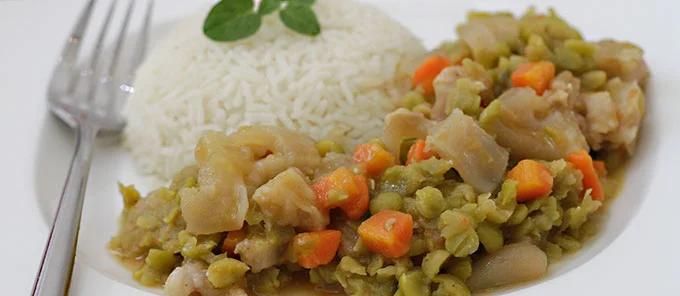
Arveja con Pata de Res is a Colombian stew of dried green peas and tender beef foot, simmered with vegetables and the flavourful cooking liquid. It takes time but uses simple ingredients, making a hearty meal to serve with rice.
Ingredients
- 190 g (1 cup)dried green peas
- 794 g with bone, or 454 g if boneless (1¾ lb, or 1 lb if boneless)beef foot
- 150 g (1 cup)chopped tomatoes
- about 100 g (1 cup)chopped spring onions
- 1carrot, diced
- 3garlic cloves
- 1 ml (¼ tsp), optionalground cumin
- 15 ml (1 tbsp), optionalchicken stock powder or 1 stock cube
- 415 ml (1¾ cups)liquid from cooking the beef foot
- 1bay leaf
- 30 ml (2 tbsp)oil
- 15 g (1 tbsp)butter
- to tastesalt
Instructions
- 1
Gather ingredients
Have the ingredients ready before you begin.
- 2
Soak the peas
Leave the dried peas to soak in water overnight.
- 3
Prepare the beef
Wash and clean the beef foot thoroughly. Put it in a pressure cooker with 2 whole or crushed garlic cloves and some spring onion.
- 4
Cook the beef
Pressure-cook the beef foot for 50–60 minutes, as it is quite tough.
- 5
Cool the beef
Take the beef foot out of the pressure cooker and leave it to cool slightly.
- 6
Strain the liquid
Strain the cooking liquid and set it aside.
- 7
Cut the meat
Remove the bones and cut the meat into pieces. Leave the bones in if you prefer.
- 8
Soften the onion
Heat the oil and butter in a saucepan over medium heat, adding the spring onion so the butter does not burn. Cook until the onion has softened slightly.
- 9
Add seasonings
Add 1 chopped garlic clove, the cumin and the chicken stock powder or cube. Stir everything together.
- 10
Cook the tomatoes
Add the tomatoes and cook a little longer, until they have softened.
- 11
Add vegetables
Add the bay leaf, carrot and peas, then pour in 1½ cups of the beef cooking liquid, or use half cooking liquid and half water.
- 12
Add beef and stock
Add the stock and the beef foot.
- 13
Simmer the stew
Cover the pan and cook over medium heat for 35 minutes, or until the peas are soft.
- 14
Adjust the liquid
Add more stock if needed.
- 15
Remove the bay
Take out the bay leaf.
- 16
Serve hot
Serve hot with rice.
What is Arveja con Pata de Res?
Arveja con Pata de Res is a Colombian stew whose name describes its main ingredients: peas and beef foot. It brings together dried peas, vegetables and beef cooked until tender.
This version builds flavour by first pressure-cooking the beef and then simmering it with the peas in some of its cooking liquid. Serving it with rice makes a substantial, comforting meal.
Nutrition and macros by portion
The nutrition label shows one serving as written: 560 calories, 38g protein, 39g carbs, 29g fat.
| Portion | Adjustment | kcal | Protein | Carbs | Fat |
|---|---|---|---|---|---|
| Lighter | More vegetables, less rice | 392 kcal | 27g | 27g | 20g |
| This serving | As written | 560 kcal | 38g | 39g | 29g |
| Hungry | Larger stew portion | 840 kcal | 57g | 59g | 44g |
The dried peas and rice served alongside provide most of the carbohydrates, while beef foot contributes protein and fat. Oil and butter add further fat, and the stock cube or powder can contribute sodium; serve with a generous portion of vegetables or salad to balance the plate.
The peas need a head start
Soaking: The dried peas are meant to soak overnight, which helps them cook through during the stew’s shorter simmer. Drain them before adding them to the pan.
Doneness: The recipe’s 35-minute simmer is a guide; keep cooking if the peas are still firm, adding more stock as needed.
Getting tender beef
Pressure cooking: Beef foot is a tough cut, so the recipe gives it 50–60 minutes in the pressure cooker before it joins the stew. Follow your cooker’s instructions for pressure release and opening it safely.
Cutting: Let the cooked meat cool just enough to handle, then remove the bones and cut the meat into pieces. The recipe also allows you to leave it on the bone.
Build the flavour in stages
Onion and butter: Cook the spring onion with the oil and butter over medium heat, as directed, to keep the butter from burning. Once the onion has softened slightly, stir in the garlic, cumin and stock seasoning.
Tomatoes: Give the tomatoes a little time to soften before adding the remaining vegetables. This creates the base for the peas and beef to simmer in.
Use the cooking liquid
Straining: Strain and reserve the liquid from cooking the beef, as the method uses it in the stew. The recipe calls for 1½ cups at the vegetable stage, with extra stock added if needed.
Adjusting: The peas absorb liquid as they cook, so check the pan during the simmer and add more stock if the mixture becomes too thick.
When is the stew ready?
Peas: The clearest doneness cue is that the peas are soft. If they need longer, continue simmering and top up the liquid as necessary.
Beef: The beef is pressure-cooked before simmering with the other ingredients. Once everything has cooked together, remove the bay leaf before serving.
Serving ideas
Rice: Serve the stew hot with rice, as suggested in the recipe. Rice soaks up the savoury cooking liquid and makes the dish a filling main course.
At the table: The stew already contains peas, carrot, tomato and spring onion. A simple fresh salad can add a crisp contrast alongside it.
Recipe notes & tips
- Soak the dried peas overnight before starting the recipe.
- Strain and reserve the beef cooking liquid rather than discarding it.
- Cook the onion over medium heat so the butter is less likely to burn.
- Check the peas towards the end of the simmer and continue cooking if they are still firm.
- Add stock gradually if the stew thickens before the peas are tender.
- Remove the bay leaf before serving.
Variations
- Leave the bones in: Keep the beef on the bone when you prefer to serve it that way.
- Use boneless beef: Use 454 g of beef foot if it comes without bones.
- Adjust the stock: Replace half of the cooking liquid with water, as suggested in the method.
- Make it milder: Leave out the optional cumin.
- Serve with rice: Add rice on the side to soak up the stew’s cooking liquid.
Common mistakes to avoid
- Skipping the soak: The recipe relies on an overnight soak, so start the peas the day before.
- Discarding the cooking liquid: Strain and reserve it for the stew rather than pouring it away.
- Burning the butter: Keep the onion and butter over medium heat as directed.
- Stopping while peas are firm: Continue simmering until they soften, adding stock if needed.
- Leaving in the bay leaf: Remove it before serving.
How to store
Refrigerate cooled leftovers in a covered container and use within 3 days. Reheat gently in a saucepan until steaming hot throughout, adding a splash of water or stock if the stew has thickened.
Frequently asked questions
Do I need to soak the dried peas?
Yes. The recipe calls for soaking them in water overnight before cooking.
How long should I pressure-cook the beef foot?
The method gives 50–60 minutes, as beef foot is a tough cut. Follow your pressure cooker’s instructions for safe use and release.
Can I leave the beef on the bone?
Yes. The method says you can leave it on the bone if you prefer; otherwise, remove the bones and cut the meat into pieces.
Can I use water instead of all the beef cooking liquid?
Yes. The method suggests using half beef cooking liquid and half water. Add more stock if needed while the peas cook.
How do I know when the stew is done?
The peas should be soft. Cook for longer if needed, adding more stock if the stew becomes too thick.
What should I serve with Arveja con Pata de Res?
The recipe suggests serving it hot with rice.
Cook it from the original
This recipe comes from antojandoando.com. Their page has the author’s own photos, notes and tips — the best place to cook it from.
Open the recipe on antojandoando.com