
Methi Dana Achar | Sprouted Methi Seeds Pickle
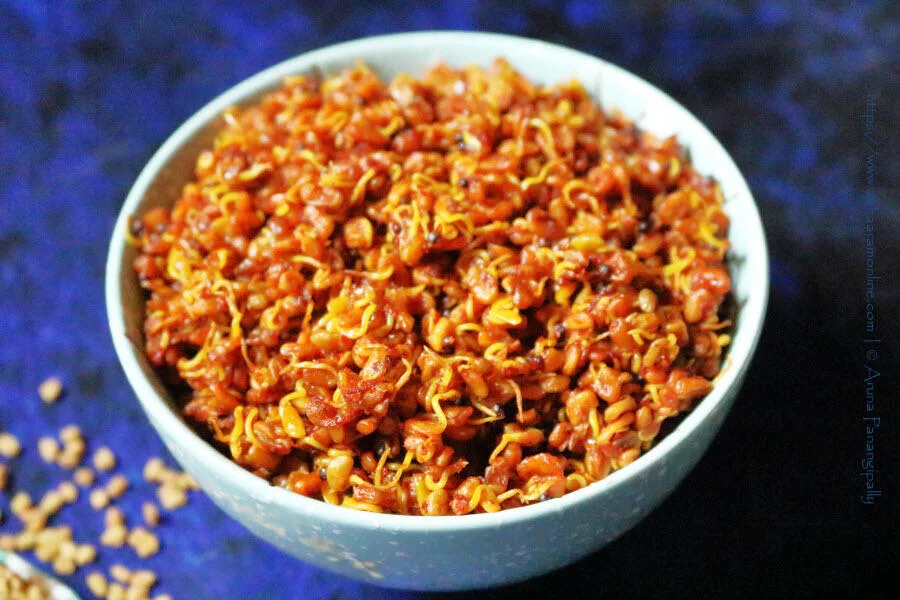
Methi Dana Achar is an Indian pickle made with sprouted fenugreek seeds, spices, tamarind and jaggery. It pairs a gently bitter, savoury flavour with sweet-sour notes and can be served in small amounts alongside a meal.
Ingredients
- 50 gmethi dana (fenugreek seeds)
- 240 mlwater, for soaking
- 15 mltamarind extract
- 12 ggrated jaggery
- 30 ml, adjust to tastered chilli powder
- 2.5 mlturmeric
- 5 ml, adjust to tastesalt
- 5 mlmustard seeds
- 1 large pinchasafoetida
- 30 mloil, preferably sesame oil
Instructions
- 1
Soak the seeds
Soak the fenugreek seeds in 240 ml water for at least 6 hours.
- 2
Tie the seeds
Drain the seeds, then tie them in a thin cotton cloth.
- 3
Sprout the seeds
Leave the bundle for 12 to 16 hours to sprout, sprinkling it with water at regular intervals.
- 4
Dry the sprouts
Once sprouted, spread the fenugreek seeds on a cloth and leave them to dry for about 3 hours.
- 5
Heat the oil
Warm the oil in a kadhai over a low flame.
- 6
Pop the mustard
Add the mustard seeds and wait for them to pop.
- 7
Fry the sprouts
Add the dried fenugreek sprouts and stir-fry for a few seconds.
- 8
Season the sprouts
Add the red chilli powder, turmeric, asafoetida and salt.
- 9
Mix the spices
Mix everything well.
- 10
Add sweet and sour
Stir in the tamarind extract and jaggery.
- 11
Cook the mixture
Stir-fry until the jaggery melts and the moisture from the tamarind evaporates.
- 12
Cool the pickle
Leave the pickle uncovered until it has cooled completely to room temperature; covering it can cause condensation and add moisture.
- 13
Store the pickle
Transfer it to an airtight bottle. It keeps for at least 7 days. For storage over a few months, add about 6 to 7 tablespoons of oil.
What is methi dana achar?
Methi dana achar is a pickle made from fenugreek seeds, a familiar ingredient in Indian cooking. This version sprouts the seeds before cooking them with chilli, turmeric, tamarind and jaggery.
The sprouting and brief frying give the seeds a distinctive texture, while tamarind and jaggery add a tangy-sweet counterpoint to their bitterness. Serve it as a small, punchy accompaniment rather than a main dish.
Nutrition and macros by portion
The nutrition label shows one serving as written: 46 calories, 1g protein, 4g carbs, 3g fat.
| Portion | Adjustment | kcal | Protein | Carbs | Fat |
|---|---|---|---|---|---|
| Lighter | Use less oil | 32 kcal | 1g | 2g | 2g |
| This serving | As written | 46 kcal | 1g | 4g | 3g |
| Hungry | Larger serving | 69 kcal | 2g | 5g | 4g |
Fenugreek seeds provide most of the carbohydrate and some protein, while the oil supplies most of the fat; jaggery adds a little more carbohydrate. Serve a small spoonful beside a meal built around vegetables and a protein source to balance the plate.
Sprouting the seeds
Soak first: the seeds need at least 6 hours in water before they are drained and tied into a thin cotton cloth.
Keep them damp: during the 12 to 16 hour sprouting period, sprinkle the bundle with water at intervals. Once sprouts appear, dry them on a cloth for about 3 hours before cooking.
Building the flavour
Tempering: heat the oil over a low flame and wait for the mustard seeds to pop before adding the sprouts. The recipe prefers sesame oil, which gives the pickle a distinctive savoury note.
Balancing: chilli and turmeric season the seeds, while tamarind extract and jaggery bring sour and sweet flavours. The chilli and salt can be adjusted to taste.
Getting the texture right
Dry sprouts: let the sprouted seeds dry for about 3 hours before they go into the pan. This helps avoid carrying excess water into the pickle.
Cook off moisture: after adding the tamarind and jaggery, keep stirring until the jaggery melts and the tamarind moisture evaporates. The mixture should no longer look wet before you take it off the heat.
Cooling and storing
Cool uncovered: leave the cooked pickle until it reaches room temperature. Covering it while warm can cause condensation, which adds moisture.
Jar it: store the cooled pickle in an airtight bottle. The recipe says it keeps for at least 7 days; for storage over a few months, it suggests adding about 6 to 7 tablespoons of oil.
Serving the pickle
Small portions are usually enough to add a concentrated sweet, sour, spicy and bitter note to a plate. Try it alongside rice, dal or a simple curry.
Because the pickle is strongly flavoured, serve it as a side rather than mixing a large amount into the whole meal. A milder main dish makes a useful contrast.
Recipe notes & tips
- Use a thin, clean cotton cloth so the seeds can sprout while staying together.
- Sprinkle the cloth bundle with water at intervals during sprouting, as directed.
- Dry the sprouts for the full 3 hours before frying.
- Keep the flame low while heating the oil and cooking the spices.
- Wait for the pickle to cool completely before transferring it to a bottle.
- Adjust the chilli and salt to your taste.
Variations
- Milder chilli: reduce the red chilli powder to suit your preferred heat.
- More sesame: use the suggested sesame oil for its distinctive savoury flavour.
- Tarter balance: adjust the tamarind extract to taste.
- Sweeter balance: adjust the jaggery to taste.
- Longer storage: follow the recipe's suggestion to add about 6 to 7 tablespoons of oil.
Common mistakes to avoid
- Skipping the soak: the seeds need at least 6 hours in water before sprouting.
- Letting the bundle dry out: sprinkle it with water at regular intervals during the 12 to 16 hour sprouting period.
- Frying damp sprouts: spread them on a cloth for about 3 hours before cooking.
- Covering while warm: cool the pickle uncovered to avoid condensation adding moisture.
- Stopping too soon: stir until the jaggery melts and the tamarind moisture evaporates.
How to store
Cool the pickle completely, then keep it in an airtight bottle. The recipe says it stays good for at least 7 days; for storage over a few months, it suggests adding about 6 to 7 tablespoons of oil. The recipe does not specify a reheating method.
Frequently asked questions
How long do the fenugreek seeds need to sprout?
Leave the soaked, drained seeds tied in a thin cotton cloth for 12 to 16 hours. Sprinkle the bundle with water at regular intervals.
How long should I dry the sprouts?
Spread them on a cloth for about 3 hours after they have sprouted.
Can I change the amount of chilli?
Yes. The recipe says to adjust the red chilli powder to taste, so use less for a milder pickle.
Why should the pickle cool uncovered?
Covering it while warm can cause condensation, adding moisture to the pickle. Let it cool fully to room temperature before bottling.
How long does this pickle keep?
The recipe says it stays good for at least 7 days in an airtight bottle. For storage over a few months, it suggests adding about 6 to 7 tablespoons of oil.
Cook it from the original
This recipe comes from aahaaramonline.com. Their page has the author’s own photos, notes and tips — the best place to cook it from.
Open the recipe on aahaaramonline.com