
Fríjoles con Pezuña
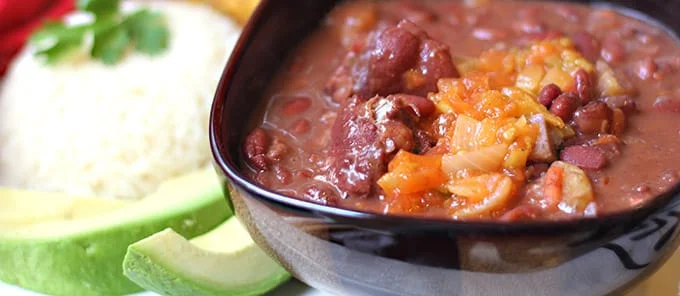
Fríjoles con pezuña is a Colombian bean stew simmered with pork trotters, ribs, plantain and hogao. A long, gentle cook makes the beans and meat tender, while the hogao added at the end brings a savoury finish.
Ingredients
- 500 gred beans
- 375 gpork ribs, cut into pieces
- 500 gpork trotters, cut into pieces
- 2semi-ripe plantains, cut into medium cubes
- 360 ml (1½ cups)hogao
- 110 g (1 cup)grated carrot
- to tastecumin and salt
- to tastepepper (optional)
Instructions
- 1
Soak the beans
Put the beans in a bowl, cover with plenty of cold water and leave to soak overnight, for at least 8 hours.
- 2
Drain and sort
Drain the beans in a colander, rinse them well and pick through them, setting aside any beans that look damaged or spoiled.
- 3
Add the pork
Put the beans in a large pot and cover generously with water. Add the well-washed trotters and the pork ribs.
- 4
Simmer gently
Cook over a medium heat for 2 hours. Keep an eye on the water level; if the pot needs more liquid, add boiling water until the beans and meat are tender.
- 5
Season the stew
Add the diced plantain, grated carrot, ½ cup of hogao, cumin, salt and pepper to taste. Stir and cook for another 30 minutes.
- 6
Serve with hogao
Ladle into individual bowls and top each portion with hogao. Serve with white rice, patacones, avocado and homemade ají.
What is fríjoles con pezuña?
This Colombian bean stew takes its name from the pork trotters cooked with the beans. It brings together beans, pork and plantain in a substantial, slow-simmered dish.
Here, the ribs and trotters cook with the beans before carrot, plantain and hogao are added. The final spoonful of hogao gives each bowl a fresh, savoury topping.
Nutrition and macros by portion
The nutrition label shows one serving as written: 640 calories, 39g protein, 67g carbs, 23g fat.
| Portion | Adjustment | kcal | Protein | Carbs | Fat |
|---|---|---|---|---|---|
| Lighter | Less pork, more beans | 448 kcal | 27g | 47g | 16g |
| This serving | As written | 640 kcal | 39g | 67g | 23g |
| Hungry | Add extra rice | 960 kcal | 59g | 101g | 35g |
The beans and plantain provide most of the carbohydrates, while the pork contributes protein and much of the fat. For a balanced plate, serve a moderate amount of rice alongside a generous portion of the stew and avocado.
The beans and pork
Soaking: Leave the beans in cold water for at least 8 hours, then drain and rinse them before cooking.
Pork: Wash the trotters well and cut the ribs into pieces as specified. Their long simmer alongside the beans is central to the method.
Why the long simmer matters
Steady heat: Keep the pot at a medium simmer rather than letting it boil hard. This gives the beans and pork time to soften during the stated 2 hours.
Water level: Check the pot as it cooks. If the liquid falls too low, add boiling water so the beans and meat stay covered and can continue cooking.
When to add the vegetables
Later additions: The plantain, grated carrot and half a cup of hogao go in after the initial 2-hour cook. They then cook for 30 minutes more.
Plantain: Cut it into medium cubes, as directed, so the pieces are easy to find in the finished stew.
How to check for doneness
Beans and meat: The recipe's cue is that both should be tender before you move on. If they still feel firm after 2 hours, continue cooking and add boiling water if needed.
Finish: Once the plantain and carrot have cooked for 30 minutes, serve the stew in individual bowls with hogao on top.
Serving the stew
Traditionally suggested sides: Serve with white rice, patacones, avocado and homemade ají, as the recipe recommends.
Toppings: Hold back some hogao for the bowls rather than adding it all to the pot. This makes it easy to crown each serving just before it reaches the table.
Recipe notes & tips
- Start soaking the beans the night before so they are ready for cooking.
- Rinse and sort the beans after soaking, removing any that look spoiled.
- Use boiling water, rather than cold water, if you need to top up the pot.
- Keep the stew at a steady medium simmer during the long cooking stage.
- Set aside some hogao to spoon over the bowls just before serving.
Variations
- Skip the pepper: Leave it out if you prefer a milder stew.
- Adjust the cumin: Add it to taste along with the salt.
- Serve with avocado: Include the suggested avocado alongside each bowl.
- Add ají at the table: Offer homemade ají separately so diners can choose how much to use.
- Choose the sides: Serve with one or more of the suggested rice and patacones.
Common mistakes to avoid
- Skipping the soak: Leave the beans in cold water for at least 8 hours before cooking.
- Letting the pot dry out: Check the liquid and add boiling water if it gets low.
- Adding vegetables too early: Wait until the beans and pork have had their initial 2-hour cook.
- Using a hard boil: Keep the pot at medium heat for the long simmer.
- Forgetting the topping: Reserve hogao to finish each individual bowl.
How to store
Cool leftovers promptly, transfer them to a covered container and refrigerate for up to 3 days. Reheat gently in a saucepan until piping hot, adding a little water if the stew has thickened.
Frequently asked questions
How long do the beans need to soak?
Soak them overnight for at least 8 hours in plenty of cold water.
Can I skip soaking the beans?
The recipe calls for soaking, and that is the best way to follow its stated cooking method. Without soaking, the beans may take longer to become tender.
How do I know when the beans and pork are ready?
They should be tender before you add the plantain, carrot and hogao. If they are still firm, keep simmering and top up with boiling water as needed.
When does the hogao go in?
Add ½ cup to the pot with the plantain, carrot and seasonings, then cook for another 30 minutes. Reserve the rest to top the servings.
What should I serve with fríjoles con pezuña?
The recipe suggests white rice, patacones, avocado and homemade ají.
Cook it from the original
This recipe comes from antojandoando.com. Their page has the author’s own photos, notes and tips — the best place to cook it from.
Open the recipe on antojandoando.com