
Sopa de Mute
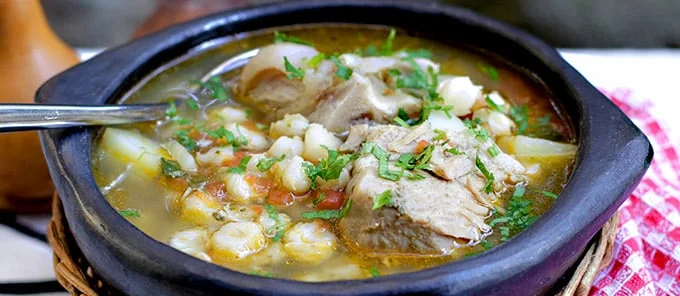
Sopa de mute is a hearty Colombian soup of hominy, pork, potatoes and herbs, finished with hogao. Its slow simmer makes the meat tender and the broth full of flavour, making it a warming meal to share.
Ingredients
- 255 g (1½ cups)precooked white hominy
- 454 g (1 lb)potatoes, diced
- 454 g (1 lb)pork backbone
- 340 g (¾ lb)pig’s trotter
- to tastefresh coriander, chopped
- to tastehogao
- 1 bunchfresh herbs (thyme, oregano and sage)
- 1.25 ml (¼ tsp)cumin
- to tastesalt
- optionalblack pepper
- 240 ml (1 cup)hogao (sofrito of spring onion, tomato, cumin, colour seasoning and salt)
Instructions
- 1
Rinse ingredients
Wash the meat and vegetables.
- 2
Cook the hominy
Put the hominy in a large pot, cover with plenty of water and bring to the boil over high heat.
- 3
Drain hominy
Once the kernels are soft and have opened, drain them and set aside.
- 4
Simmer the pork
Cut the meats into pieces and put them in a pot. Cover with water and bring to the boil over high heat.
- 5
Season the broth
Add coriander, cumin, a little salt and, if using, pepper.
- 6
Tenderise the meat
Reduce the heat to medium and cook until the meat is tender, about 50–60 minutes.
- 7
Add the hominy
Stir in the cooked hominy and let it cook for a few minutes.
- 8
Add potatoes and herbs
Add the diced potatoes and the bunch of herbs.
- 9
Stir in hogao
Add the hogao. The recipe describes it as a sofrito made by frying chopped spring onion, then adding chopped tomato and seasoning with cumin, colour seasoning and salt.
- 10
Finish the soup
Mix everything together and cook for a further 25 minutes, or until all the ingredients are soft.
- 11
Serve hot
Serve with freshly chopped coriander, wedges of avocado and white rice.
What is sopa de mute?
Sopa de mute is a substantial Colombian soup built around hominy, meat and vegetables. It is associated with Colombia’s Andean food traditions, where hearty soups make a satisfying shared meal.
This version combines pork backbone and trotter with potatoes, herbs and hogao. Cooking the hominy and meat until very tender is central to its comforting texture.
Nutrition and macros by portion
The nutrition label shows one serving as written: 480 calories, 30g protein, 43g carbs, 20g fat.
| Portion | Adjustment | kcal | Protein | Carbs | Fat |
|---|---|---|---|---|---|
| Lighter | Less rice, more soup | 336 kcal | 21g | 30g | 14g |
| This serving | As written | 480 kcal | 30g | 43g | 20g |
| Hungry | Larger bowl with rice | 720 kcal | 45g | 65g | 30g |
Hominy, potatoes and the suggested white rice supply most of the carbohydrates; pork contributes protein and fat, while hogao adds some fat depending on how it is prepared. For a balanced plate, serve a moderate amount of rice alongside a generous bowl of soup and avocado.
The hominy
Precooked white hominy shortens the preparation, but it still needs to be boiled until soft and beginning to open. Drain it before adding it to the meat broth, as directed.
The pork and broth
Pork backbone and trotter bring different textures to the pot. Simmer them over medium heat after bringing them to the boil, and allow roughly 50–60 minutes for the meat to soften.
Potatoes and herbs
Add the diced potatoes and herb bunch after the hominy has joined the pork. The recipe gives a further 25 minutes of cooking, or until everything is soft.
Remove the herb bunch before serving if you prefer not to have the stems in the bowl.
Hogao’s savoury finish
Hogao is a Colombian tomato and spring onion sofrito, seasoned here with cumin, colour seasoning and salt. Stir it into the soup so its savoury, aromatic flavour spreads through the broth.
Serving the soup
Serve the soup hot with chopped fresh coriander, avocado wedges and white rice, as suggested in the recipe. The rice makes the meal more substantial, while avocado adds a creamy contrast.
Recipe notes & tips
- Wash the meat and vegetables before starting, as the recipe directs.
- Keep the hominy in plenty of water while it cooks, then drain it once the kernels are soft and open.
- Bring the pork to the boil over high heat, then reduce the heat to medium for its longer simmer.
- Use only a little salt at first, since the hogao also contains salt.
- Check the potatoes and meat for softness before serving; the recipe’s final cue is that both meat and hominy should be very tender.
Variations
- Adjust the pepper: leave it out for the optional pepper-free version.
- Change the herbs: use the listed thyme, oregano and sage together for the recipe’s herb bundle.
- Add avocado: serve wedges alongside each bowl, as suggested.
- Serve with rice: include white rice at the table for a heartier meal.
Common mistakes to avoid
- Undercooked hominy: keep boiling it until soft and beginning to open before draining.
- Tough pork: simmer over medium heat for the stated 50–60 minutes, checking that it has softened.
- Hard potatoes: cook the soup for the additional 25 minutes or until the potatoes are soft.
- Over-salting: start with a little salt and remember that the hogao is seasoned too.
How to store
Cool leftovers promptly and refrigerate in a covered container for up to 3 days. Reheat gently in a pan until piping hot throughout, adding a little water if the soup has thickened.
Frequently asked questions
Can I use canned hominy?
The recipe calls for precooked white hominy. If using canned hominy, drain it and add it to the pork broth; check the texture as it cooks, since the stated boiling time may not be needed.
How do I know when the hominy is ready?
The recipe’s cue is that the kernels should be soft and open. Drain them at that point and set them aside.
Can I prepare the hogao ahead?
Yes. Prepare the hogao separately and keep it covered in the refrigerator, then stir it into the soup when the recipe calls for it.
What can I serve with sopa de mute?
The recipe suggests chopped fresh coriander, avocado wedges and white rice.
Can I leave out the black pepper?
Yes. Pepper is marked as optional in the ingredient list.
Cook it from the original
This recipe comes from antojandoando.com. Their page has the author’s own photos, notes and tips — the best place to cook it from.
Open the recipe on antojandoando.com