
Pasta de Ajo
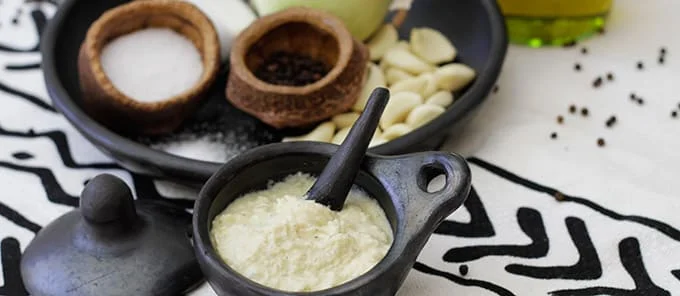
This Colombian-style garlic paste blends garlic with neutral oil into a thick, ready-to-use flavour base. Make it in minutes and add a spoonful to recipes that need a savoury garlic aroma.
Ingredients
- 2 heads (about 20–25 cloves)garlic
- 80 ml (⅓ cup)neutral vegetable oil
- 2.5 ml (½ tsp), optionalsalt
- ½ medium, chopped, optionalwhite onion
- To taste, optionalblack pepper
Instructions
- 1
Gather ingredients
Have the listed ingredients ready.
- 2
Peel the garlic
Peel the garlic cloves. The recipe notes that there are a couple of tips for making this easier.
- 3
Blend the mixture
Put all the ingredients into a blender or food processor and blend until thick and uniform.
- 4
Adjust the texture
If the paste is too thick, add a little more oil.
- 5
Transfer to a jar
Spoon the paste into a lidded glass jar and refrigerate it promptly.
What is garlic paste?
Garlic paste is a blended seasoning base used to add garlic flavour to other dishes. This version is presented as Colombian and combines garlic with neutral oil, with onion, salt and pepper as optional additions.
Blending makes the garlic quick to portion into recipes, while the oil helps turn the cloves into a thick, smooth mixture.
Nutrition and macros by portion
The nutrition label shows one serving as written: 790 calories, 7g protein, 30g carbs, 73g fat.
| Portion | Adjustment | kcal | Protein | Carbs | Fat |
|---|---|---|---|---|---|
| Lighter | Use less oil | 553 kcal | 5g | 21g | 51g |
| This serving | As written | 790 kcal | 7g | 30g | 73g |
| Hungry | Make a larger batch | 1185 kcal | 11g | 45g | 110g |
Most of the energy and fat come from the vegetable oil; the garlic and optional onion contribute most of the carbohydrates, while protein is modest. Use a small amount to season a dish and balance it with vegetables and a protein-rich food.
Choosing the ingredients
Garlic: use fresh cloves and peel them before blending so the paste is smooth and easy to use.
Oil: a neutral vegetable oil keeps the garlic flavour prominent. Add a little extra only if the mixture needs loosening.
Optional additions: onion gives the paste a rounder flavour, while salt and pepper season it. Leave any of them out if you prefer a simpler base.
Getting a smooth paste
Blender or processor: scrape down the sides if needed so the cloves blend evenly. Stop when there are no large pieces and the mixture looks thick and uniform.
Texture: the paste should be spoonable rather than dry or crumbly. If it is too thick, blend in a little more oil at a time.
How to use it
Start with a small spoonful when adding the paste to a recipe, then adjust to taste. It can be stirred into sauces, marinades or other dishes that call for garlic.
Because the paste contains oil, account for it when adding other oil to the pan or recipe.
Serving ideas
Use the paste as a flavour base for cooked vegetables, beans, rice or a savoury sauce. It also pairs well with dishes where garlic and onion are already part of the seasoning.
For a balanced plate, serve a garlic-seasoned main alongside vegetables and a source of protein.
Recipe notes & tips
- Shake or stir the oil before measuring it if it has separated.
- Blend in short bursts to check the texture without overworking the mixture.
- Add extra oil gradually so the paste does not become runny.
- Taste before adding salt if you plan to use the paste in an already-seasoned dish.
- Use a clean spoon each time you take paste from the jar.
Variations
- More onion: include the optional white onion for a fuller savoury flavour.
- Peppery paste: add the optional black pepper to taste.
- Salt-free: omit the salt and season the finished dish instead.
- Extra garlic: use the higher end of the stated clove range for a stronger paste.
- Looser texture: blend in a little more neutral oil as needed.
Common mistakes to avoid
- Uneven blending: scrape down the sides of the blender or processor and blend again.
- Too-thick paste: add a little oil at a time until it becomes spoonable.
- Too much oil: add it gradually rather than pouring in a large extra amount at once.
- Unpeeled cloves: remove the skins before blending for a more even texture.
- Leaving the jar out: refrigerate the paste promptly rather than storing it at room temperature.
How to store
Transfer the paste to a clean, lidded glass jar and refrigerate promptly. For safety, use homemade garlic-in-oil paste within 4 days, or freeze it in small portions; do not rely on the recipe's longer storage claim.
Frequently asked questions
Can I leave out the onion?
Yes. The onion is optional, so you can make the paste with garlic and oil alone.
Can I make this without salt?
Yes. Salt is optional; season the dish you add the paste to instead.
What if I do not have a blender?
The method calls for a blender or food processor to make a uniform paste. A small food processor is a suitable alternative.
How do I make the paste thinner?
Blend in a little more neutral oil until it reaches a spoonable consistency.
How long does homemade garlic paste keep?
Keep it refrigerated and use it within 4 days, or freeze it. Garlic stored in oil should not be kept at room temperature.
Cook it from the original
This recipe comes from antojandoando.com. Their page has the author’s own photos, notes and tips — the best place to cook it from.
Open the recipe on antojandoando.com