
Thalipeeth: A Multigrain Roti From Maharashtra
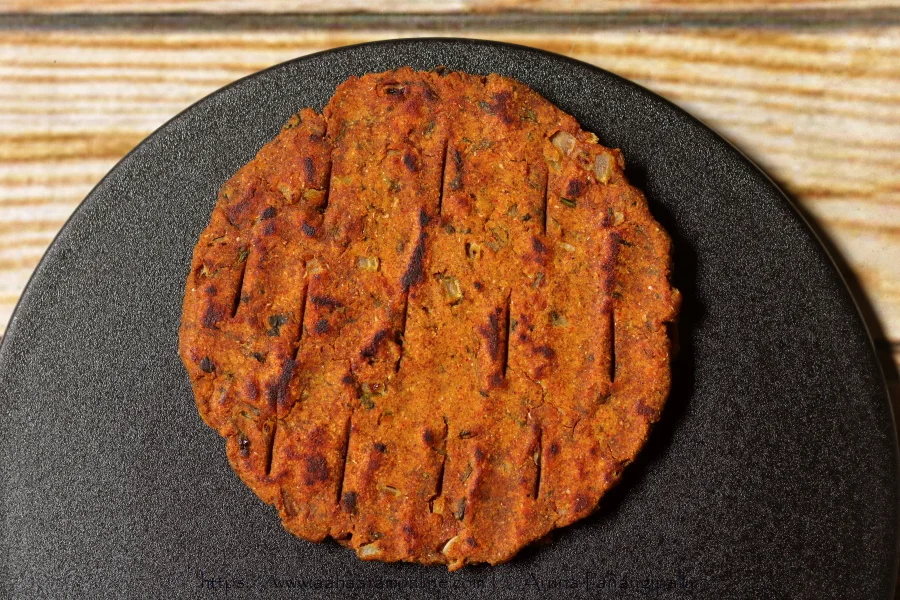
Thalipeeth is a thick, crisp-edged Maharashtrian flatbread made with a blend of six flours, spices, onion and fresh herbs. Cook it on a tava and serve it hot with dahi, butter or pickle.
Ingredients
- 60 ml (1/4 cup)rice flour
- 60 ml (1/4 cup)wheat flour
- 60 ml (1/4 cup)bajra flour
- 60 ml (1/4 cup)jowar flour
- 60 ml (1/4 cup)besan
- 60 ml (1/4 cup)ragi (nachni) flour
- 5 ml (1 tsp)coriander powder
- 2.5 ml (1/2 tsp)roasted cumin powder
- 5 ml (1 tsp)red chilli powder
- 1.25 ml (1/4 tsp)turmeric
- 250 ml (1 cup)finely chopped onion
- 60 ml (1/4 cup)finely chopped fresh coriander
- 10 ml (2 tsp)finely chopped green chillies
- to tastesalt
- for roastingoil
Instructions
- 1
Mix the ingredients
Combine all the flours with the dry spices, onion, green chillies, coriander and salt.
- 2
Make the dough
Add water gradually, a little at a time, until you have a firm but soft dough.
- 3
Divide the dough
Split the dough into 4 equal portions and roll each one into a ball.
- 4
Grease the tava
Put about 1.25 ml (1/4 tsp) oil on a cool tava and grease its surface. The tava needs to be cool for shaping, or the dough may stick. Alternatively, shape the roti on a banana leaf, plastic sheet or silicone mat, then transfer it to the tava.
- 5
Shape the roti
Place one dough ball in the middle of the tava. With damp or oiled fingers, press it into a thick roti about 13 cm (5 inches) in diameter.
- 6
Make surface cuts
Use a knife to cut into the surface so the thalipeeth cooks through, or make small holes with your index finger.
- 7
Heat the tava
Set the tava over a medium flame.
- 8
Add the oil
Drizzle a few drops of oil around the edges and into the holes or cuts.
- 9
Cook the first side
Cover and cook for 3–4 minutes, until the surface starts to dry and the side against the tava begins to brown.
- 10
Turn and finish
Flip the thalipeeth. Add a few drops of oil to the top before turning if you wish; the original method leaves this off. Cook for another 2–3 minutes.
- 11
Serve immediately
Serve the thalipeeth hot with white butter, dahi and/or green chilli pickle.
- 12
Cool the tava
Before making the next thalipeeth, let the tava cool until just warm. You can take it off the heat and sprinkle a little water over the surface.
What is thalipeeth?
Thalipeeth is a savoury flatbread associated with Maharashtra, in western India. It is traditionally made from a mixed-flour blend, and this version combines rice, wheat, millet, chickpea and finger millet flours.
Onion, herbs and spices season the dough, while shaping it directly on a cool tava helps form its characteristic thick, rustic shape. The cuts or holes let the centre cook while the outside browns.
Nutrition and macros by portion
The nutrition label shows one serving as written: 290 calories, 9g protein, 51g carbs, 7g fat.
| Portion | Adjustment | kcal | Protein | Carbs | Fat |
|---|---|---|---|---|---|
| Lighter | Use less roasting oil | 203 kcal | 6g | 36g | 5g |
| This serving | As written | 290 kcal | 9g | 51g | 7g |
| Hungry | Serve an extra thalipeeth | 435 kcal | 14g | 77g | 11g |
The flour blend supplies most of the carbohydrates, with besan contributing some of the protein; the oil used for roasting is the main source of added fat. Serve a thalipeeth with dahi and a generous portion of vegetables to round out the meal.
The flour blend
Six flours: each contributes a different flavour and texture, so measure them evenly as listed. Besan and the grain and millet flours make a dough that is more delicate to handle than a wheat-only dough.
Water: add it in small amounts rather than all at once. The onion also brings moisture, so stop when the dough holds together and feels soft but firm.
Shaping without sticking
Cool tava: grease the surface while it is cool, then press the dough into shape. A hot tava can set the dough before you have spread it.
Damp fingers: moisten or oil your fingertips as you press the dough into a roughly 13 cm round. If that feels awkward, shape it on a banana leaf, plastic sheet or silicone mat and transfer it.
Getting the centre cooked
Surface openings: make cuts with a knife or small holes with your finger before heating the tava. They give heat a route into the thick bread and provide places for a few drops of oil.
Covered cooking: keep the thalipeeth covered for the first 3–4 minutes. Look for a drying surface and a browning underside before flipping, then cook the second side for 2–3 minutes.
Managing each batch
First round: begin shaping on a cool, greased tava, then bring it to medium heat for cooking. Avoid starting the next round on a very hot surface.
Between breads: let the tava cool until just warm before pressing on the next portion. The recipe suggests taking it off the heat and sprinkling on a little water to help cool it.
What to serve with it
Dahi: its cool, tangy flavour is a simple contrast to the spiced bread. White butter is another suggested accompaniment.
Pickle: green chilli pickle adds a sharper, hotter side. Serve the thalipeeth as soon as it is cooked, while its browned edges are at their crispest.
Recipe notes & tips
- Add water gradually because chopped onion contributes moisture to the dough.
- Keep the tava cool while you shape each portion to reduce sticking.
- Use damp or lightly oiled fingers to press the dough into an even round.
- Make the cuts or holes before heating so the thick bread cooks through.
- Watch for a drying top and a browning underside before flipping.
- Let the tava cool to just warm between portions.
Variations
- Adjust the heat: use less red chilli powder or fewer green chillies for a milder bread.
- Change the herbs: vary the amount of fresh coriander to suit your taste.
- Use a banana leaf: shape the dough on one, then transfer it to the tava.
- Try a silicone mat: press out the round on the mat before moving it to the tava.
- Choose your accompaniment: serve with dahi, white butter or green chilli pickle.
Common mistakes to avoid
- Hot tava for shaping: the dough may stick; shape on a cool, greased surface.
- Adding water too quickly: the dough can become too loose; add it little by little.
- Skipping the openings: the thick centre may not cook evenly; cut or poke the surface.
- Turning too soon: wait until the top starts drying and the underside begins to brown.
- Cooking on high heat: the outside can brown before the centre cooks; use a medium flame.
- Starting the next bread on a hot tava: let the surface cool until just warm first.
How to store
Thalipeeth is best served immediately. If needed, refrigerate leftovers in an airtight container and reheat in a covered pan over low heat until warmed through.
Frequently asked questions
Can I make the dough ahead?
The method is designed for shaping and cooking after mixing. Onion can release moisture as the dough stands, so add water cautiously if preparing it in advance.
Why does the tava need to be cool for shaping?
The dough can stick if it is pressed onto a hot surface. Shape it on the greased, cool tava, or use a banana leaf, plastic sheet or silicone mat.
How do I know when to flip the thalipeeth?
After 3–4 minutes covered, the surface should start drying and the underside should begin to brown. Then flip and cook for another 2–3 minutes.
Do I have to make cuts in the dough?
The recipe uses cuts or small finger-made holes to help the thick bread cook. Make them before heating the tava.
Can I use a different surface to shape it?
Yes. The method suggests a banana leaf, plastic sheet or silicone mat; shape the bread there and transfer it to the tava.
What should I serve with thalipeeth?
Serve it hot with dahi, white butter and/or green chilli pickle, as suggested in the recipe.
Cook it from the original
This recipe comes from aahaaramonline.com. Their page has the author’s own photos, notes and tips — the best place to cook it from.
Open the recipe on aahaaramonline.com