
Badam Halwa | Almond Halwa
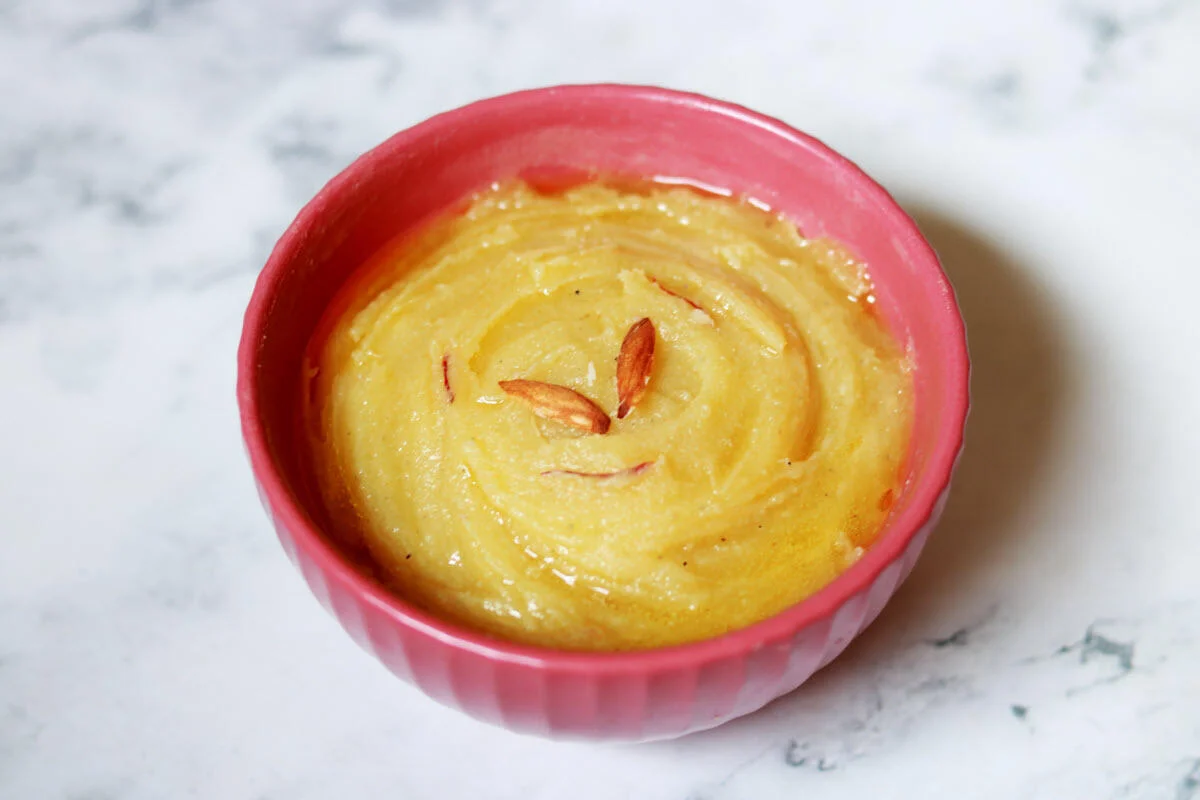
Badam halwa is a rich Andhra-style sweet made by cooking ground almonds with sugar, milk, ghee and saffron. It takes time to prepare, but its smooth texture and fragrant flavour make it a fitting treat for Diwali or other celebrations.
Ingredients
- 140 g (1 cup)almonds
- 200 g (1 cup)sugar
- 2.5 ml (½ tsp)ground cardamom
- 20 strandssaffron
- 180 ml (¾ cup)milk
- 75 ml (5 tbsp)ghee
Instructions
- 1
Soak the almonds
Cover the almonds with warm water and leave them to soak for 3 hours.
- 2
Peel the almonds
Drain the almonds, then remove and discard their skins.
- 3
Soak the saffron
Put the saffron strands in 30 ml (2 tbsp) warm milk and leave them for 15 minutes.
- 4
Grind sugar
Grind the sugar with the cardamom until it becomes a fine powder.
- 5
Make almond paste
Add the peeled almonds and 180 ml (¾ cup) milk, then grind everything to a smooth paste.
- 6
Heat the ghee
Warm 45 ml (3 tbsp) ghee in a heavy-based kadhai over a medium heat.
- 7
Add the paste
Tip in the ground almond mixture and stir to combine.
- 8
Thicken the mixture
Stir constantly as the paste cooks, until it thickens slightly.
- 9
Add more ghee
Stir in 15 ml (1 tbsp) ghee.
- 10
Cook until translucent
Keep stirring constantly until the halwa becomes translucent.
- 11
Turn off the heat
Remove the kadhai from the heat.
- 12
Finish with ghee
Add the final 15 ml (1 tbsp) ghee and mix well.
- 13
Add saffron milk
Pour in the milk used to soak the saffron and mix thoroughly.
- 14
Serve warm
Serve the badam halwa while warm.
What is badam halwa?
Badam halwa is an Indian sweet made from almonds, sugar and ghee, with milk helping form a smooth mixture. This version draws on Andhra cuisine and is flavoured with cardamom and saffron.
The almonds are soaked and peeled before being ground, which helps produce the fine paste the halwa depends on. Slow cooking and steady stirring bring the mixture together into a glossy, translucent sweet.
Nutrition and macros by portion
The nutrition label shows one serving as written: 304 calories, 5g protein, 32g carbs, 19g fat.
| Portion | Adjustment | kcal | Protein | Carbs | Fat |
|---|---|---|---|---|---|
| Lighter | Serve smaller spoonfuls | 213 kcal | 4g | 22g | 13g |
| This serving | As written | 304 kcal | 5g | 32g | 19g |
| Hungry | Take a larger spoonful | 456 kcal | 8g | 48g | 29g |
The almonds contribute protein and some fat, while the sugar supplies most of the carbohydrates; ghee adds substantial fat. Since this is a rich dessert, a few tablespoons alongside fruit or after a balanced meal can make a practical serving.
Preparing the almonds
Soaking time: The almonds need 3 hours in warm water, so plan this ahead. Once drained, their skins should peel away before they go into the grinder.
Smooth paste: Grind the almonds with the milk until no coarse pieces remain. A smooth starting paste makes it easier to stir the halwa evenly as it cooks.
Building the flavour
Cardamom sugar: Grinding the cardamom with the sugar distributes its aroma throughout the sweet. Aim for a fine powder before adding the almonds and milk.
Saffron milk: Let the saffron steep in warm milk for 15 minutes, then add that milk at the end. This preserves its fragrance and gives the halwa its characteristic colour.
Cooking the halwa
Steady heat: Use a heavy-based kadhai over medium heat to cook the paste. Stir constantly as it thickens so the mixture cooks evenly.
Staged ghee: The ghee goes in three additions: 45 ml to start, 15 ml as the paste thickens, and the final 15 ml after taking the pan off the heat. Follow the sequence and mix well after each addition.
Checking texture and doneness
Early stage: The paste first thickens while remaining opaque. Continue stirring rather than stopping when it starts to pull together.
Ready to finish: The recipe's cue is a translucent appearance. Turn off the heat at that point, then mix in the final ghee and saffron milk.
Serving and portions
Serve the halwa warm, when it is soft and easy to portion. As it is a particularly rich sweet, offer modest spoonfuls after a meal or alongside tea.
Recipe notes & tips
- Allow the full 3 hours for soaking the almonds before you start cooking.
- Peel the almonds after draining them so the skins do not go into the paste.
- Grind the sugar and cardamom finely before adding the almonds and milk.
- Stir constantly once the paste is in the kadhai to keep it cooking evenly.
- Use the translucent appearance as the cue to turn off the heat.
- Mix in the saffron-soaking milk at the end, as directed.
Variations
- More cardamom: Add a little extra ground cardamom for a stronger spice aroma.
- Saffron aroma: Steep the saffron for longer than 15 minutes if you want its flavour to come through more.
- Extra-smooth texture: Grind the almonds thoroughly with the milk before cooking.
- Festive garnish: Scatter a few finely chopped almonds over each serving.
- Small servings: Spoon the halwa into small portions for a rich after-dinner sweet.
Common mistakes to avoid
- Skipping the soak: The almonds need 3 hours in warm water before they can be peeled.
- Leaving the skins on: Peel the drained almonds before grinding for the smooth paste described in the method.
- Coarse grinding: Grind the almonds with the milk until the paste is smooth.
- Stopping the stirring: Keep stirring constantly as the paste thickens to help it cook evenly.
- Adding saffron milk early: Stir it in at the end, after turning off the heat, as the method directs.
- Cooking past the cue: Turn off the heat when the halwa becomes translucent.
How to store
Cool the halwa, transfer it to a covered container and refrigerate it for up to 4 days. Reheat a small portion gently in a pan or microwave, stirring until warm.
Frequently asked questions
Can I soak the almonds overnight?
Yes. You can soak them in water in the refrigerator overnight, then drain and peel them before grinding.
Can I use blanched almonds?
Yes, blanched almonds can save peeling time. The method's soaking and peeling step is for whole almonds with their skins on.
How do I know when the halwa is ready?
The method gives translucency as the doneness cue. Turn off the heat when the mixture reaches that stage.
Can I make the halwa ahead?
Yes. Refrigerate it in a covered container and reheat it gently before serving.
Is this served hot or cold?
The recipe serves it warm. You can also serve leftovers chilled, though the texture will be firmer.
Cook it from the original
This recipe comes from aahaaramonline.com. Their page has the author’s own photos, notes and tips — the best place to cook it from.
Open the recipe on aahaaramonline.com