
Pachai Payaru Sundal | Green Gram Sundal | Pesala Guggillu
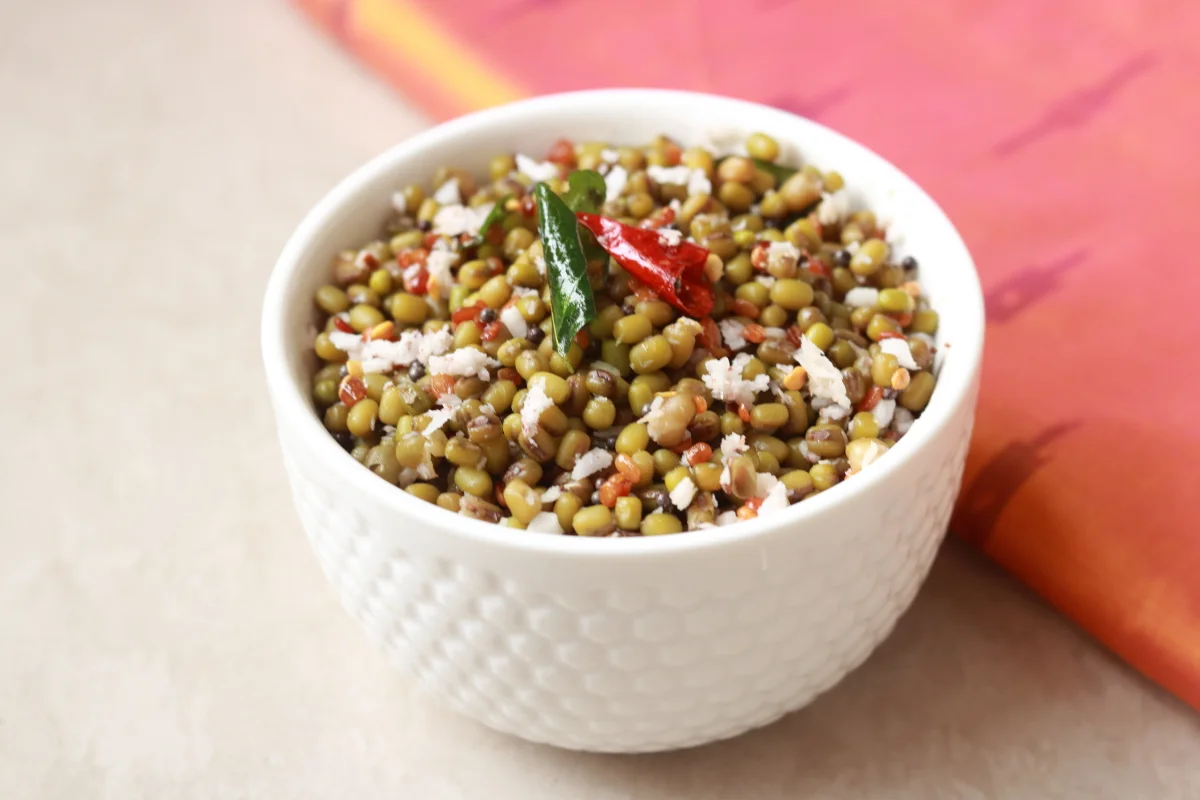
Pachai payaru sundal is a South Indian snack of cooked whole green gram tossed with a simple spiced tempering and grated coconut. It is quick to make and is traditionally served as a Navratri offering or enjoyed as a savoury snack.
Ingredients
- 100 g (½ cup)whole green gram (moong)
- 2 tbsp (about 12 g)grated coconut
- 1 tspoil, preferably sesame or coconut oil
- ½ tspmustard seeds
- 1 tspurad dal
- 2dried red chillies, split
- 1 large pinchasafoetida
- A fewcurry leaves
- To tastesalt
- 240 ml (1 cup) for optional soaking, plus as needed for cookingwater
Instructions
- 1
Soak the gram
If you like, soak the green gram in 240 ml (1 cup) of water for 2 hours.
- 2
Pressure cook
Pressure cook the gram for 1 whistle, taking care not to overcook it.
- 3
Release the pressure
Leave the cooker to depressurise naturally before removing the cooked green gram.
- 4
Drain the gram
Drain all the water from the cooked gram, using a strainer if helpful.
- 5
Heat the oil
Heat 1 tsp of oil in a kadhai.
- 6
Fry the mustard
Add ½ tsp mustard seeds and wait for them to crackle.
- 7
Brown the dal
Add 1 tsp urad dal and stir-fry until golden brown.
- 8
Add aromatics
Add 1 or 2 split red chillies, a few curry leaves and a pinch of asafoetida. Omit the asafoetida for a gluten-free dish.
- 9
Briefly stir-fry
Stir-fry the aromatics for a few seconds.
- 10
Remove from heat
Take the kadhai off the heat.
- 11
Add gram and coconut
Add the boiled, drained green gram, 2 tbsp grated coconut and salt to taste.
- 12
Mix and serve
Mix well, then transfer the sundal to a bowl.
What is pachai payaru sundal?
Sundal is a South Indian preparation of cooked pulses finished with a tempered mix of spices and often coconut. This Andhra-style version uses whole green gram, also called moong, and is known by names including pesala guggillu.
It is associated with Navratri naivedyam and also makes a straightforward savoury snack. The combination of tender pulses, crackled mustard seeds and fresh grated coconut keeps the dish simple but full of contrasting texture.
Nutrition and macros by portion
The nutrition label shows one serving as written: 48 calories, 2g protein, 6g carbs, 2g fat.
| Portion | Adjustment | kcal | Protein | Carbs | Fat |
|---|---|---|---|---|---|
| Lighter | Use less coconut | 34 kcal | 1g | 4g | 1g |
| This serving | As written | 48 kcal | 2g | 6g | 2g |
| Hungry | Serve a larger portion | 72 kcal | 3g | 9g | 3g |
Green gram supplies most of the carbohydrates and plant protein, while the oil and coconut contribute most of the fat. Serve a portion with extra vegetables and a grain if you want a more rounded plate.
Choosing and cooking the green gram
Whole green gram: Use whole, unhulled moong for the characteristic shape and bite. Soaking it for 2 hours is optional, as in the method, but can help it cook more evenly.
Pressure cooking: The recipe calls for 1 whistle and a natural pressure release. Check that the beans are tender but still hold their shape; cooking time can vary with the cooker and whether the gram was soaked.
Getting the tempering right
Mustard and dal: Heat the oil, then let the mustard seeds crackle before adding the urad dal. Stir the dal until golden so it adds a toasted note without burning.
Chillies and leaves: Add the split chillies and curry leaves after the dal has browned, and stir for only a few seconds. Keep your face back from the pan as the leaves may splutter.
Finishing without a soggy texture
Drain well: Remove the cooking water thoroughly before adding the green gram to the tempering. Excess water can dilute the seasoning and make the finished sundal wet.
Off the heat: The method takes the pan off the heat before mixing in the cooked gram and coconut. This helps keep the coconut fresh-tasting rather than frying it in the oil.
Serving the sundal
As a snack: Serve it warm or at room temperature in small bowls. It can also sit alongside a South Indian meal as a simple pulse-based side.
To make it a more filling plate, pair it with rice or another grain and add vegetables. The sundal itself is lightly seasoned, so adjust the salt to suit how you plan to serve it.
Timing and preparation
The stated total time is 25 minutes, not including the optional 2-hour soak. If you do soak the gram, allow for that extra resting time before cooking.
Prepare the coconut and tempering ingredients while the gram cooks. Once the beans are drained, the final mixing takes only a short time.
Recipe notes & tips
- Soak the gram for 2 hours if you want to follow the optional soaking step.
- Use a strainer to drain the cooked gram thoroughly.
- Wait for the mustard seeds to crackle before adding the urad dal.
- Keep stirring the urad dal so it browns evenly.
- Add the coconut after taking the pan off the heat.
- Adjust the number of chillies to suit your preferred level of heat.
Variations
- Coconut oil: Use coconut oil for a flavour that complements the grated coconut.
- Sesame oil: Choose sesame oil for the version suggested in the method.
- Milder chilli: Use one split chilli for a gentler heat.
- Gluten-free: Omit the asafoetida, as directed in the recipe.
- Fresh coconut: Grate coconut just before using for a fresh finish.
Common mistakes to avoid
- Overcooking the gram: Stop after 1 whistle and let the cooker depressurise naturally so the beans do not turn mushy.
- Skipping the drain: Drain off all the cooking water before mixing to avoid a watery sundal.
- Burning the urad dal: Stir it as it cooks and take it to golden brown, not dark brown.
- Adding coconut over high heat: Remove the kadhai from the heat first to keep the coconut from frying.
- Adding asafoetida for a gluten-free version: Leave it out if you need the dish to be gluten-free.
How to store
Cool leftovers promptly and keep them in a covered container in the fridge for up to 2 days. Reheat gently in a pan or microwave, adding a small splash of water if the gram seems dry.
Frequently asked questions
Do I have to soak the green gram?
No. The recipe marks soaking as optional; if you choose to do it, soak the gram in 240 ml (1 cup) of water for 2 hours.
How do I know when the green gram is cooked?
It should be tender but still hold its shape. The method specifies pressure cooking for 1 whistle and allowing the pressure to release naturally.
Can I leave out the asafoetida?
Yes. The method specifically says to omit it for a gluten-free dish.
Which oil should I use?
The ingredient list prefers sesame oil or coconut oil, and the method uses sesame oil.
Can I serve sundal cold?
It can be served warm or at room temperature. If refrigerated, bring it to room temperature or reheat it gently before serving.
Cook it from the original
This recipe comes from aahaaramonline.com. Their page has the author’s own photos, notes and tips — the best place to cook it from.
Open the recipe on aahaaramonline.com