
Key lime pie
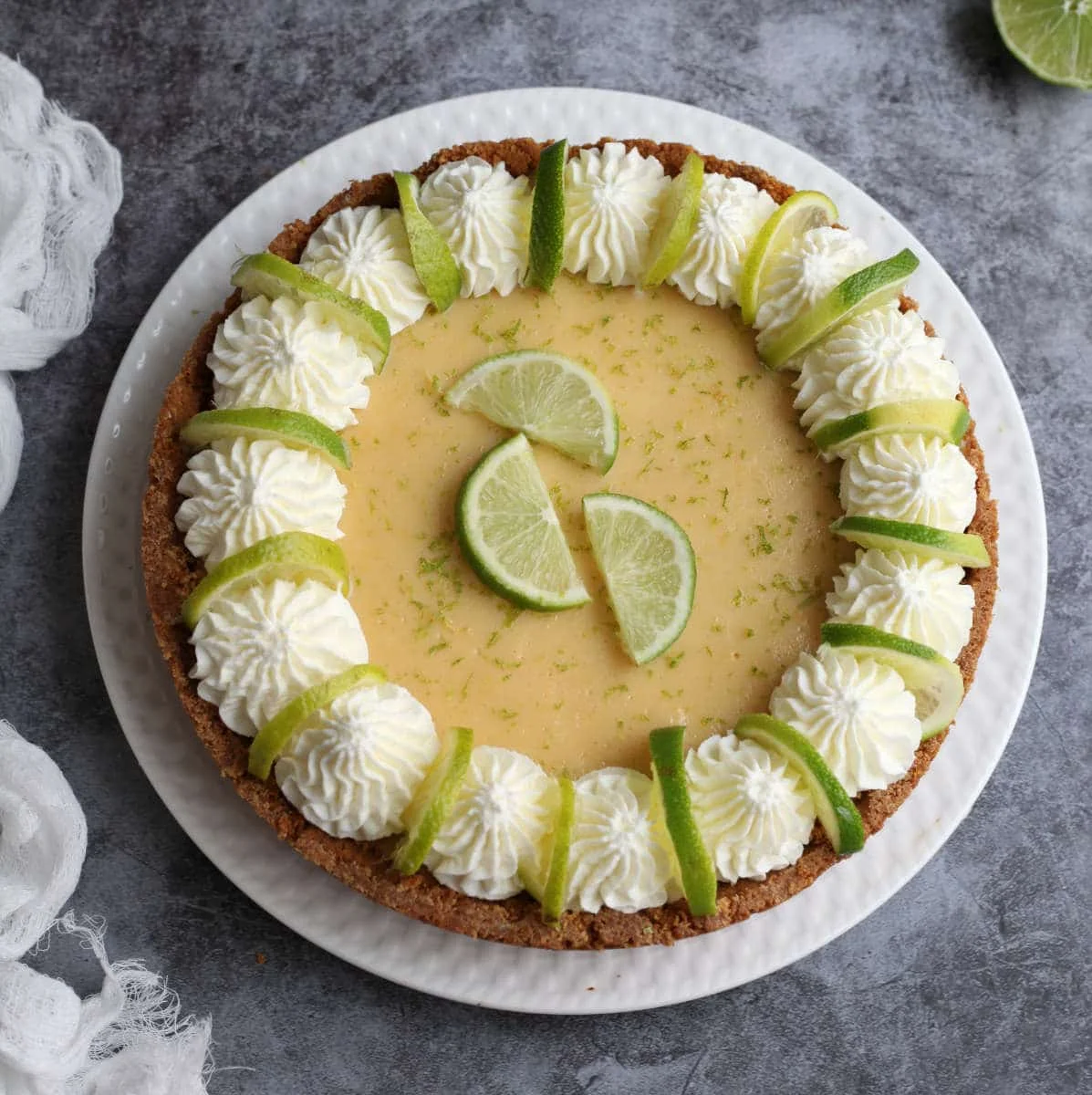
Key lime pie pairs a crisp biscuit base with a tangy condensed-milk and lime filling, finished with a crown of meringue. It makes a bright, celebratory dessert that can be prepared ahead and chilled before serving.
Ingredients
- 300 gGraham crackers (or Petit Beurre or Speculoos biscuits)
- 100 gmelted butter
- 1 tablespoonicing sugar
- 1 pinchfleur de sel
- 4egg yolks
- zest of 2limes
- 400 mlsweetened condensed milk
- 150 mlfreshly squeezed lime juice
- 4egg whites, at room temperature
- 100 gsugar
- 25 gvanilla sugar
- 1 pinchsalt
- 2.5 ml or 1.25 mlwhite vinegar or cream of tartar
- to tastelime zest
- to tastelime slices
Instructions
- 1
Heat the oven
Preheat the oven to 180°C.
- 2
Crush the biscuits
Blend the biscuits with the icing sugar, then tip the mixture into a bowl.
- 3
Mix the base
Add the melted butter to the biscuit crumbs and combine.
- 4
Press the crust
Press the mixture firmly over the base of a 25 cm springform tin, using a spatula or your hands.
- 5
Bake the crust
Bake the biscuit base for 8 minutes.
- 6
Blend the filling
In a food processor, whisk the egg yolks with the condensed milk, lime juice and lime zest until foamy.
- 7
Bake the filling
Take the pie out of the oven, pour the lime mixture over the crust and bake for a further 8–10 minutes, until the filling begins to set.
- 8
Whisk the whites
In a food processor bowl, beat the egg whites with the salt on low speed until foamy.
- 9
Add the stabiliser
Add the vinegar or cream of tartar and continue beating at medium speed until soft peaks form.
- 10
Beat in sugar
Add the sugar gradually, 1–2 tablespoons at a time, then add the vanilla sugar. Beat until the sugar dissolves and the meringue forms stiff, glossy peaks.
- 11
Top with meringue
Spread the meringue over the lime filling with a silicone spatula or pipe it on. Cover the surface completely or arrange the meringue in small peaks.
- 12
Brown the topping
Use a kitchen torch to brown the meringue, or return the pie to the oven at 180°C for a few minutes, until the meringue is slightly firm but not too dark.
- 13
Chill and serve
Refrigerate the pie in its tin for 2–3 hours. Remove it from the tin and serve topped with lime zest and/or lime slices.
What is key lime pie?
Key lime pie is an American dessert associated with the Florida Keys, where small, aromatic Key limes traditionally grow. Its familiar combination is a biscuit crust, a tart lime filling and a sweet topping.
This version uses a meringue topping rather than leaving the filling bare. The contrast between sharp citrus, creamy filling and crisp biscuit makes each layer count.
Nutrition and macros by portion
The nutrition label shows one serving as written: 575 calories, 9g protein, 65g carbs, 27g fat.
| Portion | Adjustment | kcal | Protein | Carbs | Fat |
|---|---|---|---|---|---|
| Lighter | Smaller slice, lighter topping | 403 kcal | 6g | 46g | 19g |
| This serving | As written | 575 kcal | 9g | 65g | 27g |
| Hungry | Larger slice | 863 kcal | 14g | 98g | 41g |
The biscuit crust and sugars supply most of the carbohydrates, while butter and condensed milk contribute much of the fat. Egg yolks and whites provide the protein, with the condensed milk also adding some. Serve a slice with fresh fruit if you would like to balance the dessert with something fresh.
Choosing the biscuit base
Biscuit crumbs: Graham crackers are the classic choice, while Petit Beurre or Speculoos can stand in if needed. Speculoos bring a spiced note; whichever you choose, crush the biscuits finely for a base that presses together evenly.
Butter: Mix the melted butter through the crumbs before pressing them into the tin. Press firmly across the base so the crust holds its shape when sliced.
Getting the lime filling right
Fresh citrus: Freshly squeezed juice and finely grated zest give the filling its bright flavour. Zest the limes before juicing, taking care to grate only the coloured outer skin.
Condensed milk: Sweetened condensed milk gives the filling its rich, smooth body. Blend it with the yolks and lime until foamy, then pour it over the pre-baked crust.
Watching the bake
Crust: The first 8 minutes give the biscuit base a brief bake before the filling goes on. Keep to the stated time so it is ready for the next layer without becoming overly dark.
Filling: Bake for 8–10 minutes, watching for the surface to begin setting. The recipe calls for a short bake, not a long one; the pie then needs its chilling time to firm up.
Making glossy meringue
Egg whites: Room-temperature whites are listed for this recipe. Start beating them with the salt on low speed until they look foamy, then add the vinegar or cream of tartar and increase to medium speed.
Sugar: Add it gradually, 1–2 tablespoons at a time, followed by the vanilla sugar. The finished meringue should be glossy and hold stiff peaks before you spread or pipe it over the filling.
Finishing and serving
Browning: A kitchen torch gives you control over the colour, while a brief return to the 180°C oven is the alternative in the method. Keep an eye on the topping so it firms without getting too dark.
Garnish: Lime zest or slices add a fresh citrus finish. Serve after the full 2–3 hours of chilling, when the pie has had time to set in the tin.
Planning the timing
The listed total time is 80 minutes, but the final chill takes 2–3 hours and is best treated as hands-off time. Make room in the fridge before you start so the pie can chill in its tin without being disturbed.
Recipe notes & tips
- Grate the lime zest before squeezing the fruit.
- Press the biscuit mixture evenly into the tin for a base that slices cleanly.
- Use the filling's first signs of setting as the cue to stop baking it.
- Add sugar to the egg whites gradually so it has time to dissolve.
- Keep the pie in its tin while it chills for 2–3 hours.
- Watch the meringue closely while browning it with either method.
Variations
- Use Petit Beurre: Swap them for the Graham crackers if those are easier to find.
- Try Speculoos: Use these biscuits for a gently spiced crust.
- Pipe the topping: Make small meringue peaks with a piping bag instead of spreading it flat.
- Choose a torch: Brown the meringue with a kitchen torch for more control over the colour.
- Use the oven: Return the topped pie to a 180°C oven for a few minutes instead of torching it.
Common mistakes to avoid
- Coarse biscuit crumbs: Crush them finely so the base presses into a more even layer.
- Loose crust: Press the crumbs firmly into the tin before baking.
- Overbaked filling: Stop when it begins to set, after the stated 8–10 minutes.
- Runny meringue: Continue beating until it forms stiff, glossy peaks.
- Dark topping: Watch closely while torching or returning the pie to the oven.
- Rushing the chill: Leave the pie in the tin in the fridge for the full 2–3 hours before removing it.
How to store
Keep the pie covered in the refrigerator and eat within 2–3 days. Serve chilled; the meringue is best enjoyed without reheating.
Frequently asked questions
Can I use another type of biscuit?
Yes. The recipe suggests Petit Beurre or Speculoos as alternatives to Graham crackers. Speculoos will give the crust a spiced flavour.
How do I know when the lime filling is ready?
After 8–10 minutes in the oven, look for the filling to begin to set. It will firm further as the pie chills.
Can I make the pie ahead?
Yes. It needs 2–3 hours to chill in the fridge, so you can prepare it in advance and serve it cold.
Do I need a kitchen torch?
No. The method also gives the option of returning the pie to a 180°C oven for a few minutes, until the meringue is slightly firm but not too dark.
How should I add the meringue?
Spread it over the filling with a silicone spatula or pipe it on. You can cover the whole surface or form small peaks.
Can I use bottled lime juice?
The recipe specifies freshly squeezed lime juice, which gives the filling a fresh citrus flavour. Fresh juice is the closest match.
Cook it from the original
This recipe comes from 196flavors.com. Their page has the author’s own photos, notes and tips — the best place to cook it from.
Open the recipe on 196flavors.com