
Goan fish curry
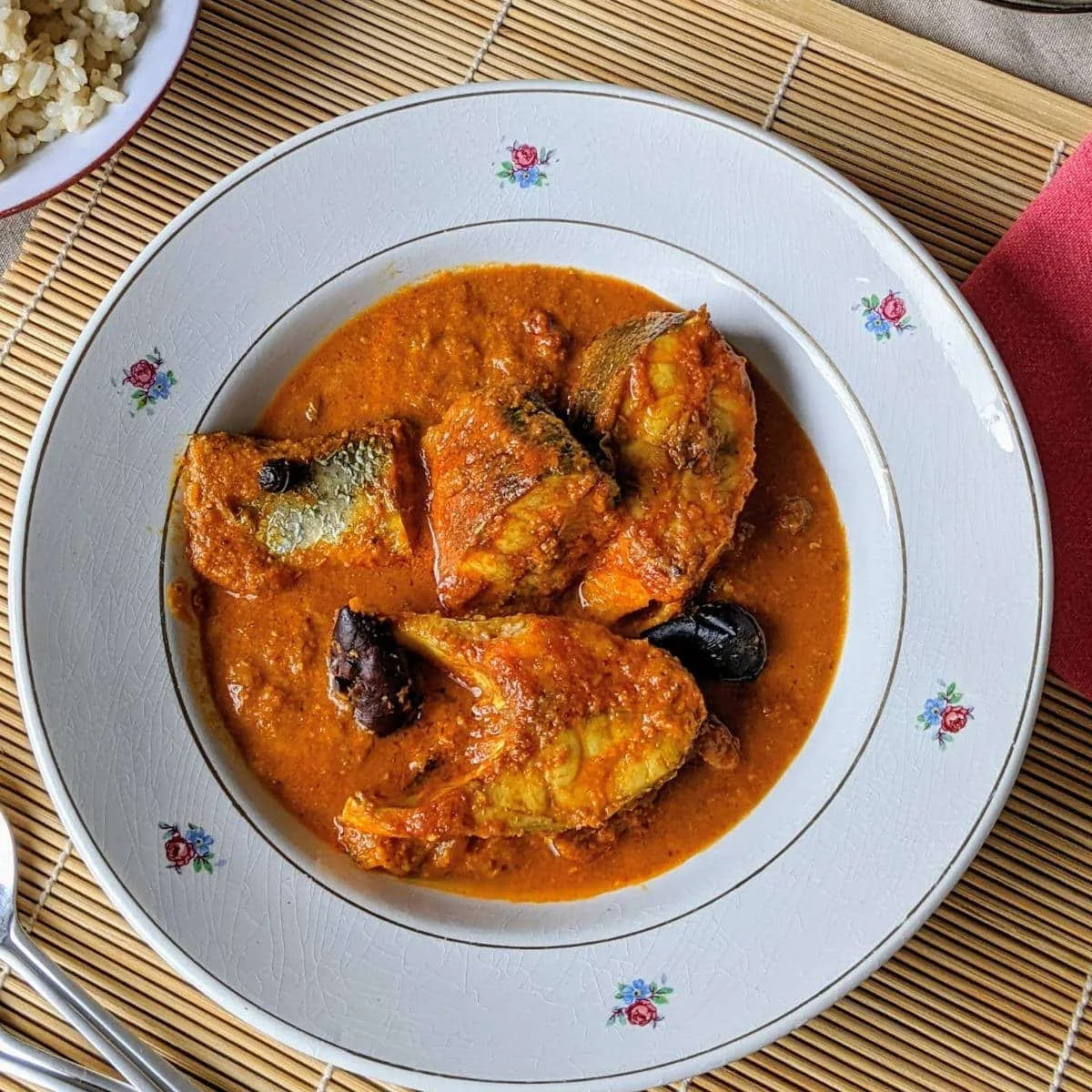
Goan fish curry is a coastal Indian curry of white fish simmered in a fragrant coconut, spice and sour-fruit sauce. It makes a warming meal with rice, and the fish cooks directly in the sauce to take on its flavour.
Ingredients
- 600 gwhite fish fillets (fresh pollock, sea bass, cod or saithe)
- 1/2 teaspoonsalt
- 1/2 teaspoonground turmeric
- 2 tablespoonscoconut oil, or vegetable oil
- 1green chilli, halved
- 1 mediumonion
- 500 ml, or morewater
- 6kokum pieces, or 1 tablespoon tamarind pulp
- 1/2 teaspoon, to tastesalt
- 4, to tasteKashmiri chillies
- 1 1/2 tablespoonscoriander seeds
- 3/4 teaspooncumin seeds
- 1/2 teaspoonmustard seeds
- 1/2 teaspoonwhole peppercorns
- 1/2 teaspoonground turmeric
- 1 piece (2.5 cm)fresh ginger
- 5 clovesgarlic
- 1 tablespoonchopped onion
- 100 gfresh desiccated coconut, or dried desiccated coconut soaked in 125 ml coconut milk
Instructions
- 1
Season the fish
Rub the fish fillets with 1/2 teaspoon salt and 1/2 teaspoon turmeric.
- 2
Marinate briefly
Cover and leave the fish to marinate for 15 minutes.
- 3
Dice the onion
Cut the onion into very small dice.
- 4
Prepare the masala
Meanwhile, make the masala paste.
- 5
Grind the spices
Grind the dry ingredients to as fine a powder as possible.
- 6
Add aromatics
Chop the ginger and garlic, then put them in a blender with 1 tablespoon chopped onion.
- 7
Add the coconut
Add the grated coconut to the blender.
- 8
Blend to a paste
Blend until smooth, adding a little warm water at intervals.
- 9
Reserve the rinse
Transfer the paste to a bowl. Rinse the blender with water and keep this water in a separate bowl.
- 10
Choose a pan
Use a pan large enough to hold the fish in a single layer.
- 11
Heat the oil
Heat the pan and add the coconut oil or vegetable oil.
- 12
Cook chilli and onion
Once the oil is hot, add the chopped green chilli and fry briefly until aromatic, then add the chopped onion.
- 13
Soften the onion
Fry the onion over medium heat until translucent.
- 14
Fry the masala
Add the masala paste and fry for 1–2 minutes to cook off its raw smell.
- 15
Add reserved water
Pour in the water used to rinse the masala and stir to combine.
- 16
Adjust the curry
Gradually add the remaining water until the curry is thick but still pourable.
- 17
Season the sauce
Add the kokum or tamarind pulp and salt. Stir, keeping the heat at medium.
- 18
Simmer the curry
Bring the curry to the boil, then reduce the heat and simmer for 5–7 minutes.
- 19
Add the fish
Arrange the fish fillets in a single layer. The curry should just cover them; add water if it is too thick.
- 20
Cook until tender
Bring the curry back to the boil, then simmer uncovered for 7–8 minutes, until the fish is tender. Shake the pan once or twice during cooking, but do not stir the fish with a spoon.
- 21
Serve with rice
Serve hot with rice.
What is Goan fish curry?
Goan fish curry comes from Goa, a coastal region of western India where fish and coconut are familiar ingredients. This version pairs white fish with a coconut-based masala and the sharpness of kokum or tamarind.
The sauce is built from freshly ground spices, ginger, garlic and coconut, rather than relying on a ready-made curry blend. Cooking the fish gently in the sauce lets it absorb flavour while keeping the preparation in one pan.
Nutrition and macros by portion
The nutrition label shows one serving as written: 495 calories, 33g protein, 13g carbs, 35g fat.
| Portion | Adjustment | kcal | Protein | Carbs | Fat |
|---|---|---|---|---|---|
| Lighter | Less coconut and oil | 347 kcal | 23g | 9g | 25g |
| This serving | As written | 495 kcal | 33g | 13g | 35g |
| Hungry | Serve with extra rice | 743 kcal | 50g | 20g | 53g |
Most of the carbohydrates and fat in this curry come from the coconut, with the oil adding further fat; the fish provides most of the protein. White rice adds a substantial share of the meal's carbohydrates, so serve it alongside a generous helping of vegetables for a more balanced plate.
Building the masala
Whole spices: Grinding the coriander, cumin, mustard seeds, peppercorns and Kashmiri chillies gives the sauce its aromatic base. Aim for a fine powder so the finished paste feels even.
Coconut and aromatics: Ginger, garlic, onion and coconut are blended with the ground spices. Add warm water gradually; too much at once can make the paste thin before it is smooth.
Getting the sauce right
Frying the paste: Give the masala 1–2 minutes in the pan to cook off its raw smell, stirring it so it does not catch. The reserved blender-rinse water helps bring any paste left behind into the curry.
Consistency: Add the remaining water gradually until the curry is thick but pourable. It should be able to just cover the fish once the fillets are added.
Balancing the flavour
Sour note: Kokum or tamarind brings a tart edge that balances the coconut and spices. Add the salt with it, then taste the sauce as it simmers and adjust to your preference.
Heat: Kashmiri chillies contribute colour and warmth, while the green chilli is fried separately for its aroma. The recipe allows for adjustment, so use less chilli if you prefer a milder curry.
Cooking the fish gently
Single layer: Choose a pan that fits the fillets without stacking them. This helps them cook evenly and keeps them surrounded by the sauce.
Doneness: Simmer uncovered for 7–8 minutes, until the fish is tender. Shake the pan once or twice rather than stirring with a spoon, which can break the fillets apart.
Serving the curry
Rice: Serve the curry hot with white rice, which soaks up the coconut-spice sauce. Spoon the sauce over the rice and place a fillet alongside or on top.
To complete the meal: A simple vegetable side works well with the rich, tangy curry. Keep it lightly seasoned so it does not compete with the masala.
Recipe notes & tips
- Cut the onion very finely so it softens evenly in the pan.
- Add warm water to the masala a little at a time to keep the paste smooth.
- Use a pan that lets the fillets sit in a single layer.
- Add the water gradually and stop when the sauce is thick but pourable.
- Shake the pan gently during the final simmer instead of stirring the fish.
- Check the curry for salt and sourness before adding the fish.
Variations
- Use tamarind: Replace the kokum with 1 tablespoon tamarind pulp for the recipe's alternative souring ingredient.
- Choose another white fish: Use fresh pollock, sea bass, cod or saithe as suggested.
- Adjust the chilli: Use fewer Kashmiri chillies for a milder sauce.
- Use vegetable oil: Swap it for coconut oil if that is what you have on hand.
- Use dried coconut: Soak 100 g dried desiccated coconut in 125 ml coconut milk before blending.
Common mistakes to avoid
- Adding all the water at once: The masala can become too thin; add warm water gradually while blending.
- Skipping the masala fry: The paste may taste raw; fry it for 1–2 minutes before adding water.
- Making the sauce too thin: Add water in stages and aim for a thick but pourable curry.
- Overcrowding the fish: Fillets may not sit evenly in the sauce; use a pan that holds them in one layer.
- Stirring the fish: Fillets can break apart; shake the pan gently instead.
- Overcooking the fish: It can lose its tender texture; check it after the 7–8 minute simmer.
How to store
Refrigerate leftovers in a covered container and eat within 2 days. Reheat gently in a pan over low heat until hot throughout, taking care not to break up the fish; add a splash of water if the sauce has thickened.
Frequently asked questions
Can I use a different white fish?
Yes. The recipe suggests fresh pollock, sea bass, cod or saithe. Choose fillets that will hold together during a gentle simmer.
What can I use instead of kokum?
Use 1 tablespoon tamarind pulp, as in the ingredient list. Add it with the salt and stir it into the sauce.
Can I make the masala paste ahead?
You can blend the paste ahead and keep it covered in the fridge, then use it when ready to cook. Keep the fish separate until the final simmer.
How do I know when the fish is cooked?
The recipe gives a simmering time of 7–8 minutes; check that the fish is tender. Avoid stirring it, as the fillets may break.
Can I make the curry less spicy?
Yes. Use fewer Kashmiri chillies and adjust the green chilli to suit your taste.
What should I serve with Goan fish curry?
Serve it hot with white rice, as suggested. A simply cooked vegetable side also goes well with the curry.
Cook it from the original
This recipe comes from 196flavors.com. Their page has the author’s own photos, notes and tips — the best place to cook it from.
Open the recipe on 196flavors.com