
Onion bhaji
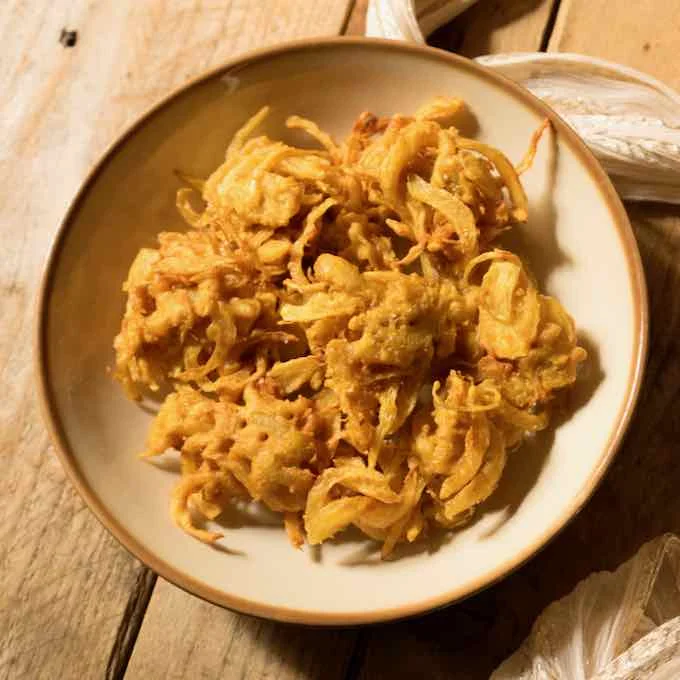
Onion bhajis are crisp, spiced onion fritters made with chickpea flour, served here with a cool cucumber and mint raita. They make a satisfying snack or starter, especially when fried in small batches and eaten hot.
Ingredients
- 2onions, thinly sliced
- 100 gchickpea flour
- 80 ml (or more)warm water
- 1garlic clove, crushed
- ½ teaspoonbaking powder
- ½ teaspoonchilli powder
- ½ teaspoonground turmeric
- 1hot green chilli, deseeded and very finely chopped
- ½ teaspoonsalt
- For deep-fryingvegetable oil
- ½cucumber
- 150 gdahi or yoghurt
- 2 tablespoonschopped mint
Instructions
- 1
Soak the onions
Place the sliced onions in plenty of cold water to soak.
- 2
Mix the dry ingredients
Combine the chickpea flour and baking powder in a bowl, then sift them into another bowl. Add the chilli powder, turmeric, chopped green chilli, garlic and salt.
- 3
Make the batter
Gradually stir in cold water, using 80–125 ml, until you have a thick paste. Set it aside.
- 4
Coat the onions
Drain the onions thoroughly and mix them into the batter.
- 5
Heat the oil
Pour about 7 cm of oil into a wok or deep frying pan and heat it to 170°C.
- 6
Fry the bhajis
Drop a few spoonfuls of the bhaji mixture into the hot oil, frying only a few fritters at a time. Fry for 3–4 minutes, turning once, until evenly golden and crisp.
- 7
Drain and season
Lift the bhajis out with a slotted spoon and drain them on kitchen paper. Sprinkle with a little salt and serve hot with raita.
- 8
Prepare the cucumber
Peel and deseed the cucumber, then grate it into a bowl.
- 9
Drain the cucumber
Drain the grated cucumber, pressing it with your hands to remove any remaining moisture.
- 10
Mix the raita
Combine all the raita ingredients with the drained cucumber in a large bowl, then transfer the mixture to a serving bowl.
What are onion bhajis?
Bhajis are spiced fritters popular in India, often made by coating onion in a chickpea-flour batter and frying it until crisp. This version pairs the savoury, gently spiced fritters with cucumber and mint raita.
Chickpea flour gives the coating its distinctive flavour and helps bind the onion without wheat flour. A thick batter and a hot, steady oil temperature help the fritters brown rather than turn soggy.
Nutrition and macros by portion
The nutrition label shows one serving as written: 115 calories, 4g protein, 11g carbs, 6g fat.
| Portion | Adjustment | kcal | Protein | Carbs | Fat |
|---|---|---|---|---|---|
| Lighter | Use less frying oil | 81 kcal | 3g | 8g | 4g |
| This serving | As written | 115 kcal | 4g | 11g | 6g |
| Hungry | Serve a larger portion | 173 kcal | 6g | 17g | 9g |
The chickpea flour and onions provide most of the carbohydrates, while the flour and yoghurt contribute some protein. The frying oil is the main source of fat, and the salt adds sodium; balance a serving with extra cucumber or other fresh vegetables alongside.
Choosing the ingredients
Onions: Thin slices cook quickly and distribute through the batter, so separate any clumps before mixing them in.
Spices: Chilli, turmeric, garlic and green chilli bring warmth and flavour. Deseed the green chilli as directed, and chop it very finely so it is spread evenly through the fritters.
Dahi: Plain yoghurt can stand in for dahi in the raita. Choose a thick yoghurt if you want a creamy dip.
Getting the batter right
Water: Add it gradually, starting with 80 ml and using up to 125 ml as needed. The finished mixture should be a thick paste that clings to the onion, not a runny coating.
Onions: Drain them thoroughly before adding them to the batter. Excess water can loosen the mixture and make it harder to fry evenly.
Frying for a crisp finish
Oil temperature: Heat the oil to 170°C before frying. If it is too cool, the bhajis can absorb oil; if it is too hot, their outsides may darken before the centres cook.
Batch size: Fry only a few at a time and turn each fritter once. Crowding the wok makes it harder to keep the oil hot and the bhajis evenly crisp.
Checking when they are done
Colour: Look for an even golden-brown surface after about 3–4 minutes of frying. Turn the bhajis once so both sides cook.
Texture: The finished fritters should feel crisp on the outside. Drain them on kitchen paper and serve while hot.
Making the cucumber raita
Cucumber: Peel, deseed and grate it, then press out as much moisture as possible. This keeps the yoghurt dip from becoming watery.
Mint: Stir the chopped mint and the other raita ingredients into the drained cucumber, then transfer the mixture to a serving bowl. The cool dip complements the hot, spiced fritters.
Recipe notes & tips
- Keep the oil close to 170°C while frying each batch.
- Drain the onions well so the batter stays thick.
- Add the water slowly; the batter should cling to the onion.
- Fry only a few bhajis at a time to avoid crowding the wok.
- Press the grated cucumber firmly to keep the raita thick.
- Serve the bhajis as soon as they have drained for the crispiest texture.
Variations
- Adjust the heat: Use less green chilli for a milder batch.
- Change the herbs: Replace the mint in the raita with another fresh herb.
- Use thicker yoghurt: Choose thick plain yoghurt in place of dahi for a creamier dip.
- Add coriander: Stir chopped fresh coriander into the raita.
- Make smaller fritters: Use smaller spoonfuls of mixture and keep an eye on their frying time.
Common mistakes to avoid
- Runny batter: Add the water gradually and stop when the paste clings to the onions.
- Wet onions: Drain them thoroughly before mixing them into the batter.
- Crowded wok: Fry only a few bhajis at a time so the oil can stay hot.
- Oil too cool: Wait until it reaches 170°C before adding the mixture.
- Watery raita: Press the grated cucumber to remove residual moisture.
- Uneven browning: Turn the fritters once during their 3–4 minutes of frying.
How to store
For the best texture, serve the bhajis straight after frying. Refrigerate leftover bhajis and raita in separate covered containers and use within 2 days; reheat the fritters in an oven until hot and crisp, and serve the raita cold.
Frequently asked questions
Can I make the batter ahead?
The method does not specify making it ahead. For the best texture, mix the batter with the drained onions shortly before frying.
How much water should I add?
Start with 80 ml and add more gradually, up to 125 ml, until the mixture forms a thick paste.
How do I know the oil is ready?
The recipe specifies 170°C. Use a kitchen thermometer if available, and let the oil return to temperature between batches.
Can I use yoghurt instead of dahi?
Yes. Plain yoghurt is given as an alternative; a thicker yoghurt will make a thicker raita.
Why is my raita watery?
Grated cucumber releases water. Drain it and press it firmly with your hands before mixing it with the other raita ingredients.
Cook it from the original
This recipe comes from 196flavors.com. Their page has the author’s own photos, notes and tips — the best place to cook it from.
Open the recipe on 196flavors.com