
Cioppino
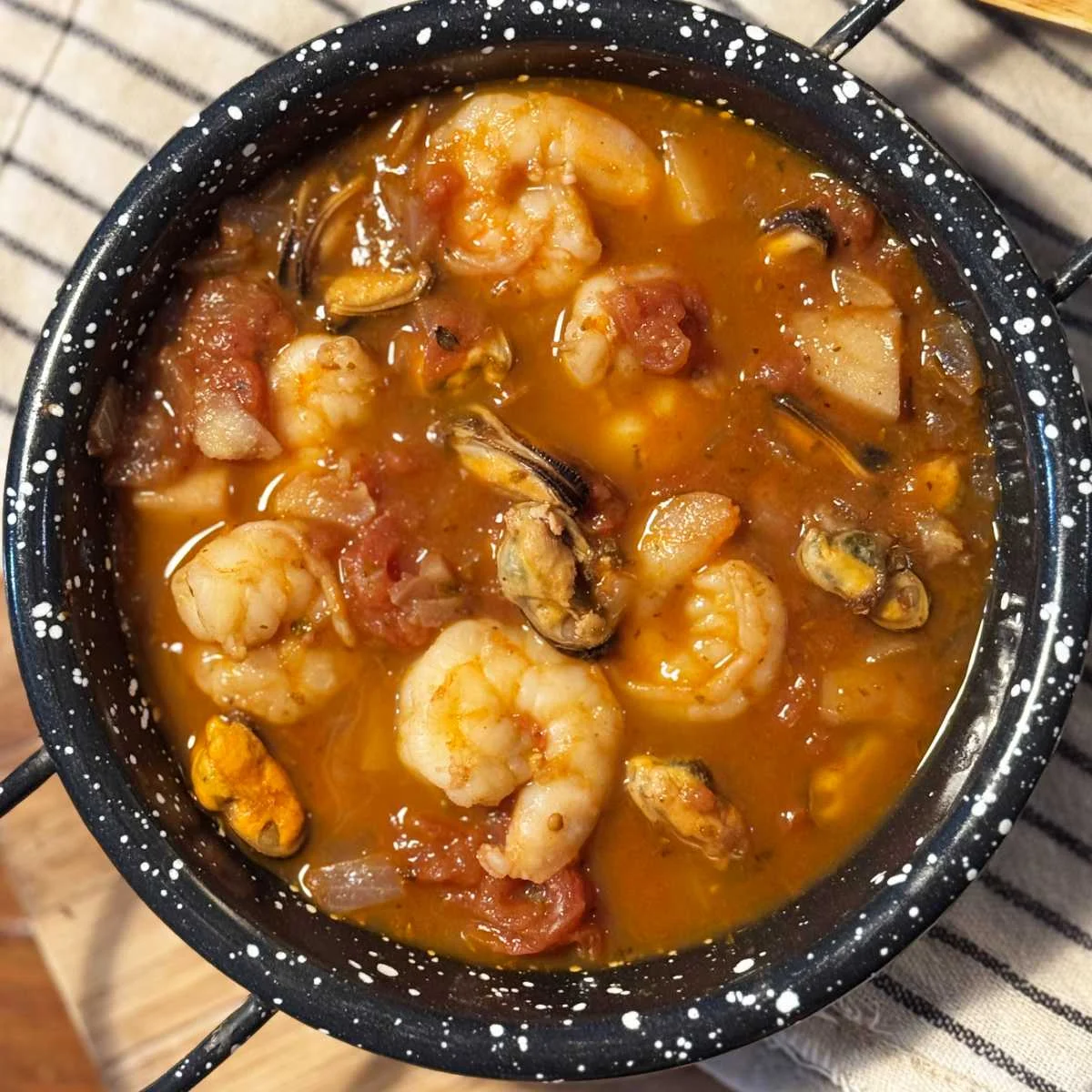
Cioppino is a San Francisco Italian-American seafood stew, simmered in a tomato, wine and fish-stock broth. It is a generous one-pot meal for bringing several kinds of seafood to the table together.
Ingredients
- 25clams
- 227 g (8 oz)mussels
- 227 g (8 oz; 15–20)prawns
- 227 g (8 oz), cracked and broken into large piecesking crab legs
- 227 g (8 oz)white fish, such as halibut, cod or sea bass
- 45 ml (3 tablespoons)olive oil
- 1 large, cut into thin stripsonion
- 1, thinly slicedfennel bulb
- 1 stalk, finely choppedcelery
- 4 cloves, pressedgarlic
- 2.5 ml (½ teaspoon)red pepper flakes
- 1bay leaf
- 1 sprig (or 1.25 ml / ¼ teaspoon dried)fresh thyme
- 1 sprig (or 1.25 ml / ¼ teaspoon dried)fresh oregano
- 30 ml (2 tablespoons)tomato purée
- 180 ml (¾ cup)dry white wine
- 240 ml (1 cup)fish stock
- 680 g (24 oz), peeled, seeded and cut into small cubestomatoes
- to tastesalt
- to tastefreshly ground black pepper
- 57 g (4 tablespoons), dicedunsalted butter
- 30 ml (2 tablespoons), finely choppedfresh flat-leaf parsley
- to servecrisp toast
Instructions
- 1
Heat the oil
Warm the olive oil in a large, heavy-based pot over a medium heat.
- 2
Soften the vegetables
Add the onion, fennel and celery. Cook for about 8 minutes, stirring often.
- 3
Add the aromatics
Stir in the garlic, red pepper flakes, bay leaf, thyme and oregano. Sauté for about 3 minutes, stirring frequently.
- 4
Stir in purée
Add the tomato purée and stir until it is evenly incorporated.
- 5
Season lightly
Add a small amount of salt and pepper.
- 6
Boil the liquids
Pour in the white wine and fish stock. Bring to the boil and cook for about 5 minutes.
- 7
Add tomatoes
Stir in the diced tomatoes.
- 8
Simmer the broth
Cover the pot and simmer over a low heat for 30 minutes.
- 9
Cook the shellfish
Take off the lid and add the mussels and clams. Stir gently to coat them in the broth, then cover and cook over a low to medium heat for 5 minutes.
- 10
Add prawns
Once the mussels and clams have just begun to open, add the prawns and king crab. Toss gently to coat them.
- 11
Top with fish
Lay the white fish fillets on top.
- 12
Finish cooking
Season the fish with salt and pepper, then cover and cook for a further 5 minutes.
- 13
Melt in butter
Turn off the heat and add the butter. Stir gently until it has melted and blended into the broth.
- 14
Check the seasoning
Taste the broth and add more salt and pepper if needed.
- 15
Serve with toast
Scatter over the parsley and serve straight away with crisp toast.
What is cioppino?
Cioppino is an Italian-American seafood stew associated with San Francisco, where it developed from the cooking of immigrant communities. It is served in a bowl like a soup, with bread for soaking up the broth.
This version builds a tomato and wine base before adding the seafood in stages. That gives the broth time to develop while helping the different seafood cook without all going into the pot at once.
Nutrition and macros by portion
The nutrition label shows one serving as written: 309 calories, 24g protein, 12g carbs, 17g fat.
| Portion | Adjustment | kcal | Protein | Carbs | Fat |
|---|---|---|---|---|---|
| Lighter | Use less butter and toast | 216 kcal | 17g | 8g | 12g |
| This serving | As written | 309 kcal | 24g | 12g | 17g |
| Hungry | Add extra toast | 464 kcal | 36g | 18g | 26g |
The tomatoes, wine and vegetables provide most of the carbohydrates, while the oil and butter contribute much of the fat. Fish, prawns, crab and shellfish supply the protein. For a balanced plate, serve a bowl with a measured amount of toast and add a side of vegetables or salad.
Build the aromatic base
Vegetables first: Onion, fennel and celery soften together for about 8 minutes, forming a savoury, lightly sweet foundation.
Aromatics next: Garlic, herbs, bay leaf and red pepper flakes cook briefly before the tomato purée goes in. Stir often so the garlic and herbs release their flavour without catching.
Give the broth time
Wine and stock: Bringing them to the boil for about 5 minutes lets the liquid reduce slightly before the tomatoes are added.
Tomato simmer: The covered 30-minute simmer gives the broth time to deepen. Keep the heat low so it bubbles gently rather than reducing too quickly.
Add the seafood in stages
Shellfish first: Mussels and clams need a head start. Stir carefully to coat them, then cover the pot so the steam helps them open.
Prawns and crab next: Add these when the shellfish just begin to open, then place the fish on top. The fish cooks through in the final 5 minutes, so handle it gently to keep the pieces intact.
Check when it is done
Shellfish: The mussels and clams should open as they cook. Discard any that remain closed after cooking.
Fish and prawns: The fish should turn opaque and flake readily, while the prawns should be opaque throughout. Avoid extending the final cooking time unnecessarily, as seafood can become tough.
Finish and serve
Butter finish: Stir the diced butter into the hot broth off the heat. Gentle mixing helps it melt in without breaking up the fish.
At the table: Add the parsley just before serving and bring the stew to the table straight away. Crisp toast is useful for catching the tomato-rich broth.
Recipe notes & tips
- Use a large heavy-based pot so the seafood has room to cook evenly.
- Cut the vegetables before heating the oil, as the first stages need regular stirring.
- Keep the broth at a gentle simmer during the covered cooking time.
- Add the seafood in the stated order so the more delicate fish does not overcook.
- Stir gently once the fish is in the pot to keep the pieces whole.
- Serve as soon as the butter has melted and the seasoning has been checked.
Variations
- Change the white fish: Use halibut, cod or sea bass, as suggested in the ingredient list.
- Adjust the heat: Reduce or increase the red pepper flakes to suit your preference.
- Use dried herbs: Replace a fresh thyme or oregano sprig with ¼ teaspoon of its dried form.
- Vary the shellfish: Use different proportions of the listed shellfish while keeping the total seafood amount similar.
- Make the broth ahead: Prepare the tomato broth through its 30-minute simmer, then reheat it before adding the seafood.
Common mistakes to avoid
- Rushing the vegetables: They need about 8 minutes to soften; stir frequently and keep the heat moderate.
- Burning the garlic: Cook the aromatics for about 3 minutes, stirring often, rather than leaving them unattended.
- Boiling the broth hard: Keep it to a low simmer during the covered 30 minutes so it does not reduce too quickly.
- Adding all the seafood together: Follow the recipe's order so the shellfish, prawns, crab and fish have suitable cooking times.
- Breaking up the fish: Lay it on top and stir gently once it is in the pot.
- Overcooking the seafood: Check the fish and prawns at the end of the stated 5-minute cook.
How to store
Refrigerate leftovers promptly in a covered container and use within 1–2 days. Reheat gently in a covered pan until piping hot, avoiding a vigorous boil that can toughen the seafood; discard any shellfish that stayed closed after cooking.
Frequently asked questions
Can I prepare cioppino ahead of time?
You can make the tomato broth ahead through its 30-minute simmer and refrigerate it. Reheat it before adding the seafood, which is best cooked just before serving.
Can I use frozen seafood?
Yes, thaw it safely and drain it well before cooking. Follow the same order of additions and check that the seafood is cooked through.
What should I do if some clams or mussels do not open?
Discard any that remain closed after cooking. Do not force them open or serve them.
Can I make cioppino without wine?
The wine is part of this recipe's broth. If you need to omit it, use additional fish stock, though the flavour will differ.
What can I serve with cioppino?
The recipe serves it with crisp toast, which is handy for dipping into the broth. A simple green salad or plain vegetables can also accompany it.
How do I know when the fish is cooked?
The fish should be opaque and flake easily when gently tested. The recipe allows 5 minutes of covered cooking after it is placed on top, but thickness can affect the time.
Cook it from the original
This recipe comes from 196flavors.com. Their page has the author’s own photos, notes and tips — the best place to cook it from.
Open the recipe on 196flavors.com