
Ham with Pineapple Glaze
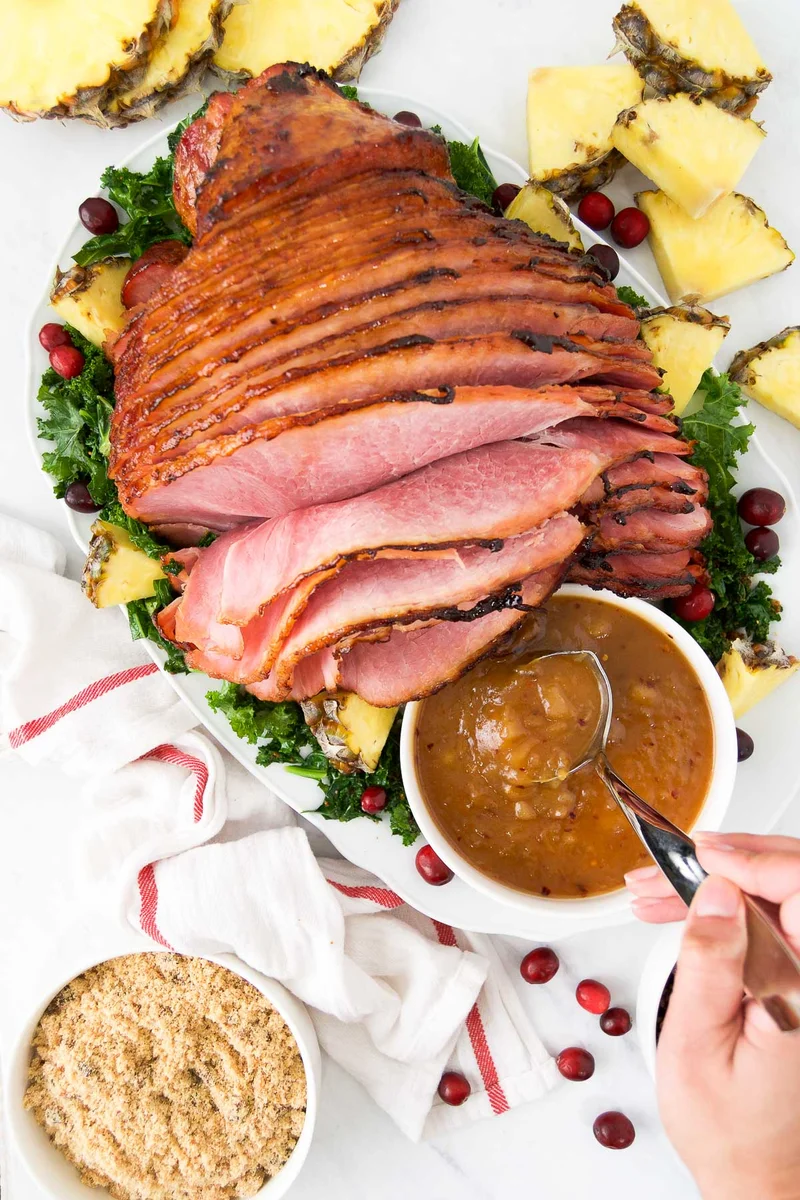
This American-style bone-in ham is baked under foil, then finished with a glossy pineapple, brown sugar and soy glaze. It makes a festive centrepiece with a sweet-savoury finish and a separate pineapple sauce for serving.
Ingredients
- 2.3–3.6 kg (5–8 lb)bone-in spiral ham
- 6 sprigsfresh thyme
- 2 tablespoons (28 g)unsalted butter
- 200 g (1 cup)brown sugar
- 180 ml (¾ cup), dividedwhite wine
- 10whole cloves, or more to taste
- 180 ml (6 oz)pineapple juice
- 2 tablespoons (30 ml)soy sauce
- 1bay leaf
- 200 g (1 cup)brown sugar
- 2 tablespoons (about 16 g)plain flour
- 1 can, 567 g (20 oz)crushed pineapple in juice
- 120 ml (½ cup)water
- 2 tablespoons (28 g)unsalted butter
- 120 ml (½ cup)pan drippings
- 1 teaspoonred pepper flakes
Instructions
- 1
Preheat the oven
Heat the oven to 165°C (325°F).
- 2
Bake the ham
Put the ham in a roasting pan and cover it with foil. Bake until the centre reaches 37–43°C (100–110°F), allowing approximately 10–14 minutes per pound. An 8 lb ham should take about 1 hour and 20 minutes.
- 3
Start the glaze
While the ham bakes, prepare the pineapple glaze.
- 4
Cook the glaze
Put 120 ml (½ cup) of the wine and the herbs in a small saucepan and bring to the boil. Remove the herbs and set them aside. Add the soy sauce, pineapple juice, cloves, sugar and butter, then boil until syrupy.
- 5
Uncover and baste
After about an hour, or when the ham is three-quarters of the way through cooking, remove the foil and raise the oven to 176°C (350°F). Pour the remaining 80 ml (⅓ cup) of wine into the roasting pan and add the reserved herbs. Cook until the ham reaches 43°C (110°F) internally.
- 6
Glaze the ham
Turn the ham upright and brush one-third of the glaze over it. Raise the oven to 205°C (400°F) and cook for another 30 minutes, brushing on the remaining glaze every 10 minutes, until the centre reaches 60°C (140°F).
- 7
Rest before serving
Remove the ham from the oven and brush it with glaze once more. Move it to a serving platter and leave it to rest for 15 minutes before serving.
- 8
Make the sauce
Meanwhile, put the ingredients listed for the serving sauce in a saucepan and cook until syrupy.
What is pineapple-glazed ham?
Baked ham is a familiar American centrepiece for holiday meals and other gatherings. This version pairs the savoury, salty meat with pineapple and brown sugar, while soy sauce adds a deeper savoury note.
Spiral-cut ham is already sliced, so it is easy to portion at the table. A final bake with repeated layers of glaze gives the outside a sticky coating, with a separate pineapple sauce to serve alongside.
Nutrition and macros by portion
The nutrition label shows one serving as written: 578 calories, 44g protein, 48g carbs, 22g fat.
| Portion | Adjustment | kcal | Protein | Carbs | Fat |
|---|---|---|---|---|---|
| Lighter | Less glaze, more vegetables | 405 kcal | 31g | 34g | 15g |
| This serving | As written | 578 kcal | 44g | 48g | 22g |
| Hungry | Larger ham serving | 867 kcal | 66g | 72g | 33g |
The ham supplies most of the protein, while the brown sugar, pineapple and juice contribute much of the carbohydrate. Butter and the ham contribute fat; serve it with vegetables for a more balanced plate, and add potatoes or bread if you want a more filling meal.
Choosing the ham
Spiral ham: The pre-cut slices make serving straightforward, but they can dry out if heated too quickly. Keep the ham covered for most of the initial bake, as directed.
Bone-in: The bone is part of the stated ingredient and gives the joint its shape. Choose a roasting pan large enough to hold the ham without crowding it.
Building the glaze
Wine and herbs: The wine is divided between the glaze and the roasting pan, while the thyme and bay leaf are removed from the saucepan and reserved. This lets the herbs flavour the liquid without leaving them in the finished glaze.
Pineapple and sugar: Pineapple juice, brown sugar, cloves, butter and soy sauce are boiled until syrupy. Keep an eye on the pan and stir as needed so the sugary mixture does not catch.
Getting the finish right
Staged heat: The ham begins covered at 165°C, then is uncovered at 176°C before the oven is raised to 205°C for the glazed finish. Follow the recipe's temperature cues and use a meat thermometer to check the centre.
Repeated brushing: Add the glaze in stages during the final 30 minutes, brushing every 10 minutes. This builds a coating gradually rather than adding all the glaze at once.
Serving the ham
Resting: Leave the ham to rest for 15 minutes after baking, as directed. This gives you time to finish the serving sauce and prepare the platter.
On the plate: Serve slices with the pineapple sauce and a vegetable side, such as green beans or roasted carrots. Potatoes or bread can make the meal more substantial.
Timing and temperature
The recipe gives an approximate first-stage estimate of 10–14 minutes per pound and says an 8 lb ham takes about 1 hour and 20 minutes. Actual timing depends on the ham and oven, so use the stated internal temperatures as well as the clock.
The later stages add time for the uncovered bake and the final 30 minutes of glazing, followed by a 15-minute rest. Allow for those stages when planning the meal.
Recipe notes & tips
- Use a meat thermometer to check the centre rather than relying on the estimated cooking time alone.
- Keep the foil snug over the ham during the first bake to help limit moisture loss.
- Reserve the thyme and bay leaf after removing them from the glaze saucepan, as the method uses them in the roasting pan.
- Brush the glaze on at the stated intervals so it has time to coat the ham during the final bake.
- Rest the ham for the full 15 minutes before serving.
- Check the saucepan regularly as the glaze boils, since sugary mixtures can thicken quickly.
Variations
- More cloves: Increase the whole cloves to taste for a stronger warm spice note.
- Less heat: Reduce or omit the red pepper flakes in the serving sauce.
- Extra pineapple: Spoon some crushed pineapple from the can into the serving sauce.
- Herb variation: Use fresh thyme as listed, or swap it for another woody herb if you have one to hand.
- Wine-free option: Replace the wine with water in the glaze and roasting pan.
Common mistakes to avoid
- Skipping the thermometer: Cooking times are estimates, so check the centre temperature at each stage.
- Glazing too early: The recipe reserves the glaze for the later bake; wait until the ham has reached the stated first-stage temperature.
- Adding all the glaze at once: Brush it on in portions every 10 minutes during the final 30-minute bake.
- Letting the glaze catch: Keep watch while it boils and lower the heat if it thickens too quickly.
- Carving straight away: Rest the ham for 15 minutes so it is easier to serve.
How to store
Refrigerate leftover ham and sauce in separate covered containers within two hours of serving, and use within 3–4 days. Reheat portions until piping hot, adding a little sauce or water if the meat seems dry.
Frequently asked questions
Can I use a boneless ham?
The recipe is written for a bone-in spiral ham. A boneless joint may cook at a different rate, so check its centre temperature rather than relying on the stated timing.
How do I know when the ham is ready?
Use a meat thermometer and follow the temperatures in the method: 37–43°C (100–110°F) during the covered bake, then 43°C (110°F) after the uncovered stage, and 60°C (140°F) after glazing.
Can I make the glaze ahead?
The recipe does not specify advance preparation, but you can prepare the glaze earlier and keep it covered in the fridge. Warm it gently until brushable before using.
What can I serve with pineapple-glazed ham?
Try green vegetables, roasted carrots or potatoes. The sweet-savoury glaze also pairs well with a simple salad or bread.
Why is there a separate serving sauce?
The method finishes by cooking the listed sauce ingredients together until syrupy. Serve it alongside the ham so diners can add more pineapple flavour as they like.
Can I leave out the red pepper flakes?
Yes. They are listed for the serving sauce, so omit them if you prefer a milder finish.
Cook it from the original
This recipe comes from braziliankitchenabroad.com. Their page has the author’s own photos, notes and tips — the best place to cook it from.
Open the recipe on braziliankitchenabroad.com