
Chicken Bulgogi (Korean BBQ Chicken)
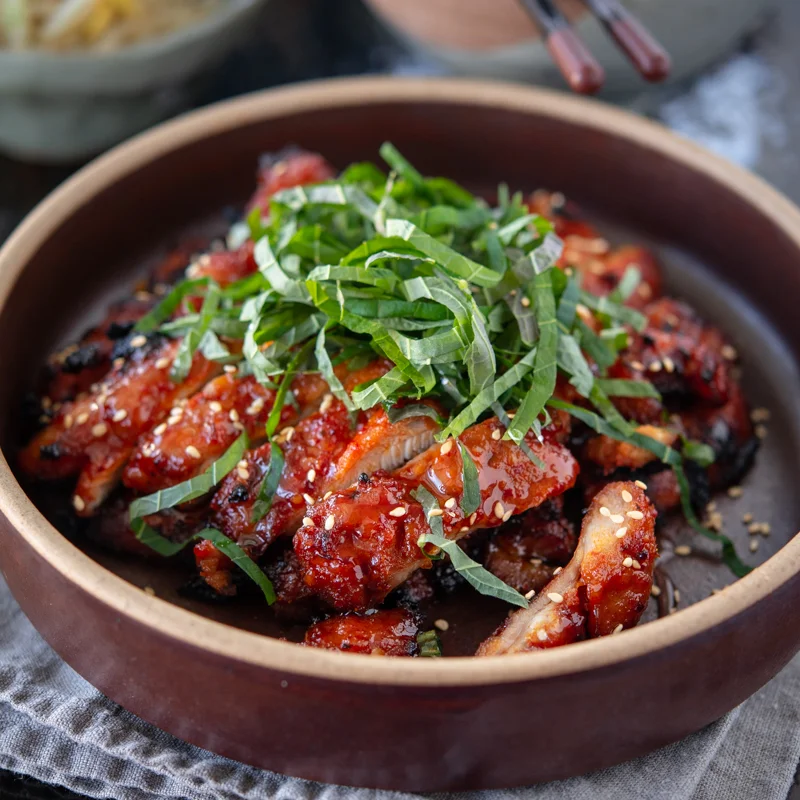
Chicken bulgogi is Korean-style barbecue chicken coated in a savoury, sweet and spicy gochujang marinade. Broiling gives the thighs charred edges while keeping them juicy, and the dish is easy to serve with rice and banchan.
Ingredients
- 6 (about 900 g)boneless, skinless chicken thighs
- 3 tbsp (45 g)Korean chilli paste (gochujang)
- 1 tbsp (8 g), optionalKorean chilli flakes (gochugaru)
- 1 tbsp (15 ml)soy sauce
- 1–2 tbsp (12–25 g)light brown sugar
- 1 tbsp (15 g)minced garlic
- 1 tsp (5 g)ginger paste
- 1 tbsp (15 ml)Korean corn syrup (mulyeot)
- 1 tbsp (15 ml), optionalsweet rice wine (mirim)
- 1 tbsp (15 ml)sesame oil
- ½ tsp (1 g)black pepper
- 5–6, thinly sliced; optionalperilla leaves (kkaennip), to garnish
- 1 tbsptoasted sesame seeds, to garnish
Instructions
- 1
Even the thighs
Cover the chicken thighs with a sheet of plastic wrap and gently pound them with a meat mallet until they are an even thickness. Set aside.
- 2
Mix and marinate
In a large bowl, combine the gochujang, gochugaru if using, soy sauce, brown sugar, garlic, ginger, corn syrup, rice wine, sesame oil and black pepper. Add the chicken and toss to coat evenly. Leave to marinate at room temperature for 10–30 minutes.
- 3
Prepare the grill
Set the oven to broil and position the rack 5–6 inches below the heat source. Lightly grease a cooling rack with oil spray and place it over a foil-lined half sheet pan.
- 4
Broil the chicken
Arrange the chicken on the rack in a single layer, without overlapping. Broil for 4–5 minutes, until lightly charred, then flip and broil for another 4–5 minutes, or until fully cooked. Watch it carefully to prevent burning.
- 5
Garnish and serve
Slice the chicken into bite-sized pieces and transfer to a serving dish. Garnish with the sliced perilla leaves and toasted sesame seeds, then serve hot with rice.
What is chicken bulgogi?
Bulgogi is a Korean barbecue dish, commonly made with thinly sliced meat in a seasoned marinade. This version uses chicken thighs and a gochujang-led mixture for a combination of savoury, sweet and spicy flavours.
Gochujang gives the marinade its deep chilli flavour, while a hot broiler helps the chicken pick up char and caramelisation. Perilla and sesame seeds add a fresh, nutty finish.
Nutrition and macros by portion
The nutrition label shows one serving as written: 633 calories, 39g protein, 21g carbs, 44g fat.
| Portion | Adjustment | kcal | Protein | Carbs | Fat |
|---|---|---|---|---|---|
| Lighter | Use less brown sugar | 443 kcal | 27g | 15g | 31g |
| This serving | As written | 633 kcal | 39g | 21g | 44g |
| Hungry | Add extra rice | 950 kcal | 59g | 32g | 66g |
The chicken thighs provide most of the protein and fat, while the brown sugar and rice served alongside contribute carbohydrates. Gochujang and soy sauce also contribute sodium. To balance the plate, serve with a generous portion of vegetables or banchan alongside the rice and chicken.
The marinade ingredients
Gochujang: this fermented chilli paste provides the main heat and savoury depth. Gochugaru is optional, but adds another layer of chilli flavour.
Sweeteners: brown sugar and Korean corn syrup balance the chilli and help the outside caramelise. Use the lower amount of sugar for a less sweet result.
Aromatics: garlic, ginger, soy sauce, sesame oil, black pepper and optional rice wine build the marinade’s savoury aroma.
Why even thickness matters
Pounding the thighs gently helps them cook at a more even rate under the intense broiler. Keep the plastic wrap over the chicken while doing this to contain splashes.
Aim for an even thickness rather than flattening the meat very thinly. This also helps each piece sit steadily on the rack.
Marinating without overdoing it
A 10–30 minute rest at room temperature gives the chicken time to take on the marinade’s flavour. Toss well so the paste coats the sides and underside of each thigh.
The marinade contains sugar, so keep an eye on the chicken as it broils. The surface can darken quickly under direct heat.
Broiling for char and doneness
The rack lets heat circulate around the chicken, while the foil-lined pan catches drips. Arrange the thighs in one layer with space between them so they broil rather than steam.
Turn the chicken after the first 4–5 minutes and watch closely during the second side. Look for lightly charred patches and chicken cooked through before slicing.
Serving the chicken
Serve the chicken hot with rice, as suggested in the method. Korean banchan, or small side dishes, make a natural accompaniment.
Add the sliced perilla and toasted sesame seeds just before serving so the garnish stays fresh and fragrant.
Recipe notes & tips
- Pound the thighs gently so they reach an even thickness without tearing.
- Coat every thigh thoroughly with the marinade before leaving it to rest.
- Keep the chicken in a single layer on the rack so the pieces broil evenly.
- Stay close to the oven, as the sweet marinade can char quickly.
- Slice the chicken after broiling and add the garnishes just before serving.
Variations
- Adjust the heat: leave out the gochugaru for a milder result.
- Choose your sweetness: use 1 tablespoon of brown sugar for a less sweet marinade.
- Skip the rice wine: omit the optional mirim if you do not have it.
- Finish with perilla: leave out the optional leaves or use them as a fresh garnish.
- Use the grill: cook the marinated chicken on a grill instead of broiling, watching closely for charring.
Common mistakes to avoid
- Uneven thighs: pound them gently to an even thickness so they cook at a similar rate.
- Overlapping chicken: arrange the pieces in one layer to help them broil rather than steam.
- Burnt marinade: watch the chicken closely because the sugars can darken quickly under the broiler.
- Skipping the turn: flip the thighs after the first 4–5 minutes so the other side cooks too.
- Crowded garnish: slice the perilla thinly and scatter it with the sesame seeds just before serving.
How to store
Refrigerate leftover chicken in a covered container and use within 3–4 days. Reheat until hot throughout, using a microwave or a covered pan over gentle heat; take care not to dry out the chicken.
Frequently asked questions
Can I make this without gochugaru?
Yes. The recipe marks gochugaru as optional, so you can leave it out; the gochujang still provides chilli flavour.
Can I skip the rice wine?
Yes. The mirim is optional and can be omitted.
How do I know when the chicken is cooked?
The method calls for broiling each side for 4–5 minutes, until lightly charred and fully cooked. Check the thickest part before serving.
Can I grill the chicken instead of broiling it?
Yes. The dish can be broiled or grilled. Keep a close watch, as the sweet marinade can char quickly.
What should I serve with chicken bulgogi?
Serve it hot with rice, as suggested in the recipe. Banchan also makes a fitting accompaniment.
Cook it from the original
This recipe comes from beyondkimchee.com. Their page has the author’s own photos, notes and tips — the best place to cook it from.
Open the recipe on beyondkimchee.com