
Garlic Parmesan Dinner Rolls (w/ frozen Rhodes Rolls)
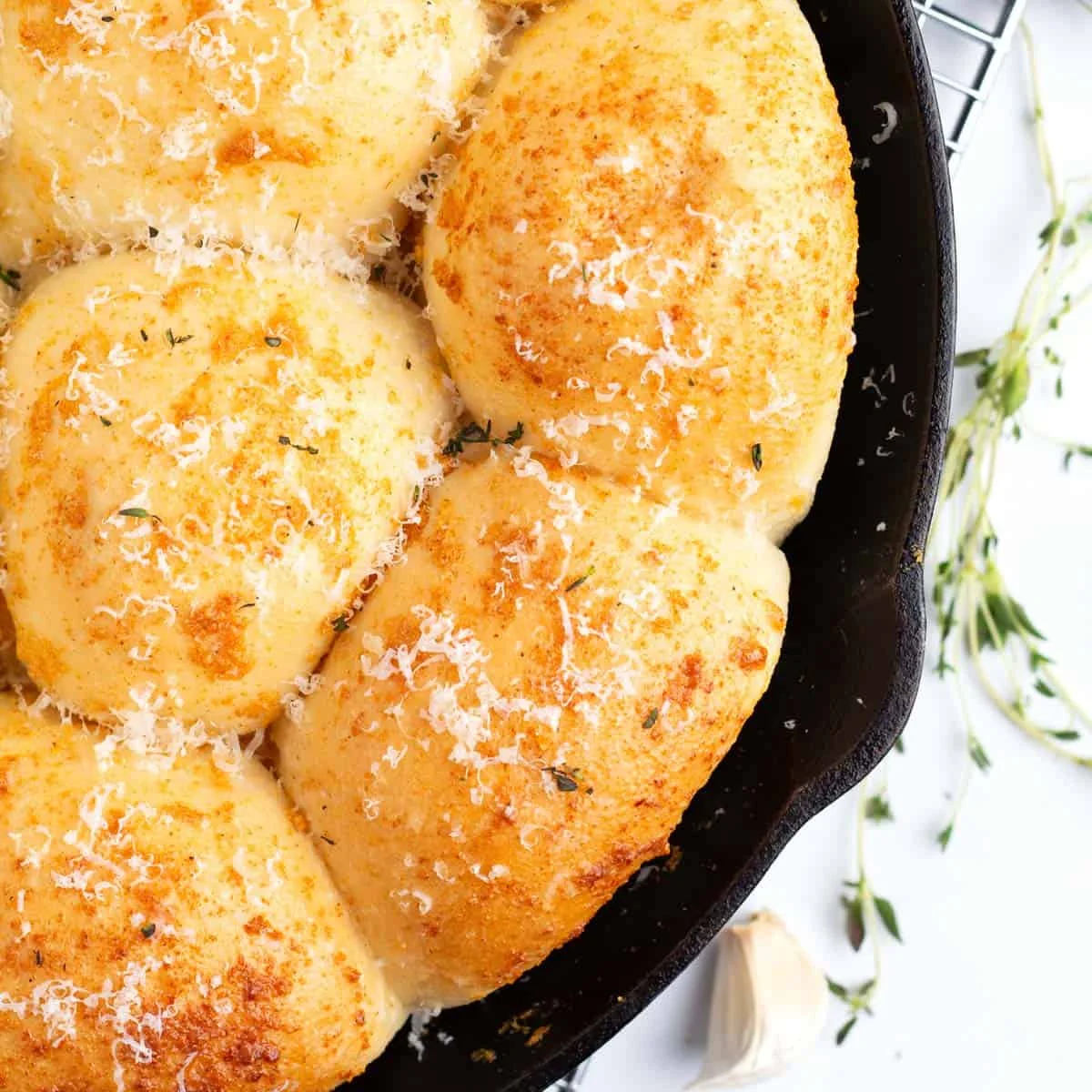
Frozen Rhodes rolls make these garlic Parmesan dinner rolls simple to prepare, with most of the time spent letting the dough rise. A buttery garlic-and-cheese topping turns them golden and savoury in the oven.
Ingredients
- 12 rolls (57 g each)Rhodes frozen dinner rolls
- 113 g (8 tbsp), meltedbutter
- 10 g (2 tbsp), plus extra for the topgrated Parmesan
- 30 ml (2 tbsp)garlic powder or granulated garlic
Instructions
- 1
Arrange the rolls
Spray a 30 cm cast-iron skillet with non-stick spray, or lightly grease it with oil. Arrange the 12 frozen rolls evenly in the pan, leaving equal gaps between them.
- 2
Let them rise
Cover the skillet loosely with plastic wrap and spray the underside of the wrap with non-stick spray. Turn it over so the greased side faces the dough. Leave the rolls at room temperature for 3–5 hours, until doubled in size.
- 3
Prepare the oven
When the rolls look soft and fluffy, heat the oven to 175°C. Carefully lift off the plastic wrap without pulling or deflating the dough.
- 4
Add garlic butter
Melt the butter in the microwave and set aside 2 tablespoons. Stir the garlic powder and Parmesan into the remaining butter, then spoon or pour it over the rolls, including the outer edges. Do not use a brush.
- 5
Bake until golden
Bake for 15–20 minutes, until golden brown and cooked through. Once the pan is out of the oven, brush the reserved butter over the rolls. Finish with extra Parmesan and, if you like, a little dried parsley, then serve warm.
What are garlic Parmesan dinner rolls?
Dinner rolls are small, soft bread rolls commonly served alongside meals in the United States. This version starts with frozen Rhodes rolls and adds garlic, butter and Parmesan for a savoury finish.
The method keeps the hands-on work brief: the dough rises in the skillet, then bakes beneath its buttery topping. The final brushing of plain butter adds another layer of richness.
Nutrition and macros by portion
The nutrition label shows one serving as written: 192 calories, 4g protein, 21g carbs, 11g fat.
| Portion | Adjustment | kcal | Protein | Carbs | Fat |
|---|---|---|---|---|---|
| Lighter | Use less garlic butter | 134 kcal | 3g | 15g | 8g |
| This serving | As written | 192 kcal | 4g | 21g | 11g |
| Hungry | Serve extra rolls | 288 kcal | 6g | 32g | 17g |
The rolls provide most of the carbohydrates, while the butter supplies most of the fat; the Parmesan and rolls contribute some protein. Balance a roll with a serving of vegetables and a protein-rich main, such as beans, eggs or chicken.
Why use frozen rolls?
Frozen dough: Rhodes rolls provide individually portioned dough, so there is no need to mix or knead bread dough from scratch.
Room-temperature rise: The rolls need time to thaw and expand before baking. Follow the visual cue in the method and wait until they look soft and doubled.
Getting the rise right
Even spacing: Arrange the frozen rolls with equal gaps so they have room to expand as they rise.
Loose cover: The wrap helps keep the dough covered, while greasing the side that faces the rolls helps prevent sticking. Lift it away gently so the risen dough does not collapse.
Making the garlic butter
Reserve some butter: Keep 2 tablespoons aside before adding the garlic and Parmesan. Brush this plain butter over the rolls after baking for a glossy finish.
Spoon it on: The method calls for pouring or spooning the garlic butter over the dough rather than brushing it. Include the outside edges of the pan so the rolls are coated around the sides too.
How to tell when they are done
Before baking: The rolls should look soft and fluffy, and should have doubled in size.
After baking: Look for a golden-brown top and rolls that are cooked through. Begin checking at 15 minutes, as the recipe gives a baking window of 15–20 minutes.
Serving these rolls
Serve them warm so the buttery topping is at its best. They make an easy side for soups, pasta, roast meat or a simple salad.
Extra Parmesan and dried parsley are optional finishing touches. Add them after baking, when the reserved butter has been brushed over the tops.
Recipe notes & tips
- Leave equal space between the frozen rolls so they rise evenly.
- Grease the side of the plastic wrap that faces the dough to reduce sticking.
- Use the rolls’ soft, doubled appearance as the cue to start heating the oven.
- Lift the wrap off gently to avoid deflating the risen dough.
- Spoon the garlic butter over the rolls and around the outer edges of the pan.
- Add the reserved butter after baking, then finish with extra Parmesan if desired.
Variations
- Use granulated garlic: Swap it for garlic powder in the same amount.
- Add dried parsley: Sprinkle a little over the rolls after brushing on the reserved butter.
- Boost the cheese: Add a little extra Parmesan over the tops before serving.
- Serve with soup: Pair the warm rolls with a bowl of soup for a simple meal.
- Make a herb finish: Add your favourite dried herbs to the garlic butter.
Common mistakes to avoid
- Crowding the rolls: They need space to expand, so arrange them with even gaps.
- Rushing the rise: Bake only once the rolls look soft and doubled in size.
- Pulling at the wrap: Lift it gently so the risen dough stays airy.
- Brushing on the topping: Spoon or pour the garlic butter over the rolls as directed.
- Forgetting the reserved butter: Brush it over the rolls after they come out of the oven.
- Baking by time alone: Check for a golden-brown top and cooked-through rolls within the 15–20-minute window.
How to store
Store cooled rolls in an airtight container at room temperature and eat within 2 days. Reheat briefly in the oven until warm; the topping is best freshly warmed.
Frequently asked questions
Can I let the rolls rise in the fridge overnight?
The supplied method gives a room-temperature rise of 3–5 hours. For a fridge rise, follow the roll package’s thawing guidance, then bake once the dough is soft and doubled in size.
How do I know when the rolls have risen enough?
They should look soft and fluffy and have doubled in size. The rise can take 3–5 hours at room temperature.
Can I use granulated garlic instead of garlic powder?
Yes. The recipe lists either garlic powder or granulated garlic, using 30 ml (2 tablespoons).
Why is some butter left plain?
Two tablespoons are reserved and brushed over the rolls after baking. The remaining butter is mixed with the garlic and Parmesan for the topping.
Can I make these without a cast-iron skillet?
The recipe specifies a 30 cm cast-iron skillet. A similarly sized oven-safe pan may work, but the rolls may brown differently.
Can I freeze the baked rolls?
The supplied recipe does not give freezing instructions. For the best texture, serve them freshly baked or store leftovers airtight and reheat gently.
Cook it from the original
This recipe comes from borrowedbites.com. Their page has the author’s own photos, notes and tips — the best place to cook it from.
Open the recipe on borrowedbites.com