
Traditional Korean Kimchi (Kimjang Kimchi)
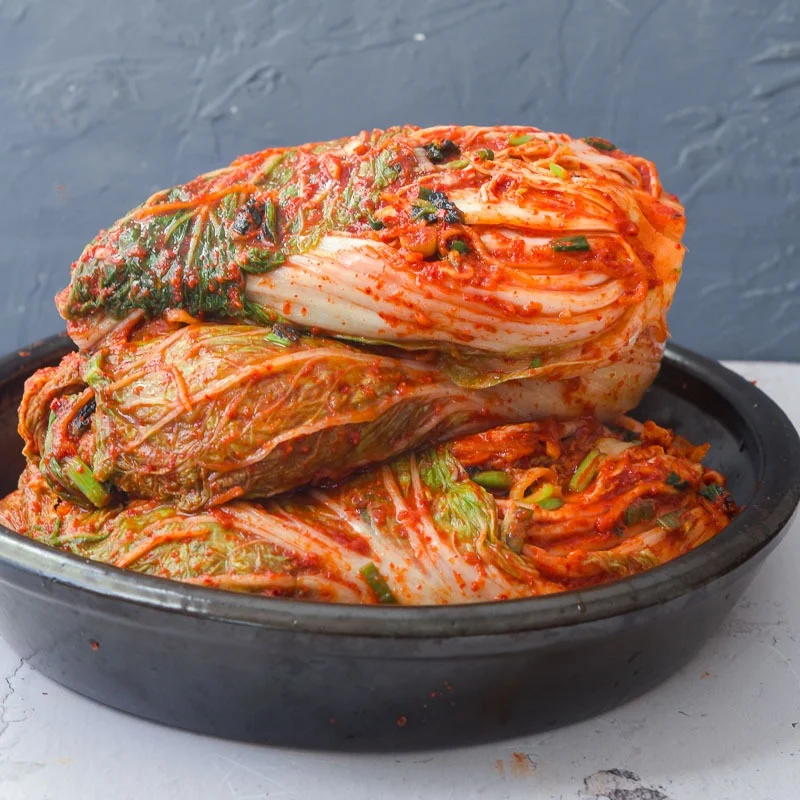
A traditional kimjang-style Korean kimchi made with whole napa cabbage, a rich seasoning paste, and classic fermentation techniques. Scaled down for home kitchens while keeping the deep, bold flavor of authentic winter kimchi.
Ingredients
- 2 (about 5 lb / 2.3 kg each) napa cabbage
- 2-1/2 cups (360 g) Korean coarse sea salt (divided)
- 10 cups (2.4 L) water
- 1 piece dried pollock fish head (or 20 dried baby shrimps)
- 6 dried large anchovies
- 1 large piece dried sea kelp
- 4 oz (100 g) Korean radish
- 1 sweet apple (cut in half)
- 1 Asian leek (or onion)
- 1 cup (240 ml) kimchi stock
- 2 tbsp (16 g) sweet rice flour (chapssal-garu)
- 1/2 onion (diced)
- 1/2 Korean pear (or bosc pear, diced)
- 20 cloves garlic
- 1/2 oz (15 g) fresh ginger (diced)
- 4 tbsp (40 g) Korean salted shrimp
- 1 lb (450 g) Korean radish (thinly julienned into 1/8-inch matchsticks)
- 2 cups (250 g) Korean chili flakes (gochugaru)
- 1 Asian leek (white part only) (thinly sliced)
- 3-1/2 oz (100 g) green onion (chopped)
- 10 oz (300 g) mustard green (chopped)
- 1 cup (240 ml) rice flour paste
- 1/3 cup (80 ml) Korean anchovy sauce
- 2 tbsp (30 ml) Korean plum extract (maeshil cheong)
- 1 tbsp (12 g) sugar
Instructions
- 1
--- To salt brine the cabbage ---
- 2
Begin by making a small slit at the base of the white stem with a knife, then gently pull the cabbage apart into halves using your hands. Afterward, make another slit in the center of the stem of each half to loosen it further.
- 3
In a large bowl, combine 1 cup of sea salt with water, stirring until fully dissolved. Thoroughly submerge each cabbage in the brine, ensuring the solution coats all the leaves and crevices.
- 4
Remove the cabbage from the saltwater and sprinkle coarse sea salt directly onto the thick white stems, as they take longer to soften than the leafy parts. Add an extra handful of salt on top of the cabbage for even seasoning.
- 5
Place the salted cabbage in a large plastic bag and seal it tightly to remove excess air. Allow the cabbage to wilt for 3–4 hours, flipping the bag occasionally for even brining. This helps the cabbage absorb the salt thoroughly and ensures consistent brining.
- 6
Rinse the cabbage thoroughly with water a few times to remove excess salt. Place it in a strainer and gently press to squeeze out excess water. Allow the cabbage to drain for 1 hour while you prepare the kimchi stock and seasoning.
- 7
--- To make kimchi stock and rice flour paste ---
- 8
In a pot, combine dried pollock fish head, anchovies, sea kelp, radish, apple, pear, and Asian leek with water. Bring to a boil, then remove the sea kelp to avoid bitterness. Reduce the heat and simmer for 30 minutes. Strain the stock, keeping the liquid, and discard the solids.
- 9
Whisk sweet rice flour into the kimchi stock and cook over medium heat, stirring continuously, until it thickens into a smooth, syrupy paste. Remove from heat and allow it to cool completely.
- 10
--- To make kimchi seasoning paste ---
- 11
In a blender, combine the aromatic ingredients: onion, garlic, ginger, pear, and salted shrimp. Blend until smooth, adding a small amount of kimchi stock if needed to achieve a smoother consistency.
- 12
In a large mixing bowl, toss the thin radish strips with 2 tablespoons of Korean chili flakes (gochugaru) until evenly coated. Let them rest for a few minutes to soften and absorb the vibrant color.
- 13
Add the greens, rice flour paste, kimchi stock, gochugaru, anchovy sauce, sugar, and Korean plum extract to the radish. Mix thoroughly until it forms a thick, cohesive paste.
- 14
--- To assemble kimchi ---
- 15
Hold the cabbage in one hand and gently separate the outer 1–2 leaves with the other. Spread the seasoning paste between each leaf, using just enough to coat them evenly while being careful not to tear the leaves.
- 16
Once the seasoning paste is applied to all the leaves, fold them inward and wrap the cabbage with the outermost leaf to create a neat, compact bundle. Repeat with the remaining batches and place the kimchi bundles in a kimchi container. (See note below.)
- 17
Rinse the bowl with 1 cup (or more) of remaining kimchi stock (or water) to gather any leftover seasoning. Pour it over the kimchi bundles in the container, then seal the lid tightly. The liquid will transform into a rich kimchi brine as it ferments.
- 18
--- To ferment and store kimchi ---
- 19
To ensure freshness and support long-term storage, it’s important to keep air out of the container. Line the container with a plastic bag, tie it tightly, and securely close the lid.
- 20
Leave the kimchi at room temperature for 1–2 days, depending on the weather, to kickstart fermentation. Then, transfer it to a refrigerator or kimchi fridge. While the kimchi can be enjoyed after this initial fermentation, letting it ferment for 1 week in the refrigerator will enhance its flavor.
- 21
Kimjang kimchi will stay delicious for several weeks in the fridge. Over time, it will continue to ferment, becoming tangier and more robust in flavor.
Cook it from the original
This recipe comes from beyondkimchee.com. Their page has the author’s own photos, notes and tips — the best place to cook it from.
Open the recipe on beyondkimchee.com