
Porridge bread
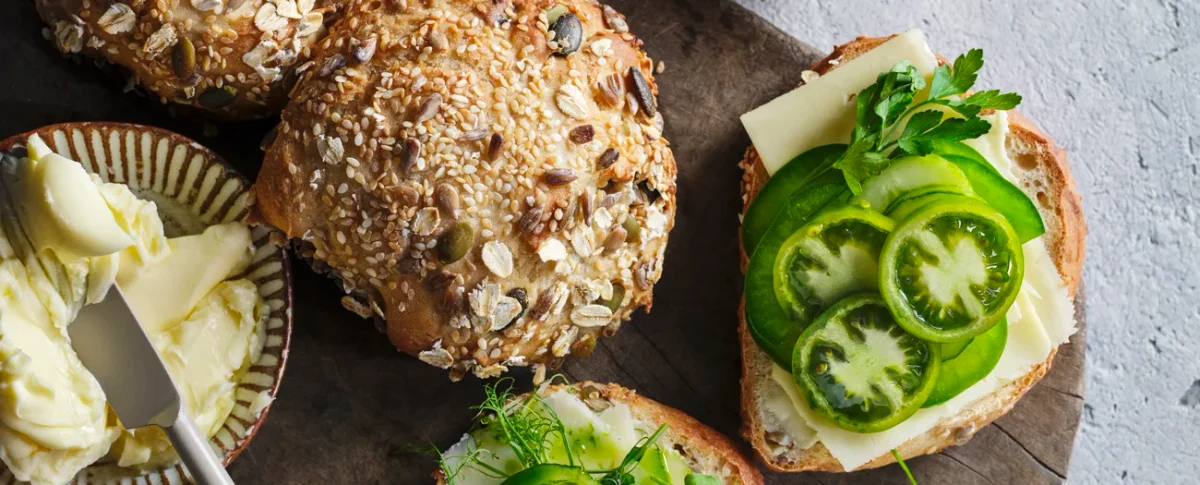
This soft, rustic porridge bread turns leftover porridge into an easy batch of breakfast rolls. Mix the loose dough quickly, then let it rise overnight in the fridge or for 1½ hours at room temperature.
Ingredients
- 25 gfresh yeast
- 1 dlGreek yoghurt, 10% fat
- 3 dlwater
- 1½ dloat porridge or rice pudding
- 1 tsprunny honey
- about 7 dlplain flour
- 1 tspflaky salt
- 1½ dlmixed seeds, such as pumpkin, sunflower and sesame seeds, or rolled oats
Instructions
- 1
Mix the yeast
Crumble the yeast into a bowl. Add the yoghurt and water, using lukewarm water if you are not leaving the dough to rise in the fridge overnight. Stir until the yeast has dissolved.
- 2
Make the dough
Add the porridge, honey, flour and salt. Quickly mix to make a loose batter-like dough. Scatter the topping over the bowl and cover with cling film.
- 3
Leave to rise
Let the dough rise either overnight in the fridge or on the kitchen counter for 1½ hours.
- 4
Heat the oven
Set the oven to 225°C, or 210°C for a fan oven, and put a baking tray inside to heat.
- 5
Prepare the tray
Take the hot tray out of the oven and place a sheet of baking parchment on it.
- 6
Shape the rolls
Spoon the dough onto the tray in 10–12 portions. Dip the spoon in cold water between each portion.
- 7
Bake the bread
Put the tray straight into the oven and bake the porridge breads for 18–20 minutes. Check with a thermometer; they are ready when the centre reaches 96–98°C.
- 8
Cool on a rack
Transfer the breads to a wire rack to cool.
What is porridge bread?
Porridge bread is a home-style loaf or roll made with cooked porridge mixed into the dough. It is a practical way to use leftovers, and this Swedish-style version makes individual portions rather than one large loaf.
The porridge brings moisture and softness, while yoghurt adds a gentle tang. A topping of seeds or oats gives the rolls a little extra texture.
Nutrition and macros by portion
The nutrition label shows one serving as written: 181 calories, 5g protein, 29g carbs, 4g fat.
| Portion | Adjustment | kcal | Protein | Carbs | Fat |
|---|---|---|---|---|---|
| Lighter | Smaller roll portions | 127 kcal | 4g | 20g | 3g |
| This serving | As written | 181 kcal | 5g | 29g | 4g |
| Hungry | Larger roll portions | 272 kcal | 8g | 44g | 6g |
The flour and porridge provide most of the carbohydrates, while the yoghurt and seeds contribute fat and some protein. The recipe's protein also comes from the flour and yoghurt; serve a roll with an egg or a protein-rich topping and fruit or vegetables for a more rounded plate.
Choosing the porridge
Oat porridge: use leftover porridge that has cooled before mixing it into the dough. Its soft texture blends readily with the other ingredients.
Rice pudding: this is the other suggested option and makes a milder, creamy-tasting bread. Either way, the mixture is meant to be loose rather than kneadable.
A deliberately loose dough
Flour: add the stated approximate amount and mix briefly; the dough should remain soft and spoonable. Avoid adding extra flour just to make it easy to handle.
Portions: use a spoon dipped in cold water to drop the dough onto the parchment. The water helps the sticky mixture release more easily.
Choosing a rise
Overnight: place the covered bowl in the fridge for a slow rise. This option suits a make-ahead breakfast or snack.
Room temperature: leave the covered dough on the kitchen counter for 1½ hours. Use lukewarm water for this route, as directed in the method.
Hot tray, quick transfer
Preheating the tray means the parchment and dough go straight onto a hot surface. Have the baking paper ready so the tray can go back into the oven promptly.
Once the portions are spooned out, bake them straight away for 18–20 minutes. The method gives a centre temperature of 96–98°C as the doneness check.
Topping and serving
Seeds: pumpkin, sunflower and sesame seeds are suggested for a varied, crunchy finish. Rolled oats are an alternative if you prefer a simpler topping.
Serve the rolls for breakfast or as a snack. They also work alongside soup or with a savoury spread.
Recipe notes & tips
- Use lukewarm water for the room-temperature rise, but not for the overnight fridge rise.
- Cover the bowl well during rising to keep the dough from drying out.
- Keep the dough loose; it is shaped with a spoon rather than kneaded.
- Dip the spoon in cold water between portions to make the sticky dough easier to portion.
- Use a thermometer to check that the centre reaches 96–98°C.
- Let the rolls cool on a wire rack so their bases do not sit against a solid surface.
Variations
- Use rolled oats: swap the mixed seeds for oats as suggested in the ingredients.
- Choose rice pudding: use it instead of oat porridge for a milder flavour.
- Mix the seed topping: combine pumpkin, sunflower and sesame seeds for varied crunch.
- Make smaller portions: spoon the dough into 12 rolls for more, smaller pieces.
- Make fewer portions: shape 10 rolls for larger individual breads.
Common mistakes to avoid
- Adding too much flour: the dough is meant to be loose, so mix it briefly and keep it spoonable.
- Using hot water: very hot water can be unsuitable for the yeast; use lukewarm water for the room-temperature rise.
- Skipping the tray preheat: warm the baking tray in the oven before adding the parchment and dough.
- Leaving the dough uncovered: cover the bowl with cling film during the rise.
- Overbaking by guesswork: check the centre with a thermometer and look for 96–98°C.
- Handling the dough with a dry spoon: dip it in cold water between portions to help the dough release.
How to store
Once cool, store the rolls in an airtight container at room temperature and eat within a couple of days. Freeze any extras, then thaw and warm briefly in the oven before serving.
Frequently asked questions
Can I use either oat porridge or rice pudding?
Yes. The recipe lists both as options, so use 1½ dl of either.
How long does the dough need to rise?
Choose an overnight rise in the fridge or leave it on the kitchen counter for 1½ hours.
Should the water be warm?
Use lukewarm water for the room-temperature rise. The recipe specifies this adjustment if you are not leaving the dough in the fridge overnight.
Why is the dough so sticky?
It is meant to be loose and spoonable, not a firm dough to knead. Dip the spoon in cold water between portions.
How do I know the rolls are baked through?
Check the centre with a thermometer; the recipe gives 96–98°C as the finished temperature.
Can I make the rolls ahead?
Yes. The dough can rise overnight in the fridge, ready to portion and bake the next day.
Cook it from the original
This recipe comes from arla.se. Their page has the author’s own photos, notes and tips — the best place to cook it from.
Open the recipe on arla.se