
Brazilian Churro Cake
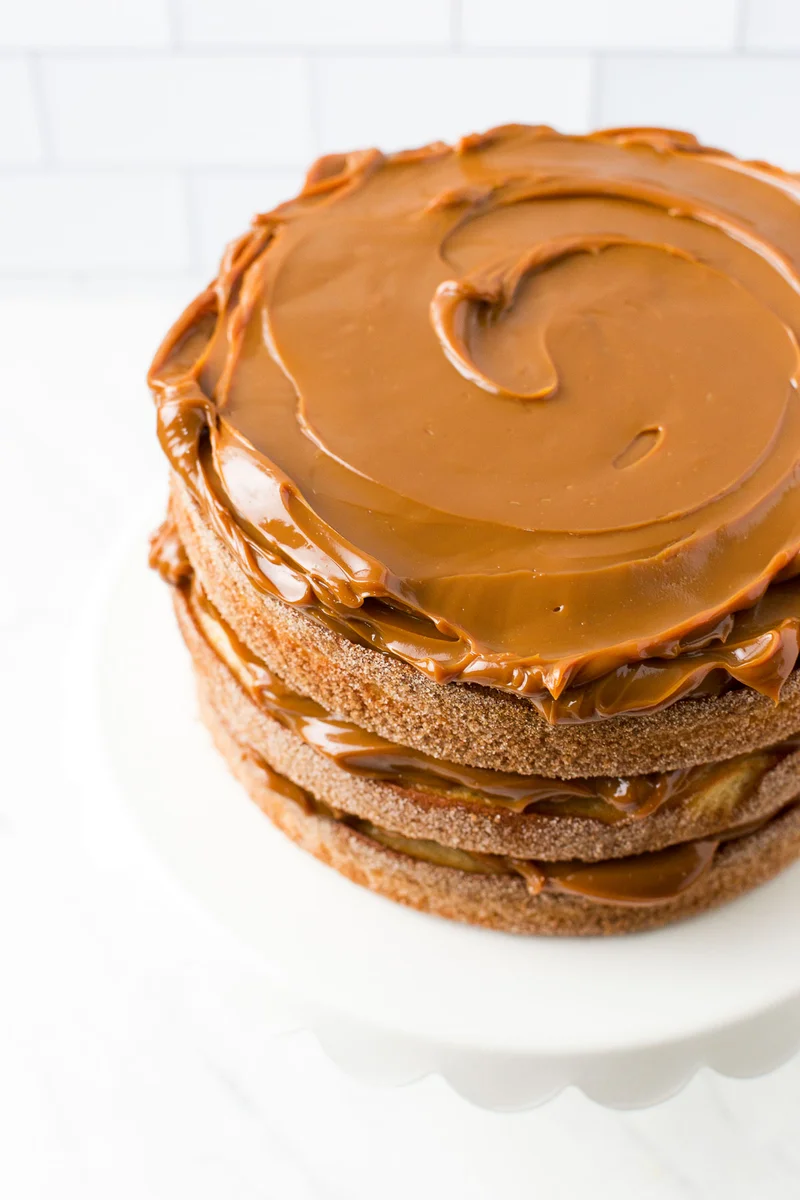
Brazilian churro cake layers moist cinnamon sponge with dulce de leche and finishes the sides with cinnamon sugar. It makes a celebratory centrepiece while using familiar cake-making techniques.
Ingredients
- 4eggs
- 375 g (3 cups)plain flour
- 360 ml (1½ cups)milk
- 400 g (2 cups)granulated sugar
- 227 g (8 oz; 2 sticks)butter
- 10 ml (2 tsp)vanilla extract
- 12 g (1 tbsp)baking powder
- 5 g (2 tsp)ground cinnamon
- 1 tspsalt
- 25 g (2 tbsp)granulated sugar
- 4 g (½ tbsp)ground cinnamon
- 2 cans, 380 g (13.4 oz) eachdulce de leche
Instructions
- 1
Preheat the oven
Heat the oven to 175°C (350°F).
- 2
Prepare the tins
Grease and flour all three cake tins, line them with baking parchment, then grease them again and set aside.
- 3
Mix dry ingredients
Whisk the flour, 2 tsp cinnamon, baking powder and salt together in a bowl; set aside.
- 4
Cream butter and sugar
Beat the butter and 2 cups of sugar with a hand mixer or a stand mixer fitted with the paddle attachment until creamy and combined, about 2 minutes.
- 5
Add the eggs
Beat in the eggs one at a time on medium speed, scraping down the sides of the bowl between additions.
- 6
Finish the batter
Stir the vanilla into the milk. With the mixer on low, add the flour mixture in three additions, alternating with the milk in two additions. Begin and end with flour, incorporating each addition fully and scraping down the bowl as needed.
- 7
Bake the layers
Divide the batter evenly among the prepared tins. Bake for about 30–35 minutes, until a tester inserted into the centre comes out lightly crumbly.
- 8
Cool the cakes
Set the tins on a cooling rack for 5–10 minutes, then turn out the cakes and leave them on the rack to cool completely.
- 9
Mix cinnamon sugar
While the cakes bake, combine 2 tbsp sugar with ½ tbsp cinnamon in a dish.
- 10
Coat the sides
Once the cakes are completely cool, brush or dab a little water onto their sides, just enough to help the sugar adhere. Roll the sides in the cinnamon-sugar mixture.
- 11
Fill the first layers
Set one cake layer flat side down on a cake stand, board or plate. Spread ½ cup dulce de leche evenly over it, add the second layer flat side down, then spread another ½ cup dulce de leche on top.
- 12
Finish the cake
Place the third layer on top, flat side down, and spread one whole can (1 cup) of dulce de leche evenly over it.
What is Brazilian churro cake?
This is a layered cake inspired by the flavours of churros: cinnamon, sugar and a rich, caramel-like filling. Churros are popular across Latin America, and this Brazilian-style cake brings those familiar flavours into a celebratory baked dessert.
Here, cinnamon is mixed into the sponge and into the sugar coating, while dulce de leche fills the layers and tops the cake. The contrast between soft cake, sticky filling and lightly crunchy sides gives each slice its character.
Nutrition and macros by portion
The nutrition label shows one serving as written: 6470 calories, 101g protein, 961g carbs, 239g fat.
| Portion | Adjustment | kcal | Protein | Carbs | Fat |
|---|---|---|---|---|---|
| Lighter | Smaller cake slice | 4529 kcal | 71g | 673g | 167g |
| This serving | As written | 6470 kcal | 101g | 961g | 239g |
| Hungry | Larger cake slice | 9705 kcal | 152g | 1442g | 359g |
The flour and sugar supply most of the carbohydrates, while butter and dulce de leche contribute much of the fat; the eggs, milk and flour provide some protein. The supplied serving count is 1, so these estimates represent the whole cake; for a more balanced plate, serve a smaller slice with fresh fruit.
The cinnamon sponge
Dry ingredients: whisk the flour, cinnamon, baking powder and salt thoroughly before mixing them into the batter. This helps distribute the raising agent and spice evenly through all three layers.
Butter and sugar: beat them until creamy, then add the eggs individually. Scraping the bowl between additions helps the mixture come together evenly.
Alternating milk and flour
Order matters: add the flour mixture in three portions and the vanilla milk in two, starting and finishing with flour. Mix on low and stop once each addition is incorporated to avoid overworking the batter.
Even layers: divide the batter as evenly as possible among the three prepared tins. Similar amounts help the layers bake at a similar rate and make the finished stack easier to assemble.
Check for doneness
The recipe gives a baking window of 30–35 minutes at 175°C (350°F). Test the centre with a cake tester or toothpick; it should come out lightly crumbly rather than coated in wet batter.
Cooling fully is important before filling. Warm sponge can soften the dulce de leche and make the layers more likely to shift as you stack them.
Make the coating stick
Moisture: brush just a little water onto the sides of the cooled cake. Too much can make the cinnamon sugar clump or dissolve instead of forming a fine coating.
Coat the sides: roll them in the sugar mixture after the water is applied. The recipe leaves the top for dulce de leche, so the cinnamon-sugar finish is focused around the outside.
Layer with dulce de leche
First and second layers: spread ½ cup of dulce de leche over each before stacking the next sponge. Aim for an even layer, keeping the filling from spilling over the sides.
Top layer: set it flat side down and spread one whole can (1 cup, as specified in the method) over the top. A level cake stand or plate makes the finished cake easier to assemble and serve.
Serving ideas
The cake is rich and sweet, so small slices are a practical place to start. Serve it on its own or alongside unsweetened coffee or tea.
For a less sweet-feeling plate, add fresh berries or sliced fruit alongside rather than adding another sugary topping.
Recipe notes & tips
- Bring the butter, eggs and milk to room temperature before mixing for a smoother batter.
- Prepare and line all three tins before you begin mixing.
- Scrape the bowl after adding each egg and each portion of the flour-and-milk mixture.
- Use a kitchen scale to divide the batter evenly between the tins.
- Let the layers cool completely before brushing on water or adding dulce de leche.
- Keep the cinnamon-sugar coating in a wide, shallow dish to make rolling the cake sides easier.
Variations
- Add a pinch of spice: mix a little extra cinnamon into the sponge for a more pronounced cinnamon flavour.
- Use a piping finish: pipe the dulce de leche on top if you want a decorative finish while keeping the same filling.
- Serve with berries: add fresh berries beside each slice for a tart contrast.
- Make a coffee pairing: serve alongside unsweetened coffee to balance the cake’s sweetness.
- Choose another tin shape: bake in other suitable cake tins, checking doneness rather than relying only on the stated timing.
Common mistakes to avoid
- Filling warm layers: the dulce de leche can soften and the stack may shift; cool the cakes completely first.
- Adding too much water: the cinnamon sugar can become wet and patchy; dampen the sides only lightly.
- Overmixing the batter: the sponge can become less tender; mix on low and stop when each addition is incorporated.
- Uneven cake layers: they can bake at different rates; divide the batter evenly among all three tins.
- Skipping the bowl scrape: unmixed ingredients can cling to the sides; scrape the bowl between additions.
- Removing cakes too soon: warm layers are delicate; allow 5–10 minutes in the tins before turning them out.
How to store
Cover and refrigerate the assembled cake, and use within 3–4 days. Let a slice stand briefly at room temperature before serving; avoid reheating the assembled cake, as the filling can become very soft.
Frequently asked questions
Can I make the cake layers ahead?
Yes. Bake and cool the layers, then wrap them well and refrigerate until you are ready to assemble. Add the cinnamon-sugar coating and dulce de leche once the layers are cool.
How do I know when the cakes are baked?
Insert a cake tester or toothpick into the centre after about 30 minutes. It should come out lightly crumbly, not covered with wet batter.
Why do the cakes need to cool completely?
Dulce de leche can soften on warm cake, making the layers harder to stack neatly. Cooling also helps the dampened sides hold the cinnamon sugar.
How much dulce de leche goes between the layers?
The method specifies ½ cup on the first layer and another ½ cup on the second. It then calls for one whole can (1 cup) on top.
Can I use a different number of cake tins?
The method is written for three tins. If you use a different arrangement, divide the batter evenly and check each cake for doneness, as baking time may change.
What should I serve with Brazilian churro cake?
Coffee or tea makes a simple accompaniment. Fresh fruit alongside the slice offers a tart contrast to the sweet filling.
Cook it from the original
This recipe comes from braziliankitchenabroad.com. Their page has the author’s own photos, notes and tips — the best place to cook it from.
Open the recipe on braziliankitchenabroad.com