
Easy Mac and Cheese (20 Minutes +One Pot!)
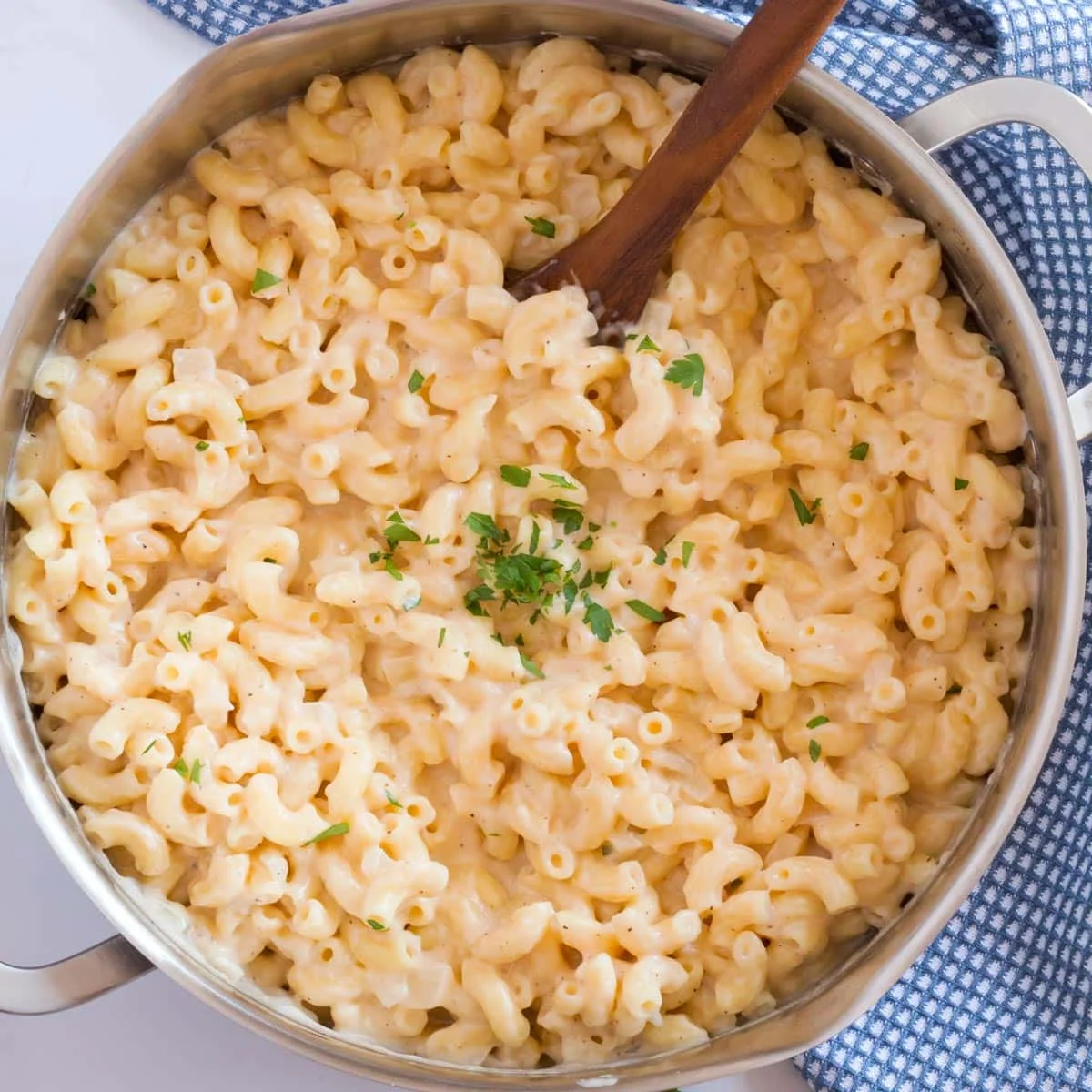
This American-style one-pot mac and cheese combines tender elbow macaroni with a creamy sauce made from milk, butter and two cheeses. It is a straightforward choice for a quick family dinner or a comforting side.
Ingredients
- 100 g (7 tbsp)butter
- 1/2 largeonion, finely diced
- 10 ml (2 tsp)garlic, minced
- 45 g (6 tbsp)plain flour
- 5 ml (1 tsp)mustard powder
- 950 ml (4 cups)milk
- 950 ml (4 cups)water
- 450 g (1 lb)elbow macaroni
- 140 g (2 cups; 5 oz)mozzarella, shredded
- 140 g (2 cups; 5 oz)sharp Cheddar, shredded
- 3/4 tspsalt, adjusted to taste
- 1/2 tsppepper
Instructions
- 1
Cook the aromatics
Melt the butter in a large saucepan over a medium-high heat. Add the onion and garlic and cook for 3–4 minutes, until translucent.
- 2
Prepare the cheese
While the onion and garlic cook, shred the cheese if it is not ready. Combine the milk and water in a separate measuring jug.
- 3
Whisk in flour
Add the flour and mustard powder to the pan. Whisk constantly for 30–60 seconds.
- 4
Add the liquid
Pour in a little of the milk and water mixture at a time, whisking constantly until a thick slurry forms. Gradually whisk in the rest, making sure the mixture stays smooth and lump-free.
- 5
Simmer the pasta
Add the macaroni and bring the pan to a simmer. Cook for 10–12 minutes, or until the pasta is tender.
- 6
Stir in cheese
Take the pan off the heat and stir in the cheese a few handfuls at a time. Taste, then add salt and pepper if needed.
What is mac and cheese?
Mac and cheese is an American comfort-food favourite: pasta coated in a rich cheese sauce. This version cooks the macaroni directly in a milk-and-water mixture, keeping the method to one pot.
A little onion, garlic and mustard powder add savoury depth, while mozzarella and sharp Cheddar bring a mild, stretchy finish and a more pronounced cheesy flavour.
Nutrition and macros by portion
The nutrition label shows one serving as written: 688 calories, 28g protein, 73g carbs, 31g fat.
| Portion | Adjustment | kcal | Protein | Carbs | Fat |
|---|---|---|---|---|---|
| Lighter | Smaller pasta portion | 482 kcal | 20g | 51g | 22g |
| This serving | As written | 688 kcal | 28g | 73g | 31g |
| Hungry | Larger pasta portion | 1032 kcal | 42g | 110g | 47g |
The macaroni supplies most of the carbohydrates, while butter and cheese contribute much of the fat. Milk and the cheeses provide protein, with the pasta adding some as well. Pair a serving with vegetables or salad for a more balanced plate.
The one-pot method
Liquid balance: The macaroni cooks in the combined milk and water, rather than being boiled and drained separately. Keep the pan at a simmer and stir as needed so the pasta cooks evenly.
Build a smooth sauce
Flour base: Whisk the flour and mustard powder into the melted butter and softened aromatics for 30–60 seconds before adding liquid. This helps distribute the flour through the sauce.
Slow addition: Add the milk and water gradually, whisking as you go. Adding the mixture in stages gives you a better chance of keeping the sauce smooth.
Choose and add the cheese
Cheddar: Sharp Cheddar gives the sauce a clear, savoury cheese flavour. Shred it before you start stirring it into the pan so it is ready when the pasta is cooked.
Mozzarella: Mozzarella contributes a mild, soft texture alongside the Cheddar. Stir both cheeses in off the heat, a few handfuls at a time.
Check the pasta
Tenderness: Begin checking the macaroni towards the end of its 10–12-minute simmer. It should be tender before you take the pan off the heat and add the cheese.
Sauce texture: The sauce thickens as the flour works and the pasta cooks. Keep it at a gentle simmer rather than a hard boil.
Serve it while creamy
This mac and cheese works as a main meal or a side dish. For a fuller plate, serve it with a crisp green salad or steamed vegetables to add freshness alongside the rich sauce.
Recipe notes & tips
- Shred the cheese before you begin so it is ready when the pasta finishes cooking.
- Measure the milk and water together in a jug for easy, gradual pouring.
- Whisk continuously as you add the liquid to help prevent lumps.
- Keep the macaroni at a simmer and check it for tenderness before the full cooking time is up.
- Add the cheese off the heat, a few handfuls at a time.
- Taste before adding the full amount of salt, as the cheeses contribute seasoning.
Variations
- Extra mustard: Add a little more mustard powder for a stronger savoury note.
- More garlic: Increase the minced garlic if you prefer a more pronounced garlic flavour.
- Different cheese: Swap one of the cheeses for another good-melting cheese.
- Peppery finish: Add extra pepper to taste when seasoning the finished dish.
Common mistakes to avoid
- Adding liquid too quickly: Pour it in gradually while whisking to help keep the sauce smooth.
- Skipping the flour whisk: Cook and whisk the flour with the butter for 30–60 seconds before adding liquid.
- Boiling too hard: Keep the macaroni at a simmer so it cooks steadily.
- Overcooking the pasta: Check for tenderness during the 10–12-minute simmer and remove the pan from the heat once ready.
- Adding cheese over the heat: Take the pan off the heat first, then stir in the cheese gradually.
How to store
Cool leftovers and refrigerate them in a covered container for up to 3–4 days. Reheat gently in a saucepan or microwave, stirring in a splash of milk or water if the sauce has thickened.
Frequently asked questions
Can I make this ahead?
It is best served soon after cooking, when the sauce is creamiest. You can prepare the ingredients in advance, then cook the pasta and sauce just before serving.
How do I stop the sauce going lumpy?
Whisk constantly while adding the milk and water in small amounts. Wait until each addition is incorporated before pouring in more.
When should I add the cheese?
Take the saucepan off the heat once the macaroni is tender. Stir in the cheese a few handfuls at a time.
Can I use a different pasta shape?
Yes, another small pasta shape can be used, though its cooking time may differ. Check it for tenderness as it simmers.
Why is my mac and cheese thick after chilling?
The sauce firms up as it cools. Reheat it gently with a splash of milk or water, stirring until it loosens.
Cook it from the original
This recipe comes from borrowedbites.com. Their page has the author’s own photos, notes and tips — the best place to cook it from.
Open the recipe on borrowedbites.com