
Tuna Pasta Salad
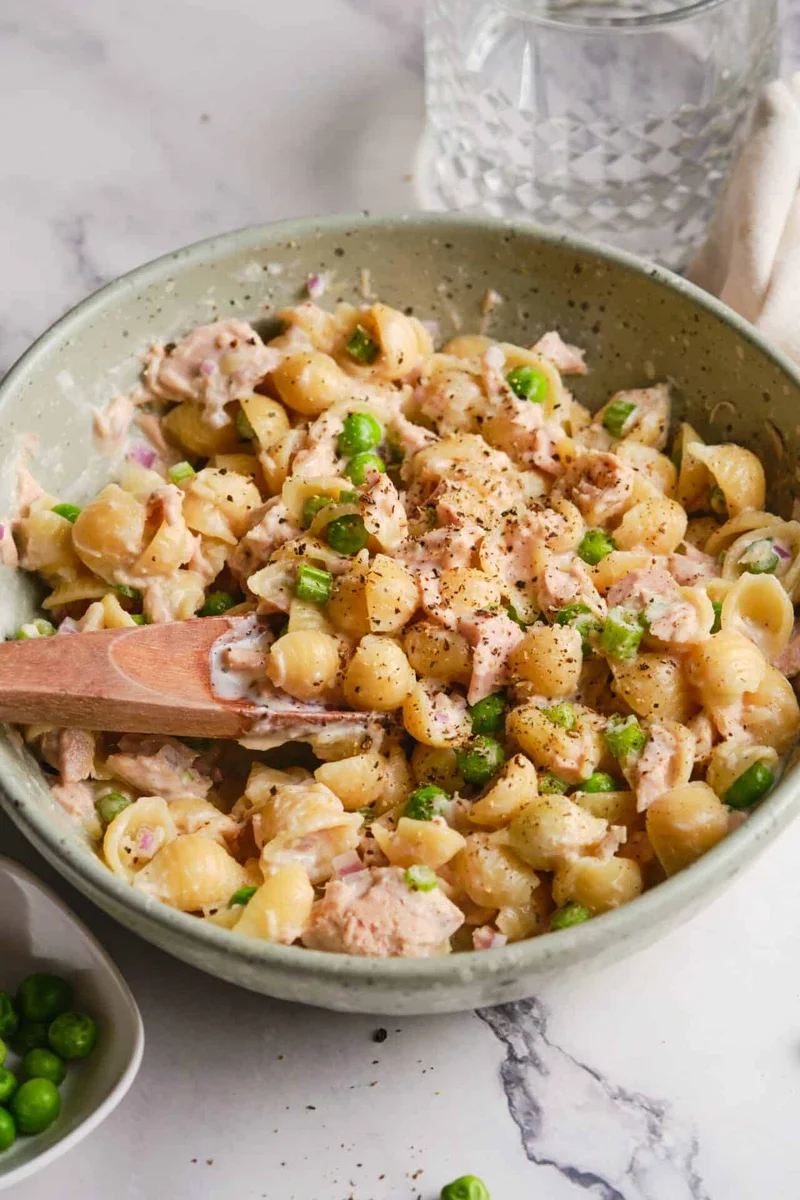
This creamy American tuna pasta salad combines tender shells, tuna, crisp celery, red onion and peas with a mayonnaise and Greek yoghurt dressing. It comes together quickly, then chills so the flavours can mingle—handy for a make-ahead lunch or easy supper.
Ingredients
- 227 g (8 oz)small shell pasta (or your favourite bite-size pasta)
- 198 g (7 oz)canned albacore white tuna in water, drained
- 2 ribscelery, chopped
- 60 ml (¼ cup)red onion, chopped
- 150 g (1 cup)frozen peas
- 120 ml (½ cup)mayonnaise
- 120 ml (½ cup)plain Greek yoghurt
- To taste (optional)dried dill
- To tastesalt
- To tastefreshly ground black pepper
Instructions
- 1
Boil the pasta
Cook the pasta according to the packet instructions until al dente. Drain it and set it aside to cool.
- 2
Combine the ingredients
Put the chopped celery and red onion, peas, cooled pasta and drained tuna in a large mixing bowl.
- 3
Whisk the dressing
In a separate bowl, whisk the mayonnaise and Greek yoghurt together until smooth.
- 4
Fold in dressing
Gently fold half of the dressing through the pasta mixture until coated. Season with salt, pepper and dried dill to taste.
- 5
Chill the salad
Cover the salad and the remaining dressing separately and refrigerate for at least 30 minutes. Stir in the remaining dressing before serving.
What is tuna pasta salad?
Tuna pasta salad is a familiar American-style cold dish that pairs cooked pasta and canned tuna with a creamy dressing and crunchy vegetables. It works as a packed lunch, a casual supper or a side for a shared meal.
This version balances mayonnaise with Greek yoghurt, while peas add sweetness and celery and red onion bring a crisp, savoury contrast. Chilling gives the pasta time to take on the dressing's flavour.
Nutrition and macros by portion
The nutrition label shows one serving as written: 411 calories, 19g protein, 40g carbs, 19g fat.
| Portion | Adjustment | kcal | Protein | Carbs | Fat |
|---|---|---|---|---|---|
| Lighter | Use more yoghurt | 288 kcal | 13g | 28g | 13g |
| This serving | As written | 411 kcal | 19g | 40g | 19g |
| Hungry | Serve a larger portion | 617 kcal | 29g | 60g | 29g |
The pasta and peas provide most of the carbohydrates, while tuna and Greek yoghurt contribute protein. Mayonnaise is the main source of fat, with additional fat from the yoghurt. Serve it with extra salad vegetables for a fresh, balanced plate.
The pasta and tuna
Small shells: Their curves catch the dressing and small pieces of vegetable, though any bite-size pasta can be used. Cook them just to al dente so they hold their shape after chilling.
Tuna: Drain the albacore well before adding it, so excess liquid does not thin the dressing. Fold it in gently to keep some recognisable flakes.
The crunchy additions
Celery and onion: Chop them small enough to distribute through each serving. Their fresh crunch gives the creamy pasta some contrast.
Peas: Add them frozen as directed; they can thaw as the salad chills. Their mild sweetness pairs well with tuna and dill.
Getting the dressing right
Mayonnaise and yoghurt: Whisking them together first makes a smooth dressing that is easy to fold through the salad. The yoghurt adds a tangy note alongside the richer mayonnaise.
Two additions: Mix in half before chilling and keep the rest covered in the fridge. Stirring in the reserved portion just before serving refreshes the salad.
Chilling and seasoning
Cool pasta: Let the drained pasta cool before combining it with the other ingredients, as warm pasta can soften the vegetables and affect the dressing's texture.
Final taste: Season with salt, pepper and optional dried dill before chilling. Taste again before serving, since a cold salad may need a little adjustment.
Serving ideas
Serve the salad cold as a light main or alongside a simple green salad. For a fuller spread, pair it with sliced tomatoes or bread.
For a balanced plate, add extra vegetables on the side; the pasta supplies most of the carbohydrate, while tuna contributes protein and the dressing supplies much of the fat.
Recipe notes & tips
- Drain the tuna thoroughly so its liquid does not loosen the dressing.
- Cook the shells to al dente, as they will soften slightly while chilling.
- Chop the celery and onion finely for an even mix in every spoonful.
- Keep the reserved dressing separate during chilling, then fold it in just before serving.
- Use dried dill sparingly at first and add more to taste.
Variations
- Use another pasta: Choose any small shape that can hold the creamy dressing.
- Add fresh herbs: Stir in chopped parsley or dill for a fresh herbal note.
- Include sweetcorn: Replace some of the peas with drained sweetcorn.
- Add cucumber: Fold in finely diced cucumber just before serving for extra crunch.
- Boost the pepper: Add more freshly ground black pepper for a sharper seasoning.
Common mistakes to avoid
- Overcooked pasta: It can turn soft after chilling; drain it as soon as it reaches al dente.
- Warm pasta: It can affect the dressing and soften the vegetables; cool it before combining.
- Wet tuna: Excess liquid can make the salad loose; drain the tuna well.
- All the dressing at once: The salad may seem less fresh after chilling; reserve half and stir it in before serving.
- Large vegetable pieces: They can make each bite uneven; chop the celery and onion finely.
How to store
Store the salad and reserved dressing in separate airtight containers in the fridge, and eat within 3–4 days. Stir the dressing through before serving; this salad is best served cold rather than reheated.
Frequently asked questions
Can I make tuna pasta salad ahead?
Yes. Chill the salad and reserved dressing separately for at least 30 minutes, then mix in the remaining dressing just before serving.
Do the peas need to be thawed first?
No. The recipe adds frozen peas directly to the bowl; they can thaw while the salad chills.
Can I use a different pasta shape?
Yes. Choose another bite-size shape, such as fusilli or macaroni, and cook it according to its packet instructions until al dente.
Why is some of the dressing held back?
The pasta absorbs some dressing as it chills. Stirring in the reserved portion before serving helps refresh the coating.
Can I leave out the dill?
Yes. Dried dill is optional, so you can omit it or season the salad with salt and pepper alone.
Cook it from the original
This recipe comes from bakedbree.com. Their page has the author’s own photos, notes and tips — the best place to cook it from.
Open the recipe on bakedbree.com