
Chayote Mushroom Stir-fry
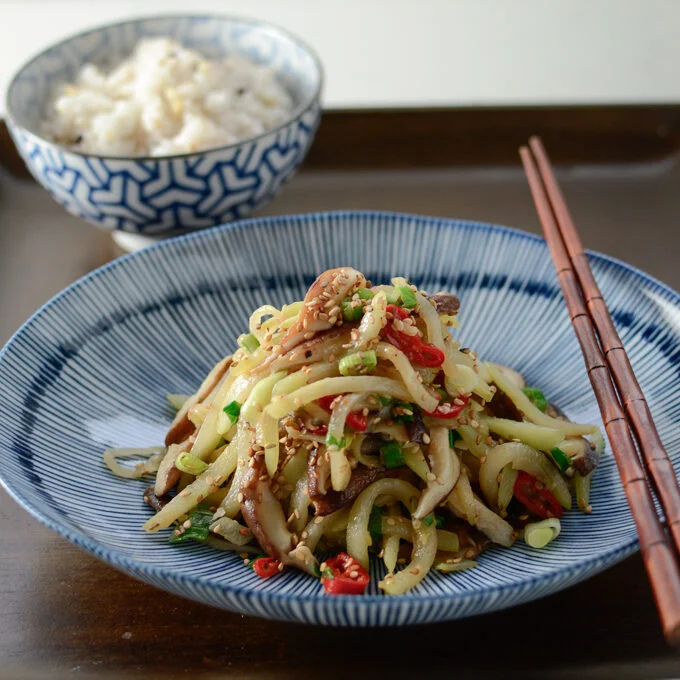
A gently savoury Korean-style stir-fry of crisp-tender chayote and mushrooms, finished with spring onion and toasted sesame seeds. Serve it warm or at room temperature as a side dish, or with rice for a simple vegetarian meal.
Ingredients
- 1chayote
- 5–6fresh shiitake or oyster mushrooms, sliced
- 1 tsp, plus moresalt
- 1 tbspoil
- 1fresh red chilli
- 1 clovegarlic, minced
- 2 tbspwater
- 2 tspKorean soup soy sauce (gukganjang)
- 2spring onions, chopped
- 2 tsptoasted sesame seeds
Instructions
- 1
Salt the chayote
Peel the chayote with a potato peeler. Slice thinly around the pit, then cut the slices into thin matchsticks. Sprinkle over 1 teaspoon salt and rub it in thoroughly. Rinse the chayote and set it aside.
- 2
Warm the aromatics
Heat the oil in a frying pan over medium heat. Add the red chilli and garlic and cook until fragrant.
- 3
Cook the chayote
Add the chayote and a pinch of salt. Cook for 2–3 minutes, until it has softened somewhat.
- 4
Steam the mushrooms
Add the mushrooms and stir. Pour in the water to create steam, then continue stirring.
- 5
Season and toss
Drizzle in the Korean soup soy sauce and add the spring onions. Toss well, then add more salt to taste.
- 6
Finish and serve
Sprinkle over the toasted sesame seeds and serve warm or at room temperature.
What is chayote mushroom stir-fry?
Chayote mushroom stir-fry is a mild, savoury vegetable dish that fits naturally on a Korean-style table as a side dish, or banchan. Chayote is a pale green squash with a delicate flavour and a texture that stays pleasantly firm when briefly cooked.
This version pairs it with mushrooms, garlic and chilli, then uses Korean soup soy sauce for a savoury finish. A short cook keeps the vegetables distinct rather than turning them into a soft, saucy mixture.
Nutrition and macros by portion
The nutrition label shows one serving as written: 65 calories, 2g protein, 7g carbs, 4g fat.
| Portion | Adjustment | kcal | Protein | Carbs | Fat |
|---|---|---|---|---|---|
| Lighter | Use less oil | 46 kcal | 1g | 5g | 3g |
| This serving | As written | 65 kcal | 2g | 7g | 4g |
| Hungry | Serve with extra rice | 98 kcal | 3g | 11g | 6g |
The chayote and mushrooms provide most of the carbohydrates, while the oil and sesame seeds supply most of the fat; the vegetables contribute a little protein. Serve it with rice for a more substantial plate, or pair it with another protein-rich dish if you want more protein.
Prepare the chayote
Thin matchsticks: cut the chayote into similarly sized pieces so they cook evenly and quickly. Slice around the central pit, which is not needed for this method.
Salt and rinse: rubbing on the salt seasons the chayote before cooking. Rinse it afterwards as directed, then let excess water drain so the pan does not become too wet.
Choose the mushrooms
Shiitake: these bring a deeper, more savoury flavour and hold their shape well when sliced.
Oyster: these are a good alternative, with a softer texture and mild flavour. Whichever type you use, slice it before starting so it can go straight into the pan.
Build flavour in the pan
Garlic and chilli: add them to the warm oil and cook only until fragrant. This gives the oil flavour without letting the garlic scorch.
Soup soy sauce: gukganjang is a Korean soup soy sauce with a salty, savoury taste. Add it near the end as instructed, and taste before adding extra salt.
Watch the texture
Chayote: after 2–3 minutes it should be somewhat soft but still have some bite. Keep stirring and check a piece rather than waiting for it to become fully tender.
Mushrooms: the added water creates steam to help cook them alongside the chayote. Stir as the water cooks, and avoid leaving the vegetables unattended.
Serve it as a side or meal
As a side: serve a small portion alongside rice and other dishes. Its mild flavour works well with a varied Korean-inspired spread.
As a meal: spoon it over a bowl of rice for a simple vegetarian plate. It can be served warm or at room temperature, as the method specifies.
Recipe notes & tips
- Cut the chayote into thin, even matchsticks for quick, consistent cooking.
- Drain the rinsed chayote well before adding it to the frying pan.
- Have the mushrooms, chilli and garlic ready before heating the oil.
- Stir the garlic and chilli as they cook so the garlic does not catch.
- Taste before adding extra salt, since both the salted chayote and soy sauce season the dish.
- Toast the sesame seeds ahead of time if yours are not already toasted.
Variations
- Use shiitake: choose them for a deeper, more savoury mushroom flavour.
- Use oyster mushrooms: swap them in for a softer texture.
- Adjust the chilli: use less for a milder stir-fry or more for extra heat.
- Add ginger: briefly cook a little finely chopped ginger with the garlic for a warmer aromatic note.
- Make it a rice bowl: serve the stir-fry over cooked rice for a more filling meal.
Common mistakes to avoid
- Thick chayote slices: they may cook unevenly; cut thin matchsticks as directed.
- Skipping the rinse: excess salt can make the dish too salty; rinse the salted chayote before cooking.
- Scorching the garlic: burnt garlic tastes bitter; cook it only until fragrant over medium heat.
- Overcooking the chayote: it can lose its bite; check it after 2–3 minutes and stop when somewhat soft.
- Adding salt too soon: the soy sauce and salted chayote already add seasoning; taste before adding more.
How to store
Refrigerate leftovers in a covered container and use within 3 days. Reheat gently in a frying pan until warmed through, or serve at room temperature.
Frequently asked questions
Do I need to peel the chayote?
Yes, this recipe directs you to peel it with a potato peeler before slicing. Cut around the pit and leave it out.
Can I use either shiitake or oyster mushrooms?
Yes. The recipe allows either, so use 5–6 fresh mushrooms of the type you prefer and slice them.
What is Korean soup soy sauce?
It is gukganjang, a Korean soy sauce used in soups. It gives this stir-fry a savoury seasoning; ordinary soy sauce may taste different and saltier, so adjust added salt cautiously.
How do I know when the chayote is done?
After 2–3 minutes in the pan it should be somewhat soft, while retaining some firmness. The aim is not to cook it until completely soft.
Can I serve this at room temperature?
Yes. The recipe says to serve it warm or at room temperature, making it suitable as a side dish either way.
Is the dish vegan?
The listed ingredients are plant-based. Check the label on your Korean soup soy sauce if you need to confirm a particular product.
Cook it from the original
This recipe comes from beyondkimchee.com. Their page has the author’s own photos, notes and tips — the best place to cook it from.
Open the recipe on beyondkimchee.com