
Pan-Seared Steak
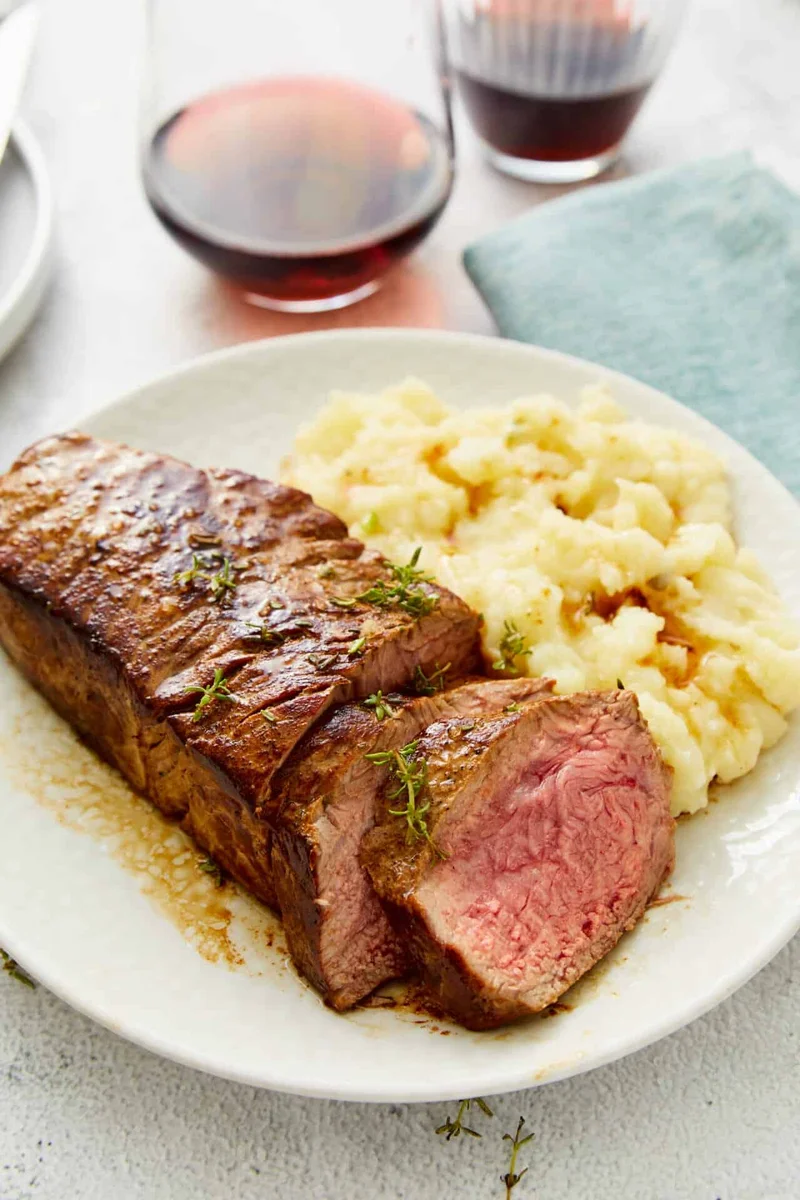
Pan-seared New York strip or rib-eye steaks get a deeply browned crust while staying juicy inside. This quick method uses a hot skillet, a brief butter baste and a short rest before slicing.
Ingredients
- 2 steaks, 340 g each (12 oz each), about 3.8 cm (1½ inches) thickNew York strip or rib-eye steaks
- 5 ml (1 teaspoon)kosher salt
- 2.5 ml (½ teaspoon)freshly ground black pepper
- 30 ml (2 tablespoons)oil, such as canola or grapeseed
- 15 g (1 tablespoon)unsalted butter
- To taste, optionalfresh thyme leaves
Instructions
- 1
Dry the steaks
Pat the steaks dry all over with paper towels so their surfaces can sear properly.
- 2
Season the steaks
Sprinkle the kosher salt and freshly ground black pepper evenly over both steaks.
- 3
Heat the skillet
Set a heavy skillet, preferably cast iron, over medium-high heat and let it become very hot.
- 4
Add the oil
Pour the oil into the hot skillet and wait until it shimmers.
- 5
Sear the first side
Carefully place the steaks in the skillet to avoid splashing oil. Leave them undisturbed for about 3 minutes, until a golden crust forms.
- 6
Turn and cook
Flip each steak once the underside is well browned and the meat releases easily from the pan. Cook for about 3–4 minutes more for rare to medium-rare, or until it reaches your preferred doneness.
- 7
Baste with butter
During the last minute of cooking, add the butter and thyme leaves, if using, to the skillet and baste the steaks.
- 8
Rest and slice
Take the steaks out of the skillet and cover them with foil. Rest for 5–10 minutes, then slice against the grain.
What is pan-seared steak?
Pan-seared steak is cooked in a very hot pan to brown the outside while the centre stays as tender as you like. It is a familiar American steakhouse-style preparation, made here with New York strip or rib-eye.
A dry surface, hot skillet and minimal movement help build the crust. A quick butter baste adds richness just before the steaks come out of the pan.
Nutrition and macros by portion
The nutrition label shows one serving as written: 645 calories, 46g protein, 0g carbs, 52g fat.
| Portion | Adjustment | kcal | Protein | Carbs | Fat |
|---|---|---|---|---|---|
| Lighter | Use less pan oil | 451 kcal | 32g | 0g | 36g |
| This serving | As written | 645 kcal | 46g | 0g | 52g |
| Hungry | Add a larger side | 968 kcal | 69g | 0g | 78g |
The steaks provide most of the protein and nearly all the fat, with additional fat from the oil and butter; the recipe has very little carbohydrate. For a more balanced plate, serve a steak with vegetables and a potato or another carbohydrate-rich side.
Choosing the steak
Cut: New York strip and rib-eye both suit this method, and the recipe calls for steaks about 3.8 cm thick. Keep the thickness similar between the two so they cook at a similar pace.
Surface: Patting the steaks dry removes surface moisture that can slow browning. Season them evenly so the salt and pepper reach the whole exterior.
Getting the pan ready
Heat: Let the heavy skillet become very hot over medium-high heat before adding the oil. The oil is ready when it shimmers.
Space: Place the steaks carefully in the pan to limit splatter. Leave them alone for the first side rather than shifting them around; the recipe relies on uninterrupted contact for a browned crust.
Judging the sear and doneness
Crust: After about 3 minutes, the underside should be well browned and the steak should release easily. If it still clings, give it a little longer rather than forcing it loose.
Centre: The method gives about 3–4 minutes on the second side for rare to medium-rare. Cooking time varies with the steak and pan, so use your preferred doneness as the guide.
Butter, thyme and timing
Baste: Add the butter and optional thyme leaves during the last minute, then spoon the melted butter over the steaks. Adding them at this stage keeps the butter from spending the whole searing time in the hot pan.
Rest: Cover the steaks with foil and leave them for 5–10 minutes before slicing. The rest follows the cooking and should be included in your serving plan, even though the stated total time is 10 minutes.
Serving the steak
Slice: Cut across the grain after resting for tender, easy-to-eat pieces. Serve straight away while the crust is at its best.
Sides: Pair the steak with a green salad or vegetables and a potato side for a fuller plate. Spoon a little of the buttery pan juice over the meat if desired.
Recipe notes & tips
- Dry the steaks thoroughly before seasoning to help the surfaces brown.
- Have the butter and optional thyme ready before the steaks go into the pan.
- Use a heavy skillet that can hold its heat as the steaks are added.
- Avoid moving the steaks during the first side of the sear.
- Rest the steaks for 5–10 minutes before slicing against the grain.
Variations
- Use rib-eye: Choose rib-eye for a richer, more marbled steak.
- Use New York strip: Choose strip steak for a firmer, leaner cut.
- Add thyme: Include the optional fresh thyme leaves in the butter baste.
- Change the oil: Use canola or grapeseed oil as suggested for the hot skillet.
- Adjust the doneness: Cook the second side longer or less to suit your preference.
Common mistakes to avoid
- Wet steak surface: Pat the meat dry before seasoning so it can sear rather than steam.
- Cool skillet: Wait until the heavy pan is very hot before adding the oil.
- Moving the steak: Leave it undisturbed for about 3 minutes to develop the first crust.
- Forcing the flip: Turn the steak when it is well browned and releases easily from the pan.
- Skipping the rest: Cover the steaks with foil and rest them for 5–10 minutes before slicing.
How to store
Refrigerate leftover steak in an airtight container and use within 3–4 days. Reheat gently in a covered pan over low heat until warmed through, to avoid overcooking it.
Frequently asked questions
Can I use a pan other than cast iron?
Yes. Use a heavy skillet; cast iron is preferred in the recipe, but it is not essential.
How thick should the steaks be?
The recipe specifies steaks about 3.8 cm (1½ inches) thick.
When should I flip the steaks?
Flip them once the first side is well browned and the steak releases easily from the skillet, after about 3 minutes.
How long should I cook the second side?
The recipe suggests about 3–4 minutes more for rare to medium-rare. Adjust the time to suit your preferred doneness.
Is the thyme essential?
No. Fresh thyme leaves are optional; the steaks can be basted with butter without them.
Why should I rest the steaks before slicing?
The method includes a 5–10 minute rest before slicing. Cover the steaks with foil, then cut against the grain.
Cook it from the original
This recipe comes from bakedbree.com. Their page has the author’s own photos, notes and tips — the best place to cook it from.
Open the recipe on bakedbree.com