
Beef Bacon
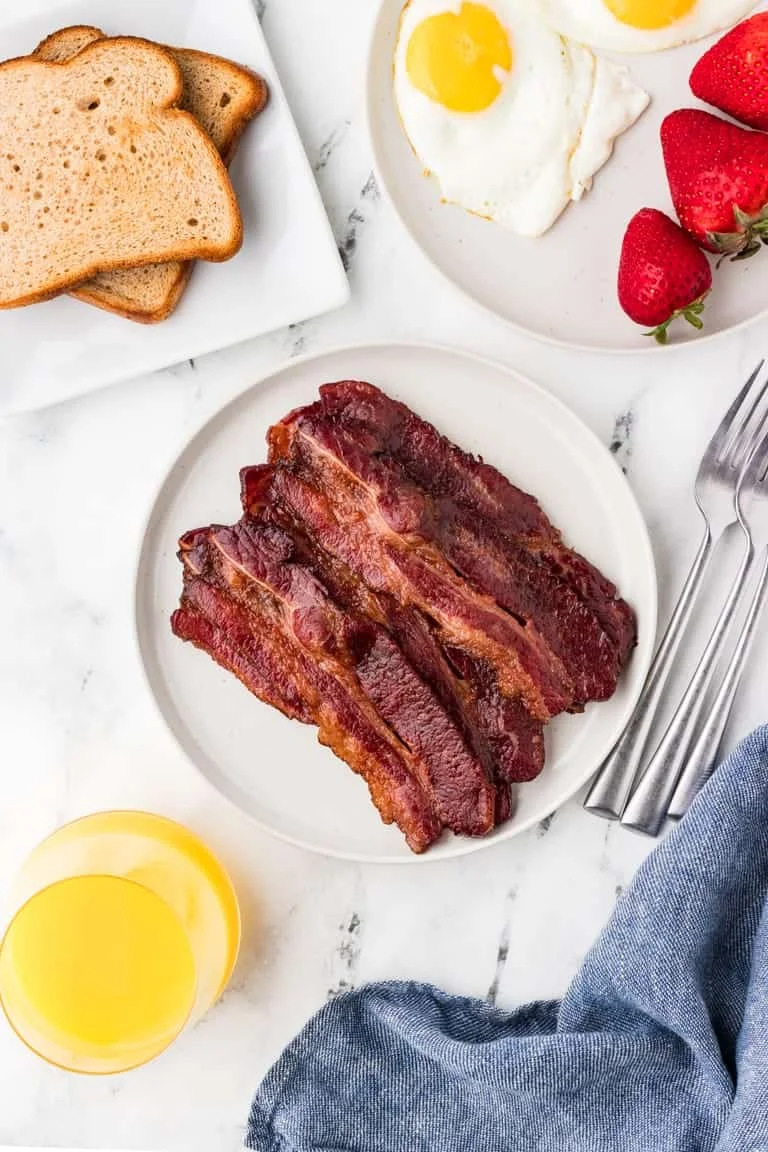
Oven-baked beef bacon turns into savoury, crisp strips with very little hands-on work. It is an easy option for breakfast or as a topping for sandwiches, salads and other dishes.
Ingredients
- 8 stripsbeef bacon
Instructions
- 1
Preheat the oven
Heat the oven to 218°C (425°F).
- 2
Line the tray
Cover a baking tray with aluminium foil or baking parchment to make tidying up easier.
- 3
Arrange the bacon
Set the beef bacon strips side by side on the lined tray. They can touch, as they will shrink while cooking.
- 4
Bake until crisp
Bake in the preheated oven for 20–25 minutes, until golden brown and crisp.
- 5
Drain the strips
Take the tray out of the oven and move the bacon to a plate lined with kitchen paper to absorb excess fat.
- 6
Serve the bacon
Serve the crisp beef bacon as you like.
What is beef bacon?
Beef bacon is a cured, sliced beef product cooked in much the same way as other bacon. It is used in American-style breakfasts and can also add a savoury, crisp element to other meals.
This version keeps things simple: the strips bake on a lined tray, so there is no need to stand over a frying pan.
Nutrition and macros by portion
The nutrition label shows one serving as written: 150 calories, 5g protein, 1g carbs, 14g fat.
| Portion | Adjustment | kcal | Protein | Carbs | Fat |
|---|---|---|---|---|---|
| Lighter | Serve fewer strips | 105 kcal | 4g | 0g | 10g |
| This serving | As written | 150 kcal | 5g | 1g | 14g |
| Hungry | Add extra strips | 225 kcal | 8g | 1g | 21g |
The bacon supplies most of the fat and protein, while the recipe contains almost no carbohydrate. Serve it alongside vegetables and a carbohydrate-rich food such as potatoes or wholemeal toast to make a more rounded plate.
Why bake it on a tray?
Even spacing: Arrange the strips side by side so heat can reach their surfaces. A little contact is fine because the bacon shrinks as it cooks.
Easy clean-up: Foil or baking parchment catches drips and helps keep the tray clean.
Watch the texture
The recipe gives a 20–25-minute baking window. Check the strips as they approach the end of that time; thickness and the particular product can affect how quickly they crisp.
Look for golden-brown colour and crisp edges, then transfer the bacon promptly so it does not continue cooking on the hot tray.
Drain after baking
A kitchen-paper-lined plate absorbs some of the excess fat from the cooked strips. Let them rest there briefly before serving.
Handle the tray carefully when removing it from the oven, as rendered fat can be hot.
Ways to serve it
Serve the strips with eggs or toast for breakfast, or tuck them into a sandwich. Their savoury crunch also works as a topping for a salad or a baked potato.
For a more balanced plate, pair a few strips with vegetables and a filling source of carbohydrate, such as potatoes or wholemeal toast.
Recipe notes & tips
- Use a rimmed baking tray to contain drips.
- Keep the strips in a single layer for more even cooking.
- Start checking the bacon at 20 minutes, especially if the strips are thin.
- Use foil or baking parchment to simplify clean-up.
- Move the cooked strips to kitchen paper to drain before serving.
Variations
- Add black pepper: Sprinkle a little over the strips before baking.
- Serve with eggs: Pair the cooked bacon with eggs for a classic breakfast plate.
- Make a sandwich: Layer the crisp strips into bread with your preferred fillings.
- Top a salad: Crumble or slice the cooked bacon over salad just before serving.
- Add to a potato: Serve the strips alongside or over a baked potato.
Common mistakes to avoid
- Skipping the liner: Fat can stick to the tray; cover it with foil or baking parchment first.
- Crowding the tray: Overlapping strips may cook unevenly; arrange them side by side.
- Baking without checking: Strips can vary in thickness; begin checking at 20 minutes.
- Leaving it on the tray: Residual heat can keep cooking the bacon; transfer it to a paper-lined plate.
- Handling hot drippings: Rendered fat can burn; take care when removing the tray.
How to store
Refrigerate leftover cooked bacon in a sealed container and use within 3–4 days. Reheat briefly in a frying pan or oven until hot; the texture may soften during storage.
Frequently asked questions
How long does beef bacon take in the oven?
Bake it at 218°C (425°F) for 20–25 minutes, until golden brown and crisp. Check near the end, as strip thickness can affect the timing.
Can the strips touch on the tray?
Yes. The method allows the strips to touch because they shrink as they cook, but keep them side by side rather than overlapping.
Do I need to turn the bacon?
The method does not call for turning the strips. Arrange them on the lined tray and bake until crisp.
Can I use foil instead of baking parchment?
Yes. Either foil or baking parchment works for lining the tray and making clean-up easier.
How do I know when the bacon is ready?
Look for golden-brown colour and crispness. The recipe's suggested baking time is 20–25 minutes.
Can I cook more than eight strips at once?
Use a second tray if needed so the strips can sit side by side without overlapping. Cooking time may vary, so check for the same colour and crispness cues.
Cook it from the original
This recipe comes from bakedbree.com. Their page has the author’s own photos, notes and tips — the best place to cook it from.
Open the recipe on bakedbree.com