
Air-Fryer Salmon
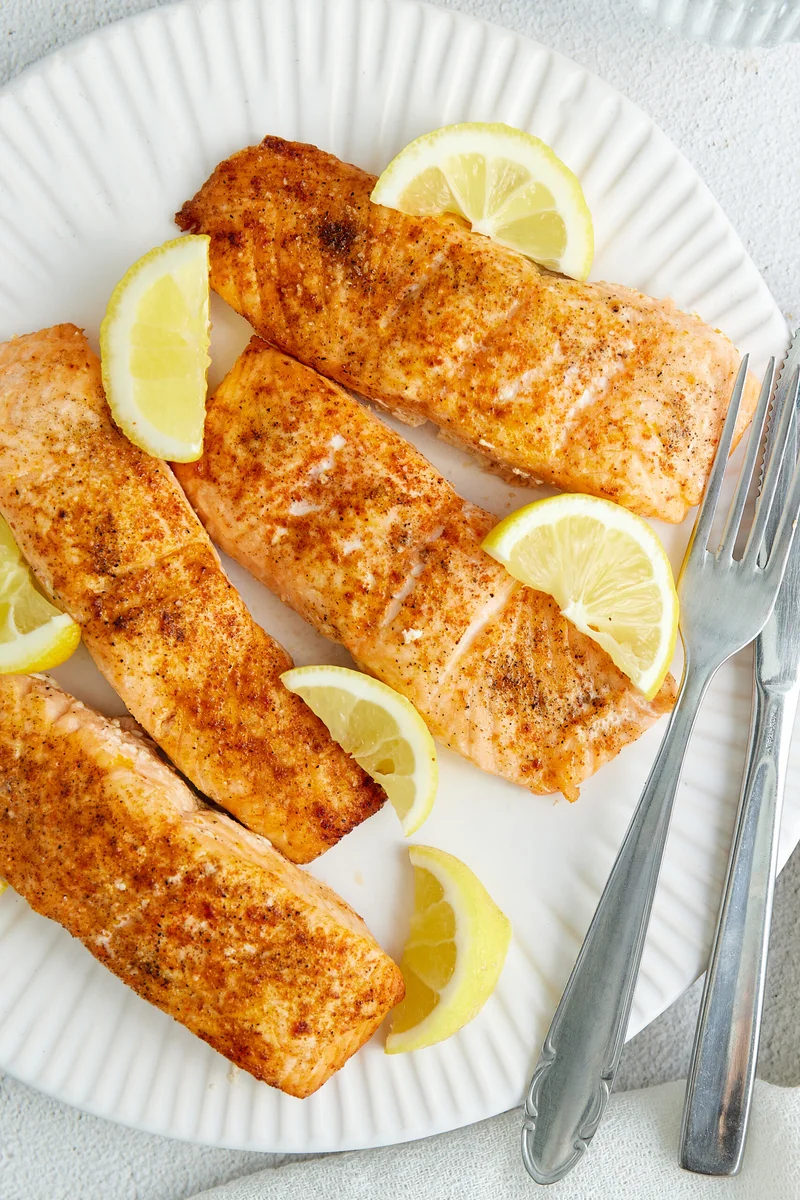
Air-fryer salmon is a quick main of seasoned fillets with tender, flaky centres and lightly browned edges. It is ready in 15 minutes and pairs easily with vegetables, potatoes or a simple salad.
Ingredients
- 4 fillets (170 g each)salmon
- 12.5 mlolive oil
- 2.5 mllemon pepper
- 5 mlgarlic powder
- 2.5 mlpaprika
- to tastesalt
- to servelemon wedges
Instructions
- 1
Preheat the air fryer
Preheat the air fryer to 200°C.
- 2
Season the salmon
Pat the salmon dry with paper towels, then brush each fillet with olive oil. Sprinkle the seasonings evenly over the fish.
- 3
Air-fry the fillets
Arrange the salmon in the basket with space between the fillets. Air-fry for 8–10 minutes, until the fish flakes easily and reaches 63°C internally.
- 4
Serve with lemon
Carefully lift the salmon from the air fryer and serve with lemon wedges.
What is air-fryer salmon?
This is a simple American-style preparation of salmon seasoned with pantry spices and cooked in an air fryer. The appliance circulates hot air around the fish, making it a convenient option when you want a quick main without heating a full oven.
A little olive oil helps the seasonings cling, while lemon pepper, garlic and paprika add savoury, citrusy flavour. The short cooking time keeps the fillets tender when they are checked for doneness promptly.
Nutrition and macros by portion
The nutrition label shows one serving as written: 267 calories, 34g protein, 1g carbs, 13g fat.
| Portion | Adjustment | kcal | Protein | Carbs | Fat |
|---|---|---|---|---|---|
| Lighter | Use less olive oil | 187 kcal | 24g | 1g | 9g |
| This serving | As written | 267 kcal | 34g | 1g | 13g |
| Hungry | Add a larger fillet | 401 kcal | 51g | 2g | 20g |
Salmon provides most of the protein and fat, while the small amount of olive oil adds more fat. The seasoning contributes little carbohydrate; serve with vegetables and a portion of potatoes or another grain if you want to add fibre and make the plate more substantial.
Choosing the salmon
Fillet size: The recipe uses four fillets of about 170 g each. Fillets of similar thickness are more likely to finish at the same time.
Skin: Skin-on or skinless fillets both work. If using skin-on salmon, place it skin-side down in the basket.
Getting the seasoning to stick
Dry surface: Patting the fish dry helps the oil and spices coat it evenly rather than slide off.
Even coating: Brush on the oil and distribute the seasonings over each fillet. Add salt to taste, bearing in mind that lemon pepper blends can already contain salt.
Spacing and cooking
Room to circulate: Arrange the fillets without touching so hot air can move around them. Cook in batches if they do not fit with space between.
Check early: Air fry for 8–10 minutes at 200°C. Thickness and appliance performance affect timing, so begin checking at the shorter end of the range.
How to tell when it is done
Texture: The fish should separate into flakes when gently tested with a fork. Avoid repeatedly opening the basket, as that interrupts cooking.
Temperature: The recipe specifies an internal temperature of 63°C. Check the thickest part of a fillet with a food thermometer.
Serving ideas
Bright finish: Serve the fillets with lemon wedges so each person can add citrus at the table.
On the side: Pair the salmon with green vegetables, a salad, rice or potatoes for a more complete meal. Choose a side that suits the time you have available.
Recipe notes & tips
- Preheat the air fryer so the cooking time starts consistently.
- Pat the fillets dry before brushing them with oil.
- Use fillets of similar thickness for more even cooking.
- Leave space around each fillet in the basket.
- Check the thickest part with a thermometer rather than judging by colour alone.
- Serve the lemon wedges alongside the fish rather than squeezing them on well before cooking.
Variations
- Add fresh herbs: Finish with chopped dill or parsley just before serving.
- Bring extra citrus: Add a little lemon zest to the seasoning before cooking.
- Use a different spice: Swap the paprika for a mild chilli powder for more warmth.
- Make it peppery: Add freshly ground black pepper to the seasoning.
- Try lime: Serve with lime wedges instead of lemon for a different citrus note.
Common mistakes to avoid
- Skipping the preheat: The fish may cook less predictably; preheat the air fryer to 200°C first.
- Crowding the basket: The fillets may cook unevenly; cook in batches if needed.
- Leaving the surface wet: Seasoning can slide off; pat the salmon dry before adding oil.
- Cooking by time alone: Fillet thickness varies; check for flaking and an internal temperature of 63°C.
- Adding too much salt: Lemon pepper may already be salty; taste the blend or season lightly.
How to store
Refrigerate leftover salmon in an airtight container and use within 3–4 days. Reheat gently in the air fryer or microwave until hot throughout; the fish may become drier if heated for too long.
Frequently asked questions
Can I use frozen salmon?
Thaw the fillets fully and pat them dry before seasoning for the most even result. Cooking from frozen would need a different cooking time, which this recipe does not specify.
Do I need to turn the salmon halfway through?
The method does not call for turning the fillets. Arrange them in a single layer with space between and cook for 8–10 minutes.
Can I cook more than one batch?
Yes. Cook in batches if the fillets would touch or crowd the basket, and serve each batch as it is ready.
How do I know the salmon is done?
It should flake easily when tested and reach 63°C in the thickest part. Check near the end of the suggested cooking time.
Can I use skin-on fillets?
Yes. Place them skin-side down in the basket and follow the same temperature and timing, checking doneness as directed.
Cook it from the original
This recipe comes from bakedbree.com. Their page has the author’s own photos, notes and tips — the best place to cook it from.
Open the recipe on bakedbree.com