
Delicious Roast Pork Loin
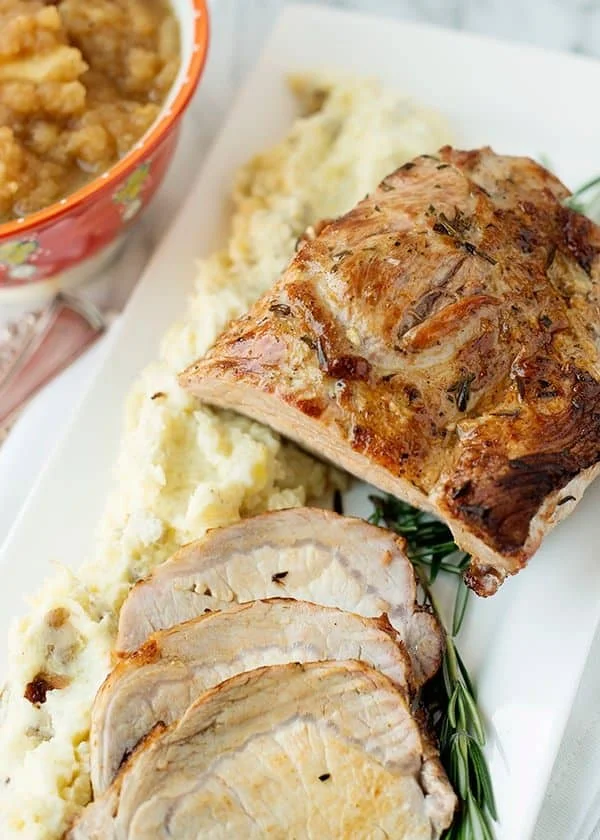
This American-style roast pork loin is rubbed with garlic, rosemary and olive oil, marinated overnight, then seared and roasted. The make-ahead marinade gives the pork time to take on flavour, while searing builds a browned exterior.
Ingredients
- 60 ml plus 30 ml (¼ cup plus 2 tbsp)extra-virgin olive oil
- 8garlic cloves, chopped
- 1 bunchrosemary, chopped
- 2 tspkosher salt
- ½ tsppepper
- 907 g (2 lb)centre-cut pork loin
Instructions
- 1
Mix the marinade
In a small bowl, combine 60 ml of the olive oil with the chopped garlic, rosemary, salt and pepper.
- 2
Rub the pork
Coat the pork all over with the mixture, covering the top, bottom and sides.
- 3
Marinate overnight
Place the pork in a plastic bag and leave it to marinate in the fridge overnight.
- 4
Bring to room temperature
Take the pork out of the fridge and let it stand at room temperature for 30 minutes. Brush off as much of the marinade as possible.
- 5
Sear the pork
Heat a large ovenproof skillet over medium-high heat. Add the remaining 30 ml of oil and heat until it shimmers. Add the pork and brown it on all sides, about 10 minutes in total.
- 6
Roast until done
Transfer the pork to a preheated 204°C oven and roast for 40–45 minutes, or until a thermometer registers 57°C.
- 7
Rest and slice
Move the pork to a board and leave it to rest for 15 minutes before serving. Slice it thinly.
What is roast pork loin?
Roast pork loin is a familiar American-style centrepiece made from a lean cut that is cooked whole and sliced to serve. This version uses a simple garlic-and-herb marinade rather than a complicated stuffing or sauce.
Overnight marinating gives the rosemary and garlic time to flavour the surface, while browning the meat before roasting adds a savoury crust.
Nutrition and macros by portion
The nutrition label shows one serving as written: 405 calories, 48g protein, 2g carbs, 21g fat.
| Portion | Adjustment | kcal | Protein | Carbs | Fat |
|---|---|---|---|---|---|
| Lighter | Trim visible fat | 284 kcal | 34g | 1g | 15g |
| This serving | As written | 405 kcal | 48g | 2g | 21g |
| Hungry | Serve with potatoes | 608 kcal | 72g | 3g | 32g |
The pork provides most of the protein, while the olive oil supplies most of the fat; the garlic and herbs contribute little carbohydrate. Pair a portion with vegetables and a modest serving of potatoes or another grain for a more rounded plate.
Why marinate overnight?
Garlic and rosemary: chopping them helps distribute their flavour through the oil, salt and pepper. Rub the mixture over every side so the seasoning is not confined to the top.
Chilling time: keep the pork covered in a plastic bag in the fridge overnight. The long rest is mostly hands-off, so this is a useful dish to prepare the day before.
Getting a good sear
Dry surface: brushing off the excess marinade before searing helps the pork brown rather than steam in the pan.
Hot skillet: wait until the remaining oil shimmers, then turn the pork to brown all sides. The recipe allows about 10 minutes altogether; avoid rushing from side to side before each has colour.
Checking doneness
Thermometer: insert it into the thickest part of the loin, avoiding the pan and any large pockets of fat. The recipe gives 57°C as its roasting endpoint.
Food safety: for whole cuts of pork, current food-safety guidance recommends reaching 63°C and resting for at least 3 minutes. Use a reliable thermometer and follow local guidance.
Why resting matters
Resting: leave the roast on a board for the full 15 minutes before slicing. This gives the meat time to settle after cooking and makes it easier to carve neatly.
Thin slices: cut across the grain where you can see its direction. Thin pieces are easier to serve and pair well with pan juices or a simple sauce.
What to serve alongside
Vegetables: roast potatoes, carrots or green beans make a straightforward side for the savoury pork. A crisp salad can add a fresh contrast.
Sauce: serve with any juices from the board, or offer apple sauce or mustard at the table. Keep extra seasoning separate so everyone can adjust their own plate.
Recipe notes & tips
- Chop the garlic and rosemary finely so they spread evenly through the marinade.
- Turn the pork in its marinade before chilling to coat every side.
- Let the pork stand for the stated 30 minutes before searing.
- Use a skillet that can safely go from the hob into the oven.
- Check the thickest part with a thermometer rather than relying on colour alone.
- Slice only after the full 15-minute rest.
Variations
- Add lemon: Mix a little lemon zest into the marinade for a brighter herbal flavour.
- Use thyme: Replace some of the rosemary with chopped thyme for a softer herb profile.
- Add mustard: Rub a thin layer of Dijon mustard onto the pork before adding the marinade.
- Make a pan sauce: Deglaze the skillet after roasting and serve the resulting juices alongside the slices.
- Serve with apples: Add baked or sautéed apples as a sweet-tart accompaniment.
Common mistakes to avoid
- Skipping the overnight rest: the flavour has less time to develop; marinate the pork in the fridge the night before.
- Leaving on excess marinade: wet herbs and garlic can hinder browning; brush off what you can before searing.
- Using a cool pan: the pork may pale rather than brown; heat the skillet and oil until the oil shimmers.
- Guessing the endpoint: loin can overcook easily; check the thickest part with a thermometer.
- Slicing straight away: the juices may run onto the board; let the roast rest for 15 minutes first.
How to store
Refrigerate leftover pork in an airtight container within 2 hours and use within 3–4 days. Reheat gently until hot throughout, or serve cold in sandwiches or salads.
Frequently asked questions
Can I marinate the pork for less than overnight?
You can, but the recipe is designed for an overnight marinade. Keep the pork refrigerated while it marinates.
Can I use dried rosemary?
Yes. Use a smaller amount than fresh rosemary, since dried herbs are more concentrated, and mix it thoroughly into the oil.
Can I roast the pork without searing it?
The recipe uses searing to brown the outside before roasting. Skipping it will change the crust and flavour.
What temperature should the pork reach?
The recipe lists 57°C as its roasting endpoint. Current food-safety guidance for whole cuts of pork recommends 63°C followed by at least a 3-minute rest; check the thickest part with a thermometer.
How do I keep pork loin from drying out?
Use a thermometer, avoid cooking it longer than needed, and let it rest for 15 minutes before slicing. Pork loin is relatively lean, so careful temperature control matters.
Can I prepare it ahead?
Yes. Marinate the pork overnight in the fridge, then bring it out for the stated 30 minutes before cooking.
Cook it from the original
This recipe comes from bakedbree.com. Their page has the author’s own photos, notes and tips — the best place to cook it from.
Open the recipe on bakedbree.com