
Korean Homemade Dumpling Wrappers (Mandu-pi)
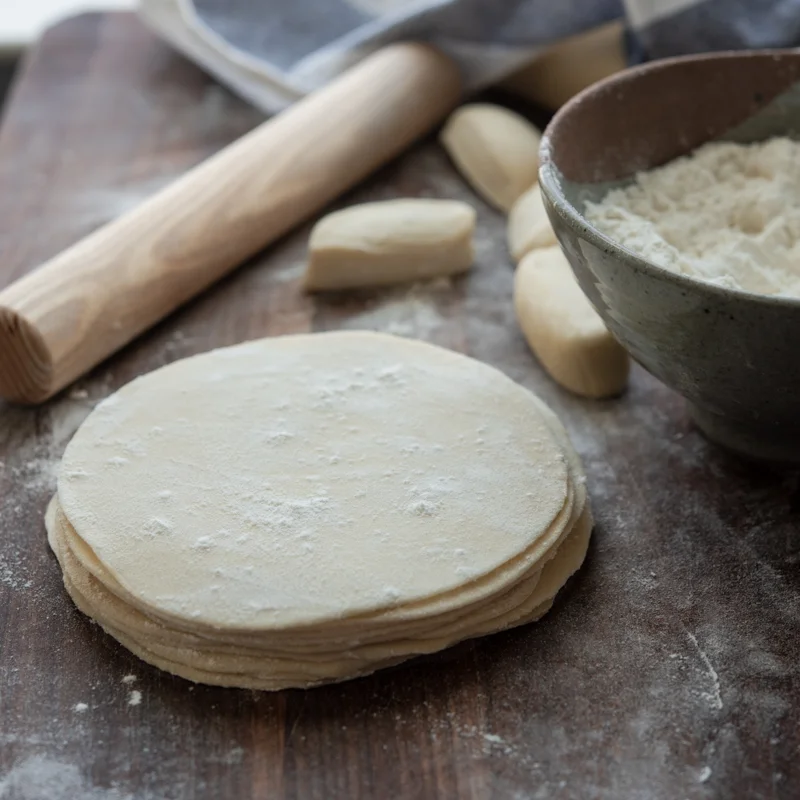
Mandu-pi are soft, chewy Korean dumpling wrappers made from a simple flour dough. Make a batch to shape into dumplings at home, adjusting the size to suit your filling and folding style.
Ingredients
- 480 g (4 cups)plain flour
- 24 g (3 tbsp)sweet rice flour (chapssal-garu)
- 16 g (2 tbsp)cornflour
- 30 ml (2 tbsp)vegetable oil
- 360 ml (1½ cups), plus 30 ml (2 tbsp) more if neededwarm water
Instructions
- 1
Mix the dry ingredients
Combine the plain flour, sweet rice flour and cornflour in a large mixing bowl.
- 2
Add liquid gradually
Stir in the oil and warm water with a spoon, adding the water gradually rather than all at once. Stop when you have a fairly thick dough; add up to 30 ml (2 tbsp) extra water if needed.
- 3
Knead and rest
Knead the dough by hand for 2–3 minutes, until smooth. Wrap it in cling film and rest for 30 minutes at room temperature or for a few hours in the fridge; if chilled, bring it back to room temperature before rolling.
- 4
Shape a dough log
Roll the dough into a long log about 4 cm (1½ inches) in diameter.
- 5
Divide the dough
For large wrappers about 13 cm (5 inches) across, cut the log into 40–45 pieces of about 30 g (1 oz) each. For smaller wrappers about 10 cm (4 inches) across, cut it into 55–60 pieces of about 20 g (0.7 oz) each.
- 6
Roll each wrapper
Use a small rolling pin to roll each piece into a round wrapper about 13 cm (5 inches) across. Dust each wrapper with flour before stacking the next one on top to prevent sticking.
What are mandu-pi?
Mandu-pi are the dough wrappers used to make Korean mandu, or dumplings. This homemade version uses plain flour with small amounts of sweet rice flour and cornflour for a tender, chewy texture.
The dough is rested before shaping, then rolled into individual rounds. Making them at home lets you choose a larger wrapper for generous filling or a smaller one for bite-sized dumplings.
Nutrition and macros by portion
The nutrition label shows one serving as written: 53 calories, 1g protein, 10g carbs, 1g fat.
| Portion | Adjustment | kcal | Protein | Carbs | Fat |
|---|---|---|---|---|---|
| Lighter | Use less oil | 37 kcal | 1g | 7g | 1g |
| This serving | As written | 53 kcal | 1g | 10g | 1g |
| Hungry | Make larger wrappers | 80 kcal | 2g | 14g | 1g |
Most of each wrapper's carbohydrates come from the plain flour, with smaller contributions from the sweet rice flour and cornflour; the vegetable oil supplies most of the fat. There is little protein in a wrapper on its own, so pair filled mandu with a protein-rich filling and vegetables for a more balanced plate.
Why use three flours?
Plain flour: forms the main structure of the dough and gives it enough strength to roll and fold.
Sweet rice flour: contributes to the characteristic chew, while cornflour helps keep the dough tender. Measure both carefully so they complement rather than replace the plain flour.
Add the water slowly
Start by stirring in most of the 360 ml water, then add more only as the flour absorbs it. The dough should be fairly thick and cohesive, not loose or batter-like.
Flour can absorb liquid differently, so the extra 30 ml is optional rather than automatic. If the dough still looks dry after mixing, add a little of it at a time.
Rest for easier rolling
The 30-minute room-temperature rest gives the dough time to settle after kneading, making it easier to roll. Keep it wrapped so its surface does not dry out.
A longer rest in the fridge is also an option. Let chilled dough return to room temperature before shaping, as directed in the method.
Portion for the wrapper size
Large wrappers: divide the log into 40–45 pieces of about 30 g each for rounds roughly 13 cm across.
Small wrappers: divide it into 55–60 pieces of about 20 g each for rounds roughly 10 cm across. A small rolling pin helps you work each piece into a round.
Keep the rounds separate
Dust each rolled wrapper with flour before stacking another on top, otherwise the moist dough surfaces can stick together. Use only enough flour to coat the surface lightly.
The method specifies rolling each piece into a round; aim for a shape that is easy to fill and fold. Keep the remaining dough covered while you work through the portions.
Serving ideas
Use the wrappers to make mandu with a filling of your choice, then cook the dumplings according to the recipe you are following. These wrappers are also suitable for shaping and folding in different styles.
Serve the finished dumplings as part of a meal with vegetables or a soup. Choose accompaniments to suit the filling and how the dumplings are cooked.
Recipe notes & tips
- Keep the dough covered between shaping sessions so the surface does not dry out.
- Add the optional water gradually and stop once the dough comes together.
- Use the specified piece weights to keep wrappers a consistent size.
- Dust each round before stacking to help prevent the wrappers sticking together.
- Bring refrigerated dough to room temperature before rolling.
Variations
- Smaller wrappers: divide the dough into 55–60 pieces of about 20 g each.
- Larger wrappers: divide it into 40–45 pieces of about 30 g each.
- Longer rest: leave the wrapped dough in the fridge for a few hours, then bring it to room temperature before rolling.
- Different vegetable oil: use another neutral vegetable oil in the same quantity.
- Adjust the water: add up to 30 ml extra only if the dough needs it.
Common mistakes to avoid
- Adding all the water at once: pour it in gradually so you can stop when the dough is cohesive.
- Making the dough too wet: aim for a fairly thick dough and add the optional water sparingly.
- Skipping the rest: wrap the dough and allow at least 30 minutes at room temperature before shaping.
- Rolling chilled dough straight from the fridge: let it come to room temperature first.
- Stacking unfloured wrappers: dust each round before placing another on top to reduce sticking.
How to store
Keep dough wrapped in the fridge for a few hours if resting it ahead, and bring it to room temperature before rolling. The method does not specify storage for finished wrappers; if storing them, keep them covered and separated with a light dusting of flour, and use promptly.
Frequently asked questions
Can I make the dough ahead?
Yes. The method allows the wrapped dough to rest in the fridge for a few hours. Bring it to room temperature before rolling.
How much extra water should I add?
The recipe allows up to 30 ml (2 tbsp) extra. Add it gradually only if the dough needs more moisture to come together.
How many wrappers does this make?
For larger wrappers, the dough makes 40–45 pieces; for smaller ones, it makes 55–60. The listed serving count is 40.
How thick should I roll the wrappers?
The method gives a diameter of about 13 cm (5 inches) but does not specify a thickness. Roll each portion into a round that is easy to fill and fold.
Why are my wrappers sticking together?
The dough surfaces can cling when stacked. Dust each wrapper with flour before adding the next one.
Can I use only plain flour?
The recipe includes sweet rice flour and cornflour as well as plain flour. Leaving them out would change the intended texture.
Cook it from the original
This recipe comes from beyondkimchee.com. Their page has the author’s own photos, notes and tips — the best place to cook it from.
Open the recipe on beyondkimchee.com