
Korean Cabbage with Soybean Paste
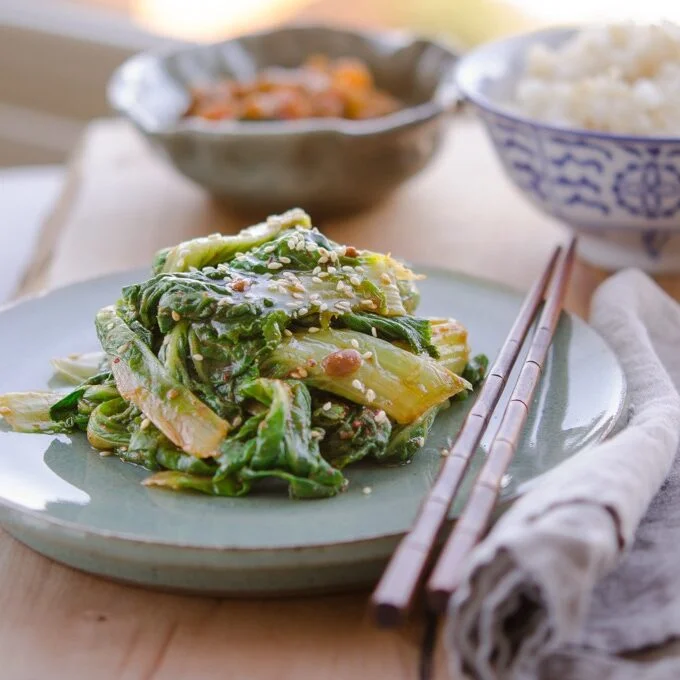
Tender spring cabbage is blanched, then tossed with savoury Korean doenjang, chilli, garlic and sesame. It is a quick side dish that pairs especially well with rice and can also be made with other leafy greens.
Ingredients
- 227 g (½ lb)spring cabbage, baby kale or Swiss chard, cut into pieces
- 22.5 ml (1½ tablespoons)Korean soybean paste (doenjang)
- 7.5 ml (½ tablespoon)Korean chilli flakes (gochugaru)
- 1 clove, minced, or 2.5 ml (½ teaspoon)garlic or garlic powder
- 10 ml (2 teaspoons)sesame oil
- 10 ml (2 teaspoons)toasted sesame seeds
- Somesalt, for the blanching water
Instructions
- 1
Blanch the cabbage
Bring a pot of salted water to the boil. Add the cabbage and blanch for 1–2 minutes, then drain and rinse under cold water. Squeeze out the excess moisture.
- 2
Toss with seasonings
Put the cabbage in a mixing bowl and add the remaining ingredients. Loosen the doenjang between your fingers, then rub it into the cabbage as you toss everything together so the flavours coat the leaves.
- 3
Serve the cabbage
Serve with rice or as a side dish.
What is Korean cabbage with soybean paste?
This is a simple Korean-style seasoned vegetable side, built around leafy greens and doenjang, a fermented soybean paste. It follows the Korean tradition of serving banchan, small sides that accompany a meal, often with rice.
Blanching softens the greens while keeping them fresh-tasting; rubbing in the paste, garlic, chilli and sesame seasons them throughout. Spring cabbage is used here, but the same approach works with other leafy vegetables.
Nutrition and macros by portion
The nutrition label shows one serving as written: 36 calories, 2g protein, 4g carbs, 3g fat.
| Portion | Adjustment | kcal | Protein | Carbs | Fat |
|---|---|---|---|---|---|
| Lighter | Use less sesame oil | 25 kcal | 1g | 3g | 2g |
| This serving | As written | 36 kcal | 2g | 4g | 3g |
| Hungry | Serve a larger portion | 54 kcal | 2g | 6g | 4g |
The cabbage contributes most of the carbohydrates and fibre, while the sesame oil and seeds provide much of the fat. Doenjang and the greens contribute some protein, though the side is not especially protein-rich; serve it with rice and a protein-rich main to make a more balanced plate.
Choosing the greens
Spring cabbage: its tender leaves need only a brief blanch. Cut them into manageable pieces so they are easy to toss and eat.
Other leaves: baby kale or Swiss chard are suggested alternatives. Their thickness can vary, so check for tenderness during blanching rather than relying only on the clock.
Working with doenjang
Doenjang: the paste brings a deep, savoury fermented flavour and is the main seasoning. Smearing it between your fingers before tossing helps break up dense lumps and spread it evenly.
Seasoning: gochugaru adds chilli warmth, while garlic and sesame oil round out the mixture. Taste the finished cabbage before adding any extra salt, as the paste is already salty.
Getting the texture right
Brief blanching: cook the cabbage for 1–2 minutes, just until it is tender but not falling apart. The exact point depends on the leaves and how finely they are cut.
Cool and squeeze: rinsing with cold water stops the cooking, and squeezing removes water that could dilute the seasoning. Handle the leaves gently so they stay intact.
Serving it with a meal
Rice: serve the seasoned greens alongside plain rice, which works well with the bold, salty paste. It also makes a useful vegetable side for a wider Korean-style meal.
At the table: the recipe is served as a side rather than a full meal. Add it to the plate shortly before eating so the cabbage keeps its seasoned, tender texture.
Recipe notes & tips
- Cut the leaves into similar-sized pieces so they blanch at a similar rate.
- Keep the blanching water at a boil when adding the cabbage.
- Rinse the leaves promptly with cold water after blanching.
- Squeeze out excess water before adding the seasoning.
- Break up the doenjang with your fingers as you mix to avoid concentrated pockets of paste.
Variations
- Swap the greens: use baby kale or Swiss chard in place of spring cabbage.
- Use garlic powder: replace the minced clove with the listed ½ teaspoon of garlic powder.
- Adjust the chilli: use less gochugaru for a milder result.
- Serve with rice: pair the greens with plain rice as suggested.
- Change the cut: chop larger leaves into bite-sized pieces before blanching.
Common mistakes to avoid
- Over-blanching: the leaves can turn limp; start checking at 1 minute and stop within the 1–2 minute range.
- Skipping the cold rinse: the cabbage keeps cooking; rinse it as soon as it is drained.
- Leaving the leaves wet: excess water dilutes the seasoning; squeeze the cabbage before mixing.
- Adding doenjang in one lump: it may not coat evenly; loosen it between your fingers as you toss.
- Over-seasoning with salt: doenjang is salty; taste the finished greens before adding more.
How to store
Refrigerate leftovers in a covered container and use within 3 days. Serve chilled or bring to room temperature; if reheating, warm gently so the leaves do not become too soft.
Frequently asked questions
Can I use a different leafy vegetable?
Yes. Baby kale and Swiss chard are suggested alternatives, and other leafy greens can also be used. Adjust the blanching time to suit their thickness.
What is doenjang?
Doenjang is a fermented Korean soybean paste with a savoury, salty flavour. It is the central seasoning in this dish.
How long should I blanch the cabbage?
Blanch it for 1–2 minutes. Begin checking early, since tender leaves can soften quickly.
Do I need to rinse the cabbage after blanching?
Yes. Rinse it with cold water to stop the cooking, then squeeze out the excess moisture before seasoning.
What should I serve with it?
Serve it with rice or as a side dish alongside a meal.
Cook it from the original
This recipe comes from beyondkimchee.com. Their page has the author’s own photos, notes and tips — the best place to cook it from.
Open the recipe on beyondkimchee.com