
Fail-proof Moroccan pan-fried bread (batbout)
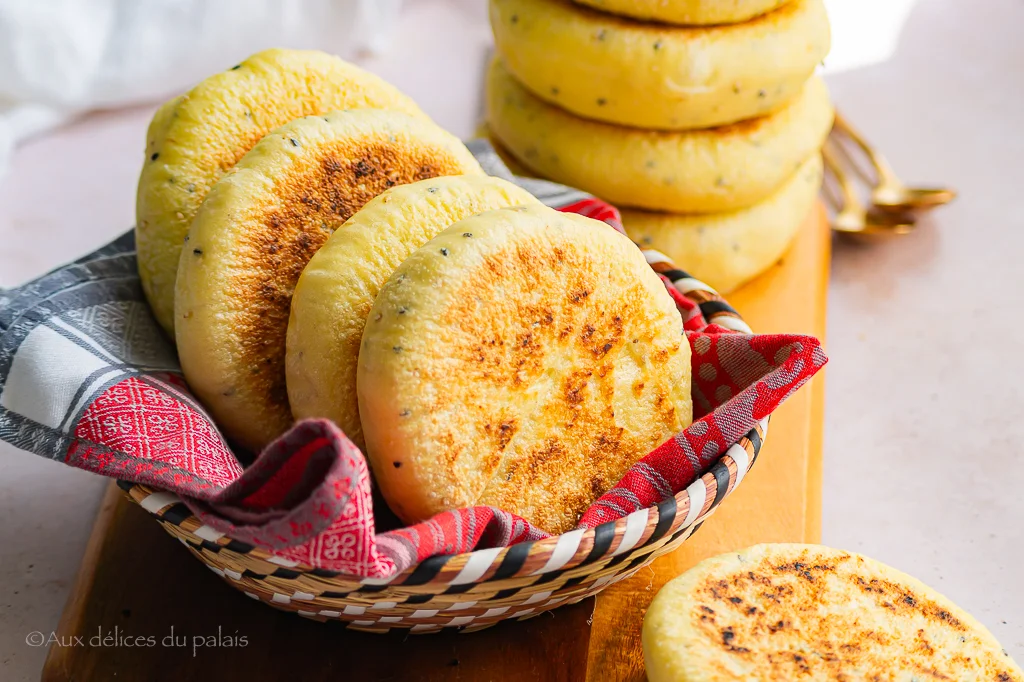
Batbout is a soft Moroccan pan-cooked flatbread made with wheat flour and fine semolina, here flecked with savoury nigella seeds. It is a useful homemade bread for serving alongside a meal or filling once cooled.
Ingredients
- 375 gplain wheat flour, T65 or T45
- 375 gextra-fine semolina
- 10 gsalt
- 20–25 g fresh baker’s yeast or 8 g dried yeastbaker’s yeast
- 10 gsugar
- 480 mlwarm water
- 30 golive oil
- 30 ml (2 tablespoons)nigella seeds
Instructions
- 1
Combine the flours
Put the wheat flour and semolina in a large bowl and make a well in the centre. Add the olive oil, salt, sugar and warm water.
- 2
Mix in yeast
Mix the ingredients, then, partway through, crumble in the fresh yeast or add the dried yeast and stir in the nigella seeds.
- 3
Knead the dough
Knead until the dough is smooth and supple.
- 4
Shape the dough
Form the dough into a ball and return it to the bowl.
- 5
Leave to rise
Cover the bowl with a clean tea towel or cling film. Leave the dough to rise for 1 hour 30 minutes in a draught-free place.
- 6
Shape the batbout
Gently press the dough to release some air, then divide it into 12 balls. Scatter a little fine semolina over the work surface and roll or press each ball to about 0.5 cm thick.
- 7
Rest the rounds
Set the rounds on a sheet of baking paper. Cover them and leave to rise for another 30 minutes.
- 8
Cook in a pan
Heat a frying pan over a medium heat and cook a batbout until small bubbles appear. Turn it over and let it puff up, turning it regularly. Repeat with the remaining rounds.
- 9
Cool before serving
Leave the batbout to cool before eating.
What is batbout?
Batbout is a Moroccan pan-cooked bread, part of the wider Maghrebi tradition of making breads to share with meals. It is shaped into small, round flatbreads and cooks on a hot pan rather than in an oven.
This version combines wheat flour with fine semolina for a soft, flexible crumb, while nigella seeds add a savoury, aromatic note.
Nutrition and macros by portion
The nutrition label shows one serving as written: 300 calories, 0g protein, 0g carbs, 0g fat.
| Portion | Adjustment | kcal | Protein | Carbs | Fat |
|---|---|---|---|---|---|
| Lighter | Serve with lean fillings | 210 kcal | 0g | 0g | 0g |
| This serving | As written | 300 kcal | 0g | 0g | 0g |
| Hungry | Have an extra batbout | 450 kcal | 0g | 0g | 0g |
The flour and semolina provide most of the carbohydrate, while the olive oil contributes fat; the yeast adds little protein compared with the flour. Pair a batbout with a protein-rich filling or side and vegetables to make a more balanced plate.
Why use both flour and semolina?
Wheat flour: the recipe allows either T65 or T45 flour, so use whichever is available. Both form the main structure of the dough.
Fine semolina: its small grain gives the dough its characteristic texture. A little extra semolina on the work surface helps when shaping the rounds.
Getting a supple dough
Water: add the specified 480 ml of warm water with the oil, salt and sugar, then mix in the yeast partway through. Knead until the dough feels smooth and supple rather than rough.
Yeast: use either 20–25 g fresh yeast or 8 g dried yeast, as listed. Crumble the fresh yeast before mixing it in.
Shape evenly
Divide: after the first rise, gently release some of the air and make 12 balls. Keeping them similar in size helps them cook at a similar pace.
Thickness: roll or press each ball to about 0.5 cm. The second 30-minute rise follows once the rounds have been set on baking paper and covered.
Look for bubbles and puffing
First side: cook over a medium heat until small bubbles appear on the surface, then turn the bread over. The recipe does not give a fixed pan-cooking time, so use these visual cues.
Puffing: turn the batbout regularly as it cooks and allow it to swell. Cook the remaining rounds in the same way.
Serving and timing
The method includes a 1 hour 30 minute first rise and a 30-minute rise after shaping, followed by pan cooking in batches. Although the listed total time is 50 minutes, allow for the rising periods described in the method.
Serve the batbout alongside a meal, or let it cool before serving as directed. Its soft, flat shape also makes it convenient to split and fill.
Recipe notes & tips
- Use warm water rather than hot water when mixing the dough.
- Knead until the dough is smooth and supple before shaping it.
- Keep the dough covered during both rises to prevent the surface drying out.
- Use a light dusting of fine semolina on the work surface when rolling the rounds.
- Cook over medium heat and watch for bubbles before turning each batbout.
- Turn the bread regularly in the pan to encourage it to puff.
Variations
- More nigella: increase the seeds slightly for a more pronounced savoury flavour.
- Smaller breads: divide the dough into more than 12 pieces and roll them thinner.
- Plain batbout: leave out the nigella seeds for a simpler flatbread.
- Filled batbout: split a cooled bread and add a savoury filling before serving.
Common mistakes to avoid
- Water too hot: use warm water so it is not excessively hot when it reaches the yeast.
- Rushing the first rise: leave the covered dough for the full 1 hour 30 minutes in a draught-free place.
- Uneven rounds: divide the dough carefully into 12 balls and roll them to a similar thickness.
- Skipping the second rise: cover the shaped rounds and leave them for 30 minutes before cooking.
- Heat too high: keep the pan at medium heat and use the bubbles as the cue to turn the bread.
- Leaving a batbout unattended: turn it regularly while it cooks so it can puff.
How to store
Once cool, store the batbout in an airtight container at room temperature and eat within 2 days. Reheat briefly in a dry frying pan over a low to medium heat.
Frequently asked questions
Can I use dried yeast instead of fresh yeast?
Yes. The recipe specifies 8 g dried yeast as an alternative to 20–25 g fresh yeast.
Which flour should I use?
The recipe lists either T65 or T45 wheat flour. Use the one you have, alongside the extra-fine semolina.
How thick should I roll the batbout?
Aim for about 0.5 cm thickness after shaping each of the 12 dough balls.
How do I know when to turn a batbout?
Turn it when small bubbles appear. Then let it puff, turning it regularly as it cooks.
Why did my batbout not puff?
Check that the dough had both of its covered rises and that the pan was at medium heat. The method also recommends turning the bread regularly after flipping.
Can I make the dough ahead?
This method is written for two rises followed by cooking, rather than an overnight rest. For best results, follow the stated rising stages and cook the breads after shaping.
Cook it from the original
This recipe comes from auxdelicesdupalais.net. Their page has the author’s own photos, notes and tips — the best place to cook it from.
Open the recipe on auxdelicesdupalais.net