
Italian Four Cheese Risotto
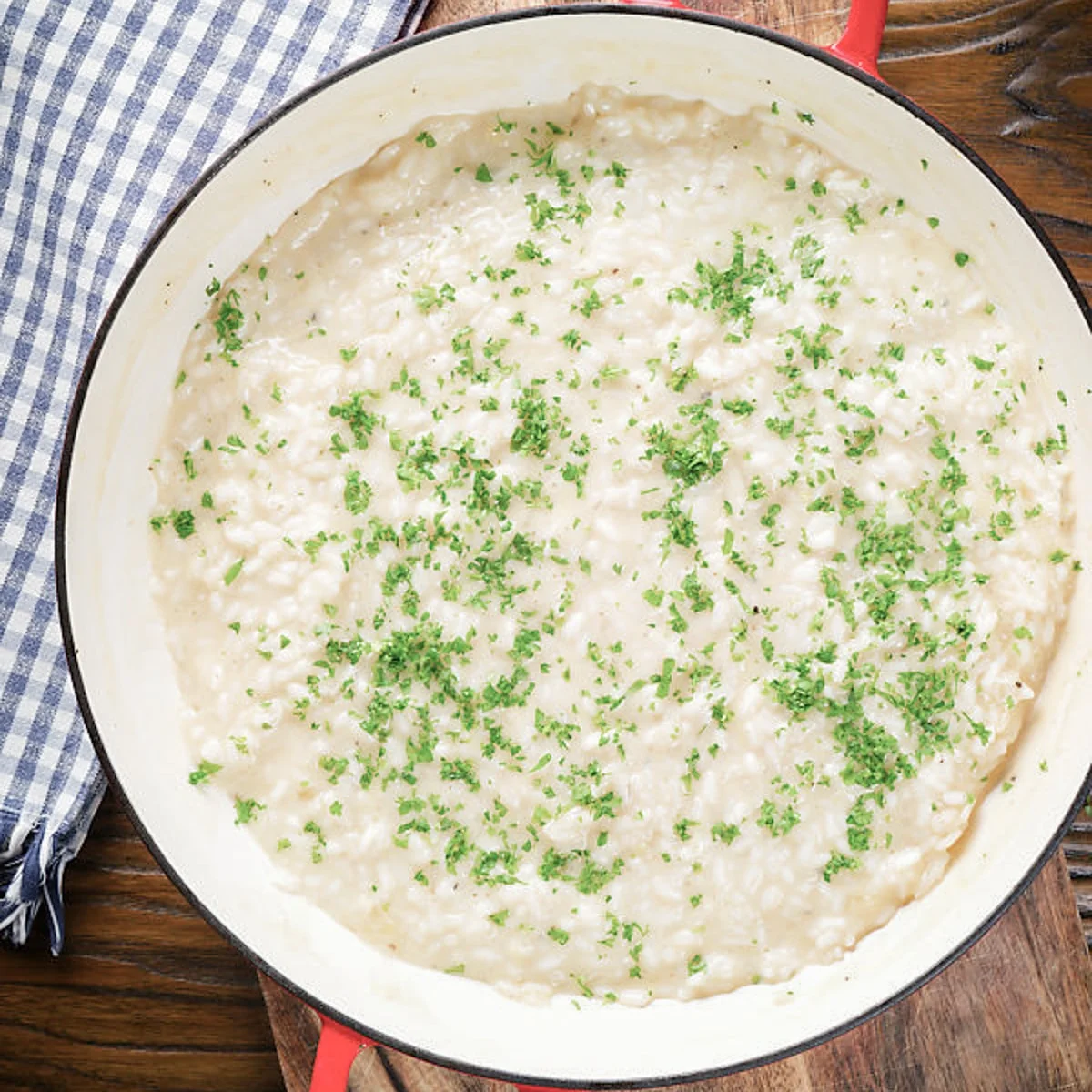
Italian four cheese risotto is a rich, creamy rice dish made with Swiss, Fontal, Parmigiano and Gorgonzola. It makes a comforting meal for cheese lovers, with a little white wine adding depth to the slow-cooked rice.
Ingredients
- 45 g (3 tablespoons)butter
- 1 smallonion, finely chopped
- 350 g (1¾ cups)Arborio rice
- 120 ml (½ cup)dry white wine
- 710–950 ml (3–4 cups)vegetable broth
- 1.25 ml (¼ teaspoon), more or less to tastesalt
- 1–2 dashespepper
- 55 g (½ cup)shredded Swiss cheese
- 55 g (½ cup)shredded Fontal (Fontina or Gruyère)
- 50 g (½ cup)freshly grated Parmigiano
- 30 g (¼ cup)crumbled Gorgonzola, sweet or mild
- 1–2 tablespoonsfresh parsley, finely chopped
- 2–4 tablespoonsfreshly grated Parmesan
Instructions
- 1
Soften the onion
Melt the butter in a large pan over low-to-medium heat. Add the chopped onion and stir to coat, then cook until it is translucent. Add the rice and stir to combine.
- 2
Toast the rice
Cook the rice for about 2 minutes. Add the wine and cook for 1–2 minutes, until it has evaporated, stirring occasionally.
- 3
Add the broth
Pour in the broth a little at a time, about 120 ml (½ cup) per addition, stirring often. Lower the heat slightly to maintain a gentle simmer so the rice does not cook too quickly.
- 4
Cook until tender
Wait for the rice to absorb the broth while remaining slightly moist before adding more. Taste and add salt if needed, then add a dash or two of pepper. Cook for about 20 minutes, or until the rice is al dente, not mushy, and a little moisture remains.
- 5
Stir in cheese
Take the pan off the heat and stir in the cheeses. Serve immediately, topped with freshly grated Parmesan and chopped parsley if desired.
What is four cheese risotto?
Risotto is a northern Italian rice dish, traditionally cooked gradually with broth until the grains are tender and the mixture turns creamy. This version finishes the rice with four cheeses, balancing Swiss and Fontal with savoury Parmigiano and tangy Gorgonzola.
Arborio rice releases starch as it cooks, helping create a creamy texture without needing cream. Adding broth in stages gives the grains time to absorb liquid while keeping them distinct.
Nutrition and macros by portion
The nutrition label shows one serving as written: 617 calories, 19g protein, 75g carbs, 24g fat.
| Portion | Adjustment | kcal | Protein | Carbs | Fat |
|---|---|---|---|---|---|
| Lighter | Serve with extra vegetables | 432 kcal | 13g | 53g | 17g |
| This serving | As written | 617 kcal | 19g | 75g | 24g |
| Hungry | Larger risotto portion | 926 kcal | 29g | 113g | 36g |
Most of the carbohydrate comes from the Arborio rice, while butter and the cheeses contribute much of the fat. The cheeses also provide protein; serving the risotto with a crisp salad or vegetables adds a fresh contrast to the plate.
Choosing the cheeses
Swiss and Fontal: These melt into the hot rice and bring a mild, rounded flavour. Fontina or Gruyère can stand in for Fontal, as noted in the ingredient list.
Parmigiano and Gorgonzola: Parmigiano adds a savoury edge, while sweet or mild Gorgonzola contributes a stronger, tangy note. Crumble the Gorgonzola so it disperses readily when stirred in.
Build the base patiently
Onion first: Cook it gently in butter until translucent rather than browned, so it softens without taking over the cheese flavours.
Rice next: Stir the Arborio into the butter and onion, then cook it for about 2 minutes before adding wine. This brief step warms the grains and prepares them for the gradual addition of liquid.
Keep the simmer gentle
Small additions: Add about 120 ml (½ cup) of broth at a time and stir often. Let the rice absorb most of each addition before pouring in more.
Steady heat: Lower the heat after adding the broth so the risotto simmers gently. A vigorous boil can cook the rice too quickly and make it harder to judge when it is ready.
Check the texture
Taste the grains after about 20 minutes of cooking. They should be al dente rather than soft or mushy, and a little moisture should still remain in the pan.
Broth amount: The recipe gives a range of 710–950 ml because the rice may absorb different amounts. Use the texture cues as your guide rather than adding all the broth automatically.
Season and serve promptly
Salt check: Taste before seasoning, as vegetable broth and the cheeses can already contribute salt. Add pepper and salt sparingly, then adjust to taste.
Finish off the heat: Stir in the cheeses once the pan is removed from the heat, then serve straight away with the optional Parmesan and parsley. The risotto is at its creamiest when freshly made.
What to serve alongside
A crisp green salad or simply cooked vegetables make a fresh contrast to the creamy, cheese-rich rice. Keep accompaniments straightforward so they complement rather than compete with the four cheeses.
Serve the risotto as a main course or as part of an Italian-inspired meal. If pairing it with another rich dish, offer a modest portion and add plenty of vegetables.
Recipe notes & tips
- Keep the broth warm so it does not cool the rice each time you add it.
- Add the broth in roughly 120 ml (½ cup) portions and stir often.
- Taste the broth and risotto before adding salt, since both broth and cheese can be salty.
- Stop cooking when the grains are al dente and a little moisture remains.
- Have the cheeses ready before taking the pan off the heat so you can stir them in promptly.
- Serve immediately for the creamiest texture.
Variations
- Use Fontina: Swap it for the Fontal as suggested in the ingredient list.
- Try Gruyère: Use it in place of Fontal for a fuller, nutty flavour.
- Choose mild Gorgonzola: Use a sweet or mild variety for a gentler blue-cheese note.
- Adjust the pepper: Add a dash or two to suit your taste.
- Finish with parsley: Sprinkle chopped fresh parsley over the risotto just before serving.
Common mistakes to avoid
- Adding all the broth at once: Pour it in gradually so the rice can absorb it between additions.
- Boiling too hard: Lower the heat to keep the broth at a gentle simmer.
- Overcooking the rice: Start checking around 20 minutes and stop when the grains are al dente.
- Letting the pan dry out: Add more broth when the rice has absorbed the previous addition but remains slightly moist.
- Oversalting: Taste first, since the broth and cheeses may already supply enough salt.
- Waiting to serve: Stir in the cheeses off the heat and serve the risotto immediately.
How to store
Refrigerate leftovers in a covered container and use within 2 days. Reheat gently in a pan with a splash of water or broth, stirring until hot; the rice may be thicker than when freshly cooked.
Frequently asked questions
Can I use Fontina instead of Fontal?
Yes. The recipe lists Fontina or Gruyère as alternatives to Fontal.
How much broth should I use?
The recipe calls for 710–950 ml (3–4 cups). Add it gradually and stop when the rice is al dente, slightly moist and not mushy.
Does the broth need to be added a little at a time?
Yes. Add about 120 ml (½ cup) per addition, stirring often and allowing the rice to absorb most of it before adding more.
How do I know when the risotto is done?
After about 20 minutes of cooking, taste the rice. It should be al dente, with a little moisture still in the pan.
Can I make the risotto ahead?
It is best served immediately after the cheeses are stirred in. You can refrigerate leftovers and reheat them gently, though the texture will be thicker.
When should I add the cheeses?
Remove the pan from the heat first, then stir in the cheeses. Serve straight away, with the optional Parmesan and parsley on top.
Cook it from the original
This recipe comes from anitalianinmykitchen.com. Their page has the author’s own photos, notes and tips — the best place to cook it from.
Open the recipe on anitalianinmykitchen.com