
Sambousek
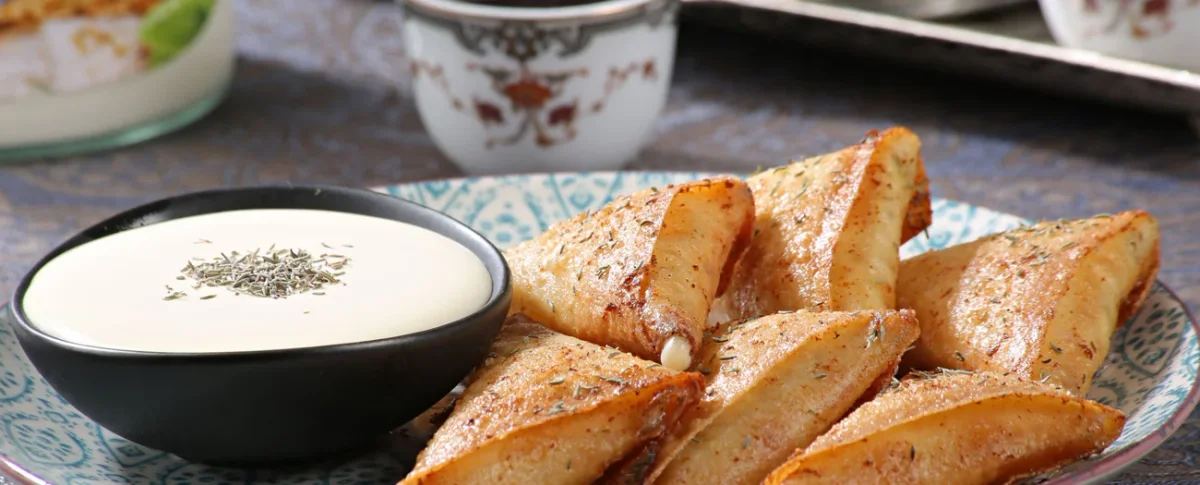
Sambousek are crisp Lebanese filo parcels filled here with creamy cheese, herbs and spices. They make a handy savoury snack for sharing, particularly during Ramadan.
Ingredients
- 240 gPuck® Spread
- 500 gPuck® Classic Creamy White
- 15 mldried mint
- 50 mlchopped fresh parsley
- 5 mlfennel seeds
- 1 mlblack pepper
- 1beaten egg
- 10 sheetsfilo pastry
- 150 mlcooking oil
Instructions
- 1
Mix the filling
Combine the Puck Spread and Puck Classic Creamy White in a bowl. Add the dried mint, parsley, fennel seeds and black pepper, then mix well.
- 2
Cut the pastry
Cut the filo pastry into 20 strips, each about 10 × 30 cm. Put about 2 tablespoons of filling at one end of each strip.
- 3
Fold the parcels
Fold one corner across the filling to make a triangle. Continue folding the strip over itself until you reach the end. Brush the final layer with beaten egg and seal each parcel.
- 4
Fry until golden
Heat the oil in a large frying pan. Add the parcels, ensuring they are covered by the oil, and fry until crisp and golden. Lift them out and drain on kitchen paper.
What is sambousek?
Sambousek is a Lebanese savoury pastry, commonly made as small filled parcels. Versions vary in pastry and filling; this one uses filo wrapped around a creamy cheese mixture.
The combination of herbs and fennel brings fragrance to the rich filling, while frying makes the thin pastry crisp. The small format suits a snack table or a spread for sharing.
Nutrition and macros by portion
The nutrition label shows one serving as written: 187 calories, 3g protein, 10g carbs, 14g fat.
| Portion | Adjustment | kcal | Protein | Carbs | Fat |
|---|---|---|---|---|---|
| Lighter | Serve with more salad | 131 kcal | 2g | 7g | 10g |
| This serving | As written | 187 kcal | 3g | 10g | 14g |
| Hungry | Add extra parcels | 281 kcal | 5g | 15g | 21g |
The cheese filling and frying oil provide most of the fat, while the filo pastry contributes carbohydrates; the cheese supplies some protein. Pair a portion with salad or fresh vegetables for a plate with a fresher, lighter contrast.
The creamy filling
Cheese base: Puck Spread and Puck Classic Creamy White make a soft, rich filling. Mix them thoroughly with the herbs and spices so each parcel gets an even balance.
Working with filo
Thin pastry: Filo dries out quickly, so keep the sheets you are not using covered while you cut and fill the strips. Handle them gently to avoid tears.
Even strips: Cut the sheets into 20 strips of about 10 × 30 cm, as specified. A consistent size makes the parcels easier to fold and helps them cook evenly.
Folding neat parcels
Start at the corner: Place about 2 tablespoons of filling at one end, then fold the corner diagonally over it to form a triangle. Keep folding the triangle along the strip, maintaining a snug shape without squeezing filling out.
Seal the edge: Brush the last layer with beaten egg and press it closed. This helps the end of the pastry stay in place during frying.
Frying for crispness
Oil coverage: The method calls for the parcels to be covered by oil in a large frying pan. Fry them until crisp and golden, then drain on kitchen paper to remove excess oil.
Work in manageable batches if needed so the parcels have room in the pan. Watch their colour closely; filo can brown quickly.
Serving ideas
Sambousek can be served warm as a snack or alongside other small dishes. A fresh salad or crisp vegetables make a light contrast to the creamy, fried parcels.
They also fit naturally into a shared Ramadan meal, where their compact size makes them easy to pass around.
Recipe notes & tips
- Keep unused filo sheets covered while assembling the parcels so they do not dry out.
- Use about 2 tablespoons of filling per strip to keep the parcels manageable to fold.
- Fold each strip into a snug triangle, but avoid pressing hard enough to force filling out.
- Seal the final flap with beaten egg so it stays closed during frying.
- Drain the fried parcels on kitchen paper before serving.
Variations
- More herbs: Add extra parsley for a greener, more herbal filling.
- Extra mint: Increase the dried mint slightly for a stronger aromatic note.
- More pepper: Add a little more black pepper for extra warmth.
- Smaller parcels: Cut the strips narrower and use less filling in each one.
- Oven finish: Bake the folded parcels instead of frying, brushing the pastry lightly with oil first.
Common mistakes to avoid
- Uncovered filo: It can dry and crack; keep the sheets you are not using covered.
- Overfilled strips: The parcels become difficult to fold; stick to about 2 tablespoons of filling.
- Loose folding: Parcels can open as they cook; keep the folds snug and seal the final layer with egg.
- Crowded pan: The parcels may cook unevenly; fry in batches if they do not fit comfortably.
- Skipping the drain: Excess oil can make the pastry feel greasy; let the parcels drain on kitchen paper.
How to store
Cool any leftovers, then store them in an airtight container in the fridge for up to 2 days. Reheat in an oven until hot and crisp; the pastry may soften during storage.
Frequently asked questions
Can I prepare sambousek ahead?
You can mix the filling ahead and keep it covered in the fridge. For the crispest pastry, fold and fry the parcels closer to serving.
How much filling goes in each strip?
The recipe uses about 2 tablespoons per strip. Keeping to that amount makes the parcels easier to fold and seal.
How do I stop the filo from drying out?
Keep the sheets covered while you work, uncovering only the pastry you are cutting and filling.
How do I know when the parcels are ready?
Fry them until the filo is crisp and golden, then lift them out and drain on kitchen paper.
Can I bake these instead of frying?
The supplied method uses frying. Baking is an alternative, though the texture may differ from the crisp fried version.
What can I serve with sambousek?
Serve them with salad or fresh vegetables for a crisp, fresh contrast to the creamy filling and fried pastry.
Cook it from the original
This recipe comes from arla.se. Their page has the author’s own photos, notes and tips — the best place to cook it from.
Open the recipe on arla.se