
Moroccan sellou with Amlou (sfouf)
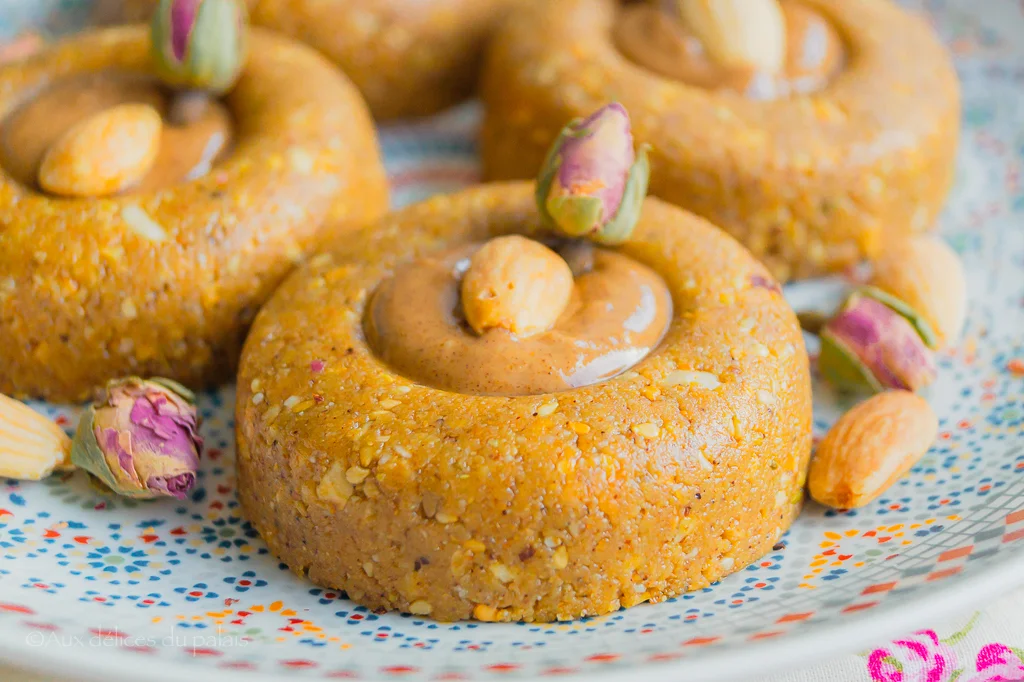
Moroccan sellou, also known as sfouf, is a rich, crumbly toasted-flour sweet flavoured with sesame, almonds, anise and cinnamon. This version is moulded into individual portions and finished with Amlou, toasted almonds and dried roses.
Ingredients
- 800 gwholemeal or semi-wholemeal organic flour
- 250 grolled oats
- 1 kgalmonds
- 1 kgsesame seeds
- 150 gchopped hazelnuts (optional)
- 375 gflower honey
- 2 tablespoonscarob molasses or honey
- 70 mlolive oil
- 2 tablespoonsanise seeds
- 2 tablespoonsfennel seeds
- 1 tablespoonground cinnamon
- 1 tablespooncarob powder (optional)
- 1/4 teaspoonground nutmeg (optional)
- 8 seedsground gum arabic (optional)
- 1/2–1 teaspoonGuérande sea salt
- 150 gwhole blanched, toasted almonds
- To tasteAmlou
- To tastedried roses
Instructions
- 1
Heat the oven
Preheat the oven to 170°C, using conventional heat.
- 2
Spread the flour
Spread the wholemeal flour over a baking tray.
- 3
Toast the flour
Toast the flour for about 45 minutes to 1 hour, stirring from time to time so it does not burn. The exact time will depend on your oven.
- 4
Cool and sift
Leave the flour to cool, then sift it.
- 5
Toast oats and nuts
Toast the rolled oats and chopped hazelnuts in the oven at 170°C for about 10–15 minutes. When the oats are well browned, grind them finely in a food processor.
- 6
Toast the sesame
Spread the sesame seeds on a baking tray and toast at 170°C for 10–15 minutes. Five minutes before the end, take out two small bowls of sesame seeds and warm the anise and fennel seeds in the oven with them. Grind one bowl finely and keep the other bowl of sesame seeds whole. Grind the remaining sesame with the anise and fennel until it forms a compact, oily paste like praline.
- 7
Toast the almonds
Toast the almonds at 170°C for 15–20 minutes, until browned through. Set aside two small bowls; grind the rest into almond butter. Roughly crush the almonds in one reserved bowl and keep the other bowl whole.
- 8
Mix dry ingredients
In a stand mixer fitted with the paddle attachment, or in a large bowl, combine the sifted flour and ground oats with the salt, ground gum arabic, cinnamon, carob powder and nutmeg.
- 9
Add the pastes
Add the sesame paste, almond butter and olive oil. Mix until the mixture becomes compact.
- 10
Knead with honey
Add the honey and carob molasses while kneading the mixture for 5 minutes.
- 11
Fold in crunch
Fold in the toasted crushed almonds and the reserved toasted sesame seeds, both crushed and whole, to add crunch.
- 12
Shape the sellou
Pack the sellou firmly into a silicone mould with cavities; the original recipe uses an eight-cavity savarin mould. A round, square or kugelhopf mould can also be used.
- 13
Fill and garnish
Unmould the sellou. Fill the centre with Amlou and garnish with a blanched toasted almond and a dried rose.
- 14
Serve as a cone
Alternatively, press the sellou into a cone shape on a serving plate and decorate with blanched toasted almonds and dried roses, if you like.
What is sellou?
Sellou, also called sfouf, is a Moroccan sweet made by combining toasted flour with ground nuts, seeds, spices and a sweetener. It is traditionally served for celebrations and special occasions.
This version builds flavour by toasting its main ingredients separately, then shaping the mixture around a filling of Amlou. Almonds and sesame provide a rich, nutty base, while anise, fennel and cinnamon bring fragrant warmth.
Nutrition and macros by portion
The nutrition label shows one serving as written: 165 calories, 0g protein, 0g carbs, 0g fat.
| Portion | Adjustment | kcal | Protein | Carbs | Fat |
|---|---|---|---|---|---|
| Lighter | Use a smaller portion | 115 kcal | 0g | 0g | 0g |
| This serving | As written | 165 kcal | 0g | 0g | 0g |
| Hungry | Serve a larger portion | 248 kcal | 0g | 0g | 0g |
The flour and oats provide most of the carbohydrates, while the almonds, sesame, hazelnuts and olive oil contribute much of the fat; honey and carob molasses add sweetness. Pair a portion with fresh fruit, or serve it after a meal with a source of protein.
Toast each ingredient carefully
Flour: spread it in an even layer and stir it now and then as it browns. It needs to cool before sifting and mixing.
Seeds and nuts: toast the sesame, oats, hazelnuts and almonds according to their separate timings, as their sizes and textures differ. Keep the reserved portions whole or crushed for the finishing texture.
Make the sesame and almond pastes
Sesame paste: grind most of the toasted sesame with the anise and fennel until it becomes oily and compact, like praline. The reserved sesame adds contrast later.
Almond butter: grind most of the toasted almonds into a smooth paste, keeping some whole and some crushed. The recipe relies on these pastes to bind the toasted flour and give the sellou its dense texture.
Bring the mixture together
Dry mix: combine the sifted flour and ground oats with the salt and spices before adding the pastes. This helps distribute the seasonings through the mixture.
Sweetener: knead in the honey and carob molasses for 5 minutes. The mixture should become compact enough to press into a mould.
Shape and fill
Moulds: press the sellou firmly into the cavities so it holds its shape when turned out. A round, square or kugelhopf mould is also suggested if you do not have a savarin mould.
Finish: spoon Amlou into the centre and top with a toasted almond and dried rose. For a simpler presentation, shape the mixture into a cone on a plate and decorate it instead.
Serving and timing
The recipe takes about 120 minutes in total, with much of the work spent toasting, cooling and grinding the ingredients. Allow the flour to cool before sifting it and moving on to the mixing stages.
Serve the sellou as a small sweet after a meal or alongside tea. Its rich, nutty flavour also pairs well with fresh fruit for a more balanced plate.
Recipe notes & tips
- Stir the flour as it toasts to help it brown evenly and avoid scorching.
- Keep the sesame and almonds you have set aside separate from the portions being ground into paste.
- Grind the toasted sesame with the anise and fennel until the mixture turns into a compact, oily paste.
- Press the mixture firmly into the mould so the sellou holds its shape when unmoulded.
- Use a food processor for the oats and a separate grind for the sesame and almonds, as their intended textures differ.
Variations
- Skip the hazelnuts: leave out the optional chopped hazelnuts for a version without them.
- Use honey: choose honey instead of carob molasses as the recipe allows.
- Omit the carob: leave out the optional carob powder.
- Leave out the nutmeg: skip the optional ground nutmeg.
- Make a cone: press the sellou into a cone on a serving plate instead of using a mould.
Common mistakes to avoid
- Leaving flour unstirred: it can burn in patches, so stir it from time to time as it toasts.
- Grinding all the sesame: reserve the two small bowls as directed so you have whole and finely ground seeds for texture.
- Grinding every almond: set aside the two small bowls before making the almond butter.
- Skipping the cooling: cool the toasted flour before sifting and adding it to the mixture.
- Packing loosely: press the mixture firmly into the mould so it keeps its shape when turned out.
How to store
Store the sellou in an airtight container in a cool, dry place. The recipe does not specify a storage duration; keep it chilled if your Amlou or room conditions call for refrigeration, and bring it to room temperature before serving.
Frequently asked questions
What is the difference between sellou and sfouf?
Sellou and sfouf are names used for a Moroccan sweet made from toasted flour, nuts, seeds and spices. The precise ingredients and presentation can vary between recipes.
Can I use honey instead of carob molasses?
Yes. The recipe lists honey as an alternative to the carob molasses.
How do I know when the sesame paste is ready?
Keep grinding the sesame with the anise and fennel until it becomes a compact, oily paste, similar to praline.
Do I need a savarin mould?
No. The recipe suggests a round, square or kugelhopf mould as alternatives. You can also shape the mixture into a cone on a plate.
Can I leave out the optional ingredients?
Yes. The hazelnuts, carob powder, nutmeg and gum arabic are marked optional. The recipe also makes the dried rose garnish optional for the cone presentation.
Can I prepare the sellou ahead?
You can make and shape it ahead, then store it in an airtight container in a cool, dry place. Add the Amlou and garnishes when serving if you prefer them freshly arranged.
Cook it from the original
This recipe comes from auxdelicesdupalais.net. Their page has the author’s own photos, notes and tips — the best place to cook it from.
Open the recipe on auxdelicesdupalais.net