
Chicken Carbonara
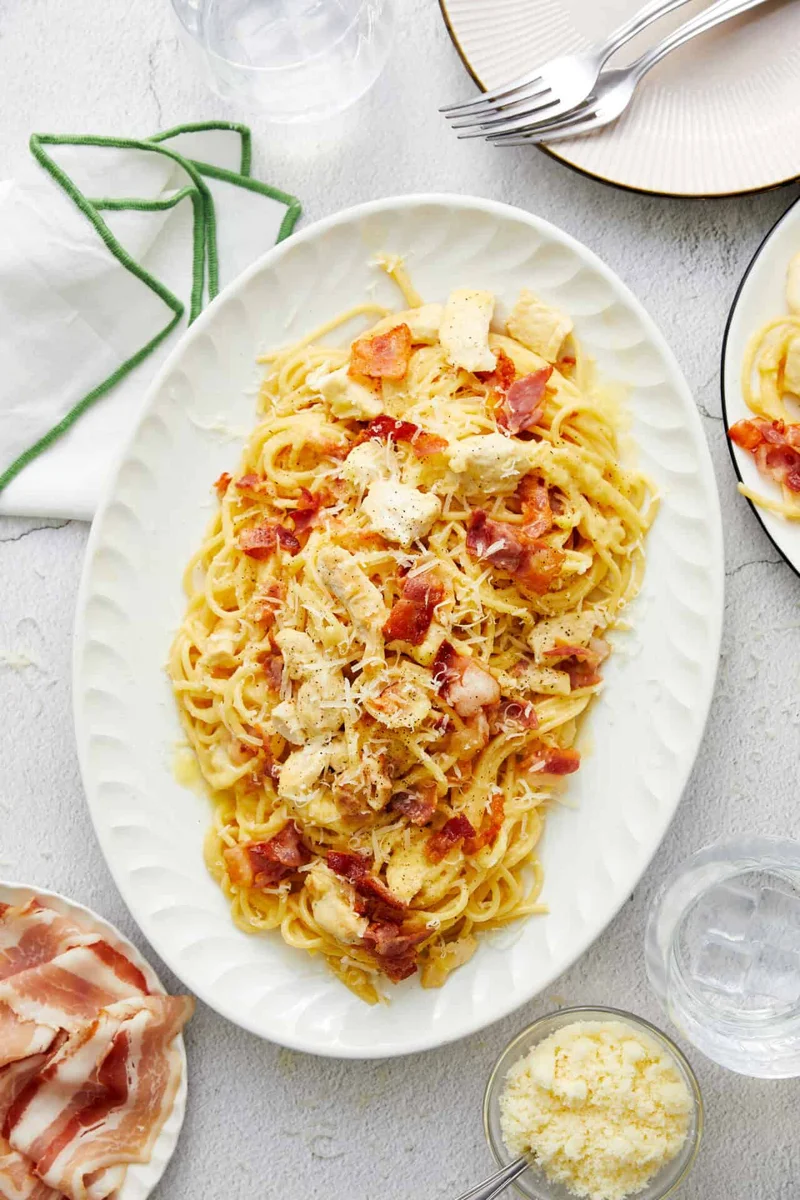
Chicken carbonara pairs spaghetti with crispy bacon, tender chicken and a silky Parmesan-and-egg sauce. It makes a comforting, filling meal in about 40 minutes, with the sauce coming together in the pasta’s residual heat.
Ingredients
- 340 g (12 ounces)spaghetti
- 4 slicesbacon, chopped
- 454 g (1 pound)boneless, skinless chicken breast, cut into bite-sized pieces
- 2 clovesgarlic, minced
- 2 largeeggs
- 100 g (1 cup)freshly grated Parmesan cheese
- to tastesalt
- to tasteblack pepper
Instructions
- 1
Cook the spaghetti
Boil the spaghetti in a large pot of salted water until al dente. Drain it, reserving 120 ml (1/2 cup) of the pasta water, and set the pasta aside.
- 2
Crisp the bacon
Cook the chopped bacon in a large frying pan over medium heat until crisp. Lift it out and set it aside, leaving the bacon fat in the pan.
- 3
Cook the chicken
Add the chicken to the pan and season with salt and pepper. Cook for about 5 to 7 minutes, until golden and cooked through, adding the garlic for the final minute.
- 4
Whisk the sauce
Whisk the eggs and grated Parmesan together in a bowl. Gradually whisk in the reserved pasta water to temper the eggs.
- 5
Toss with sauce
Turn the heat under the pan to low and add the cooked spaghetti. Pour in the egg and cheese mixture, tossing continuously for about 2 to 3 minutes, until the pasta is coated and the sauce thickens.
- 6
Return the bacon
Add the cooked bacon back to the pan and toss everything together. Taste and add more salt and pepper if needed.
- 7
Serve straight away
Serve immediately, with extra Parmesan on top if desired.
What is chicken carbonara?
Carbonara is a Roman pasta dish traditionally made with pasta, eggs, hard cheese and cured pork. Chicken carbonara is a familiar adaptation rather than the classic version, combining bacon and chicken with the characteristic egg-and-Parmesan coating.
Here, bacon supplies savoury fat for cooking the chicken, while reserved pasta water helps the cheese and eggs cling to the spaghetti. The result is rich and comforting without needing a separate cream-based sauce.
Nutrition and macros by portion
The nutrition label shows one serving as written: 735 calories, 47g protein, 65g carbs, 30g fat.
| Portion | Adjustment | kcal | Protein | Carbs | Fat |
|---|---|---|---|---|---|
| Lighter | More greens, less pasta | 515 kcal | 33g | 46g | 21g |
| This serving | As written | 735 kcal | 47g | 65g | 30g |
| Hungry | Larger pasta portion | 1103 kcal | 71g | 98g | 45g |
The spaghetti provides most of the carbohydrates, while bacon and Parmesan contribute much of the fat; the chicken and eggs are the main protein sources. Balance the plate with a generous serving of green vegetables or salad alongside.
Choose and prepare the ingredients
Spaghetti: Its long strands are easy to coat evenly as you toss them through the sauce. Cook it just to al dente so it keeps some bite after returning to the pan.
Parmesan: Freshly grated cheese melts more smoothly into the eggs than coarsely grated or pre-shredded cheese. Grate it finely so it disperses through the sauce.
Chicken and bacon: Bite-sized chicken pieces cook quickly, and chopped bacon becomes crisp in the pan. Keep the bacon fat for cooking the chicken and carrying flavour through the dish.
Temper the eggs carefully
Pasta water: Add the reserved water to the egg and cheese mixture gradually while whisking. This warms the eggs gently and gives the sauce moisture to coat the pasta.
Heat: Lower the pan before adding the mixture, then toss continuously. Gentle residual heat thickens the sauce; excessive heat can scramble the eggs.
Look for a silky finish
The sauce is ready when it clings to the spaghetti in a glossy coating rather than sitting as a pool at the bottom of the pan. Keep the pasta moving as it thickens over the stated 2 to 3 minutes.
The chicken should be cooked through, while the bacon stays crisp. If the pasta seems tight before the sauce coats it, a little more reserved pasta water can help loosen it.
Plan the timing
Get the sauce ingredients ready while the pasta cooks, and reserve the pasta water before draining. The egg mixture and final tossing work best when the spaghetti is freshly cooked and hot.
Cook the bacon and chicken while the pasta boils if your pans and stovetop allow it. Once the sauce is added, finish the dish promptly rather than letting it stand in the pan.
What to serve alongside
A crisp green salad or simply dressed leaves bring a fresh contrast to the rich pasta. Keep the dressing light so it does not compete with the Parmesan and bacon.
Steamed or roasted green vegetables, such as broccoli or green beans, also make a good accompaniment. Serve them alongside rather than mixing them into the sauce.
Recipe notes & tips
- Reserve the pasta water before draining, since it is difficult to replace once the pasta has been tipped away.
- Grate the Parmesan finely so it incorporates evenly into the egg mixture.
- Cut the chicken into similar-sized pieces to help it cook at the same rate.
- Keep the egg mixture moving with a whisk as you gradually add the hot pasta water.
- Toss continuously after adding the sauce to help it thicken without scrambling.
- Taste before adding extra salt, as bacon and Parmesan are already savoury.
Variations
- Use pancetta: Swap it for the bacon and cook until crisp before adding the chicken.
- Try another pasta shape: Use a similarly sized pasta that holds the sauce well.
- Add peas: Stir cooked peas through with the bacon for a little sweetness.
- Bring in greens: Fold in wilted spinach just before serving.
- Add a peppery finish: Grind extra black pepper over each serving.
Common mistakes to avoid
- Scorching the eggs: Keep the heat low and toss continuously as the sauce thickens.
- Skipping the pasta water: Reserve it before draining so you can temper and loosen the sauce.
- Adding the water all at once: Whisk it into the eggs gradually to warm them gently.
- Overcooking the spaghetti: Stop at al dente because it cooks a little more in the pan.
- Crowding the chicken: Use a roomy pan and spread out the pieces so they brown rather than steam.
- Salting too early: Taste the finished dish before adding more, since the bacon and cheese add saltiness.
How to store
Refrigerate leftovers in an airtight container and eat within 3 days. Reheat gently in a pan over low heat with a small splash of water, tossing until hot; avoid high heat, which can make the egg sauce grainy.
Frequently asked questions
Can I make chicken carbonara without cream?
Yes. This recipe uses eggs, Parmesan and reserved pasta water for its sauce, with no cream required.
How do I stop the eggs from scrambling?
Whisk the hot pasta water into the eggs gradually, lower the pan heat and toss continuously when adding the mixture. Keep the sauce over gentle heat as it thickens.
How do I know when the chicken is cooked?
The pieces should be golden and cooked through, as stated in the method. Cutting them to a similar size helps them finish evenly.
Can I use a different pasta shape?
Yes. Another pasta shape can work, though cooking time may vary. Cook it until al dente and reserve some of its cooking water.
Can I prepare the sauce ahead?
It is best to whisk the eggs and Parmesan shortly before finishing the pasta. The dish is at its silkiest when tossed and served immediately.
Can I reheat leftovers?
Yes, but reheat them gently in a pan with a small splash of water. High heat can scramble or split the egg-based sauce.
Cook it from the original
This recipe comes from bakedbree.com. Their page has the author’s own photos, notes and tips — the best place to cook it from.
Open the recipe on bakedbree.com