
Vegan Soda Bread Recipe
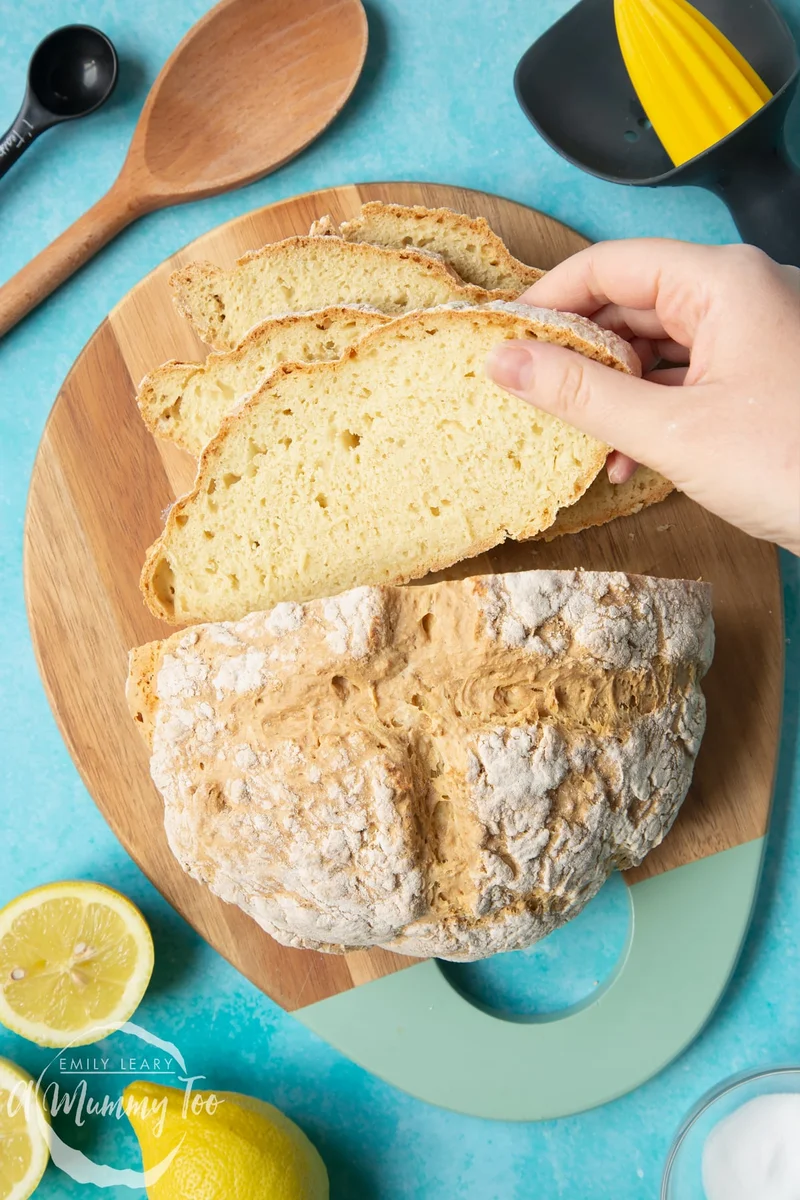
This vegan soda bread uses plant milk and lemon juice in place of buttermilk, with bicarbonate of soda helping it rise without yeast. It comes together quickly and is a handy choice when you want fresh bread without waiting for dough to prove.
Ingredients
- 500 gplain white flour
- 1 tspsalt
- 1 tspbicarbonate of soda
- 400 mlunsweetened plant milk
- 2 tbsplemon juice
Instructions
- 1
Heat the oven
Preheat the oven to 200°C (180°C fan / 390°F).
- 2
Acidify the milk
Measure the plant milk into a jug, stir in the lemon juice and leave the mixture for five minutes.
- 3
Combine dry ingredients
Measure the flour into a bowl, then add the bicarbonate of soda and salt.
- 4
Make a well
Mix the dry ingredients and make a well in the centre.
- 5
Check the milk
When the plant milk looks curdled, pour it into the well in the flour.
- 6
Mix the dough
Mix everything together. The dough will be very wet; that is how it should be.
- 7
Flour the surface
Generously flour your work surface, turn out the dough and dust its top with more flour.
- 8
Shape the loaf
Shape the dough into a round and transfer it to a floured baking tray. With a sharp knife, cut an X into the top.
- 9
Bake the bread
Bake for 40 minutes.
- 10
Cool the loaf
Place the bread on a wire rack to cool, covering it with a tea towel.
- 11
Slice and serve
Use a serrated knife to cut the cooled bread into slices.
What is soda bread?
Soda bread is a quick bread that uses bicarbonate of soda rather than yeast for its rise, so it does not need time to prove. It is associated with the British Isles, particularly Ireland, where this simple style of bread has long been made with readily available ingredients.
Plant milk and lemon juice give this version an acidic liquid in place of traditional buttermilk. The result is a dairy-free loaf that is mixed and baked straight away.
Nutrition and macros by portion
The nutrition label shows one serving as written: 143 calories, 5g protein, 28g carbs, 1g fat.
| Portion | Adjustment | kcal | Protein | Carbs | Fat |
|---|---|---|---|---|---|
| Lighter | Smaller bread slice | 100 kcal | 4g | 20g | 1g |
| This serving | As written | 143 kcal | 5g | 28g | 1g |
| Hungry | Larger bread slice | 215 kcal | 8g | 42g | 2g |
The flour supplies most of the carbohydrates, while the plant milk contributes some protein; the recipe contains very little added fat. Pair a slice with a protein-rich topping and vegetables to make it part of a more filling plate.
Why the plant milk matters
Acid and bicarbonate of soda work together to help the loaf rise. Lemon juice makes the plant milk curdle slightly, which is the cue to add it to the flour.
Unsweetened soya milk is suggested because it keeps the loaf savoury, but the recipe calls for unsweetened plant milk generally.
Mixing a wet dough
Wet dough: the mixture is meant to feel very soft and sticky after the milk is added. Avoid adding extra flour to the bowl just to make it feel like a kneaded yeast dough.
Shaping: use a well-floured work surface and dust the outside of the dough so you can form a round. Handle it gently and transfer it to the floured tray.
The X on top
Cutting an X into the top is a traditional feature of soda bread and gives the loaf a marked centre as it bakes. Use a sharp knife and make the cut after shaping, just before the loaf goes into the oven.
The flour on the surface helps manage the sticky dough, while the scored top makes the loaf easy to identify and portion once cooled.
How to tell when it is baked
Bake the loaf for 40 minutes at 200°C (180°C fan). The recipe gives time and temperature as the baking cues, so avoid opening the oven repeatedly during that period.
Cool it on a wire rack under a tea towel before slicing. A serrated knife is useful for cutting through the crust without crushing the soft interior.
Serving ideas
Serve slices with soup, a savoury spread or a simple plant-based meal. The plain loaf also works well toasted once it has cooled.
For a more balanced plate, pair a slice with a protein-rich topping and vegetables, such as hummus with sliced tomato or a bowl of bean soup.
Recipe notes & tips
- Measure the plant milk before adding the lemon juice so the proportions stay as listed.
- Leave the milk and lemon juice mixture for the full five minutes before using it.
- Flour your hands and work surface generously to make the sticky dough easier to shape.
- Use a floured baking tray so the loaf is easier to lift off after baking.
- Let the loaf cool on a wire rack before slicing to help it hold its shape.
Variations
- Use soya milk: choose unsweetened soya milk as suggested for a neutral-tasting loaf.
- Add dried herbs: mix a small amount into the flour for a savoury variation.
- Add seeds: fold seeds into the dry ingredients before adding the milk mixture.
- Serve toasted: slice the cooled loaf and toast it just before serving.
- Pair with soup: serve alongside a hearty vegetable or bean soup.
Common mistakes to avoid
- Adding extra flour to the dough: it is supposed to be very wet, so flour the work surface rather than stiffening the mixture.
- Skipping the resting time: leave the lemon juice and plant milk together for five minutes so the milk can curdle.
- Leaving out the X: score the shaped loaf with a sharp knife before baking.
- Using an unfloured tray: dust the tray with flour to help prevent the loaf sticking.
- Slicing while hot: cool the bread on a rack under a tea towel before cutting it with a serrated knife.
How to store
Once completely cool, store the bread in an airtight container at room temperature and eat within 2 days for the best texture. Reheat slices in a toaster or warm them briefly in the oven.
Frequently asked questions
Can I use a different plant milk?
Yes, the recipe specifies unsweetened plant milk and recommends unsweetened soya milk. Choose an unsweetened option so the loaf stays savoury.
Why does the plant milk look curdled?
The lemon juice acidifies the milk, and the recipe uses this curdled appearance as the cue that it is ready to add to the flour.
Is the dough supposed to be sticky?
Yes. The dough is meant to be very wet after mixing, so use flour on your work surface and on the dough when shaping.
Does this bread need proving?
No. Bicarbonate of soda provides the rise, so the loaf is shaped and baked without a yeast-proving stage.
Can I slice the bread while it is warm?
Let it cool on a wire rack under a tea towel first. Once cooled, a serrated knife makes it easier to cut neat slices.
Cook it from the original
This recipe comes from amummytoo.co.uk. Their page has the author’s own photos, notes and tips — the best place to cook it from.
Open the recipe on amummytoo.co.uk