
Roast pork with thyme vegetables
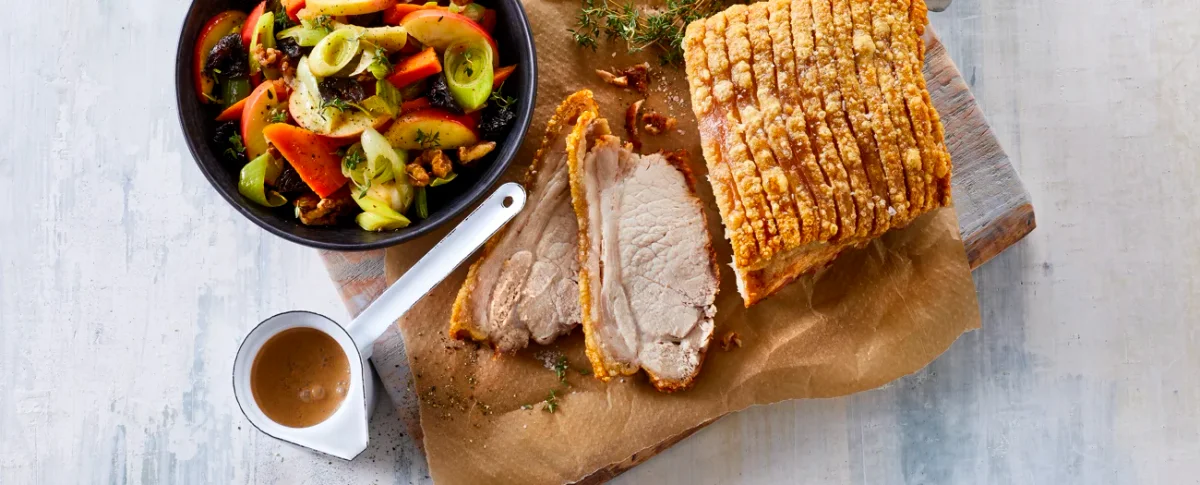
A Danish-style roast pork dinner with crisp scored rind, pan gravy, thyme-sautéed vegetables and boiled potatoes. The sweet-savoury mix of apples, prunes and walnuts makes the vegetables a distinctive partner for the roast.
Ingredients
- 15 mlcoarse salt
- 1 pork loin with scored rind (about 1.5 kg)pork loin
- 1 litrewater
- 25 gsoft butter
- 2½ tbsp (about 37.5 ml)plain flour
- 2.5 mlsugar
- to tastefreshly ground black pepper
- optionalbrowning for gravy
- 50 gbutter
- 6 carrots, halved and cut into pieces about 5 cm long (about 300 g)carrots
- 4 leeks, cut into diagonal rings (about 300 g)leeks
- 2 unpeeled apples, cut into wedges, such as Elstar (about 200 g)apples
- 100 groughly chopped prunes
- 50 groughly chopped walnuts
- 100 mlfresh thyme leaves
- 7.5 mlcoarse salt
- to tastefreshly ground black pepper
- 1.5 kgboiled waxy potatoes
Instructions
- 1
Salt the rind
Rub the coarse salt down between the scored strips of rind.
- 2
Set up the roast
Put the pork on the oven rack. If needed, support it with crumpled aluminium foil so it sits level. Pour half the water into the roasting tin and place the rack with the pork above it.
- 3
Roast the pork
Roast the pork loin in the centre of the oven. Add the remaining water after about 45 minutes.
- 4
Check the centre
Take the roast out and check the centre temperature with a meat thermometer; it should be about 65°C.
- 5
Keep it warm
Keep the roast warm while you prepare the gravy and vegetables.
- 6
Strain the juices
Strain the roasting juices and skim off any fat if you wish. Measure them, then add water or reduce them until you have 500 ml in total.
- 7
Heat the juices
Bring the strained juices to the boil in a saucepan.
- 8
Thicken the gravy
Mix the soft butter and flour thoroughly. Whisk the mixture into the juices, then add the sugar and pepper.
- 9
Simmer the gravy
Cook the gravy gently, stirring, for about 5 minutes. Taste and adjust the seasoning.
- 10
Melt the butter
Meanwhile, melt the 50 g butter in a sauté pan over a high heat without letting it brown.
- 11
Sauté the vegetables
Sauté the carrots for about 4 minutes. Add the leeks and cook for about 1 minute, then add the apples, prunes, walnuts, thyme, salt and pepper. Sauté for a further 2 minutes.
- 12
Season to taste
Taste the vegetables and adjust the seasoning.
- 13
Carve the pork
Slice the roast. If you like, stir any juices that have collected into the gravy.
- 14
Serve straight away
Serve the pork immediately with the vegetables, boiled potatoes and gravy.
What is Danish roast pork?
Flæskesteg is a familiar Danish roast, typically made with pork and scored rind, served with gravy and potatoes. This version pairs it with sautéed vegetables enriched with fruit, prunes and walnuts.
The method keeps the roast and its pan juices at the centre of the meal. Thyme gives the vegetable mixture a savoury note to balance the apples and prunes.
Nutrition and macros by portion
The nutrition label shows one serving as written: 121 calories, 6g protein, 7g carbs, 7g fat.
| Portion | Adjustment | kcal | Protein | Carbs | Fat |
|---|---|---|---|---|---|
| Lighter | More vegetables, fewer potatoes | 85 kcal | 4g | 5g | 5g |
| This serving | As written | 121 kcal | 6g | 7g | 7g |
| Hungry | Larger pork and potato portions | 182 kcal | 9g | 11g | 11g |
The potatoes, carrots, leeks, apples and prunes contribute most of the carbohydrates; pork and walnuts contribute protein, while butter and pork carry much of the fat. For a balanced plate, serve a generous share of the vegetables alongside a measured portion of potatoes and pork.
Getting the rind ready
Scoring: Salt needs to reach the cuts in the rind, not just sit on top. Work it carefully into the grooves before roasting.
A level roast: The recipe suggests using crumpled foil as a support if the joint rocks on the rack. Keeping it level helps it sit steadily as it cooks.
Using the roasting juices
Straining: Pour the juices through a sieve before making the gravy, and skim away some fat if desired. Measure the liquid and bring it to 500 ml with water or by reducing it.
Thickening: Mix the butter and flour together before whisking them into the hot juices. Stir gently while the gravy simmers for about 5 minutes so it thickens evenly.
Keeping the vegetables distinct
Staggered cooking: Give the carrots about 4 minutes first, then add the leeks for about 1 minute. Add the more delicate apples, prunes, walnuts and thyme for the final 2 minutes.
Texture: The recipe calls for sautéing rather than cooking the vegetables until soft. Keep the pan moving and taste at the end to check the seasoning.
How to judge the roast
Temperature: Check the centre with a meat thermometer; the method gives about 65°C as the target. The recipe does not specify an oven temperature, so follow the source recipe's oven setting if available.
Timing: Add the remaining water to the roasting tin after about 45 minutes. The stated total time is 105 minutes, but the thermometer reading is the doneness cue given in the method.
Serving the meal
Carve the pork into slices and serve while hot with the thyme vegetables, boiled waxy potatoes and gravy. A spoonful of the vegetables alongside each slice gives a sweet, savoury contrast.
If the sliced pork releases juices on the board, the method suggests adding them to the gravy before serving.
Recipe notes & tips
- Check that the roast is level on the rack before putting it in the oven.
- Keep the second half of the water ready to add after about 45 minutes.
- Measure the strained juices before thickening so the gravy starts with 500 ml.
- Whisk the butter-flour mixture into the hot juices to avoid lumps.
- Add the fruit and walnuts only near the end of the vegetable sauté.
- Taste both the gravy and vegetables before serving.
Variations
- More thyme: Add extra fresh thyme if you want its herbal flavour to stand out.
- Apple choice: Use another firm apple in place of Elstar, keeping the quantity the same.
- Smoother gravy: Strain the roasting juices carefully and skim off more of the fat.
- Nut-free vegetables: Leave out the walnuts for a version without nuts.
- Extra gravy colour: Add the optional browning a little at a time until the sauce reaches the colour you prefer.
Common mistakes to avoid
- Salt left on top: Work it into the scored cuts so it reaches between the strips of rind.
- Uneven roast: Support the joint with crumpled foil if it will not sit level on the rack.
- Too little gravy liquid: Measure the strained juices and bring the total to 500 ml with water or by reducing.
- Lumpy gravy: Mix the butter and flour thoroughly before whisking them into the hot juices.
- Overcooked vegetables: Follow the staged timings, adding the apples and prunes only for the final 2 minutes.
- Guessing doneness: Check the centre with a meat thermometer and aim for about 65°C, as stated in the method.
How to store
Refrigerate leftover pork, vegetables, potatoes and gravy in covered containers within 2 hours, and use within 3 days. Reheat until steaming hot throughout; reheat the gravy gently, stirring as it warms.
Frequently asked questions
What temperature should the pork reach?
The recipe's method says to check the centre with a meat thermometer and gives about 65°C as the target.
When do I add the remaining water?
Add the rest of the litre to the roasting tin after about 45 minutes.
How much liquid do I need for the gravy?
After straining the roasting juices, measure them and add water or reduce them until you have 500 ml in total.
Can I make the gravy without browning?
Yes. Browning is optional in the ingredients, so you can leave it out.
Can I prepare the vegetables ahead?
The method cooks them shortly before serving. For the best texture, sauté them close to mealtime and avoid holding them hot for long.
What potatoes work best?
The recipe specifies boiled waxy potatoes, which hold their shape when served alongside the gravy.
Cook it from the original
This recipe comes from arla.dk. Their page has the author’s own photos, notes and tips — the best place to cook it from.
Open the recipe on arla.dk