
Brazilian feijoada
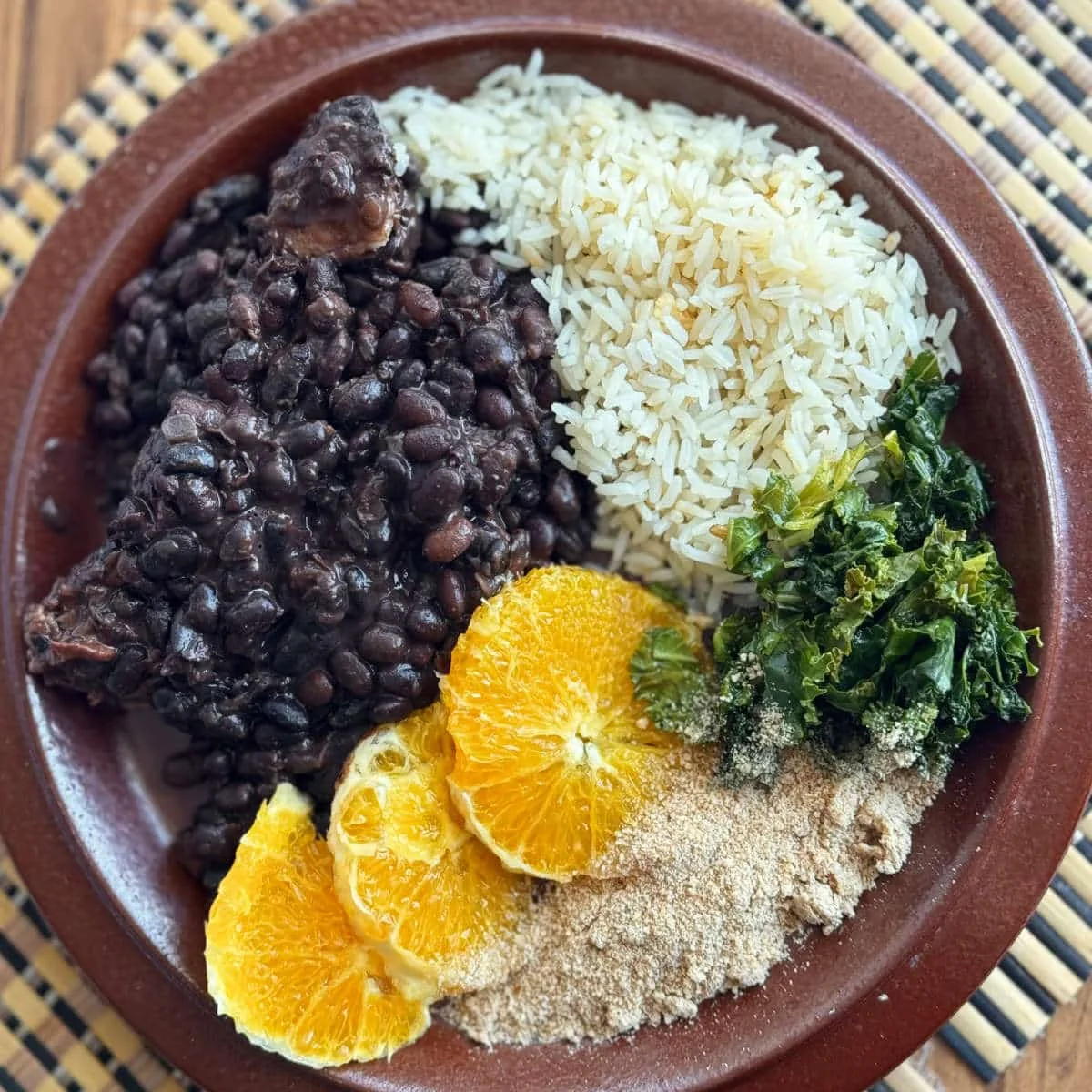
Brazilian feijoada is a slow-simmered stew of black beans with pork and beef, served here with rice, garlicky greens, farofa and orange. It is a generous meal for a crowd, with several accompaniments to prepare while the beans cook.
Ingredients
- 1 kgdried black beans
- 4smoked Portuguese sausages or chorizo
- 400 gsalted pork ribs
- 250 gsmoked pork belly
- 250 gdried beef
- 400 gbeef shank
- 2yellow onions, grated
- 6 clovesgarlic, pressed
- 5 leavesbay leaves
- 3 tbspolive oil
- to tastesalt
- to tasteblack or white pepper, freshly ground
- 3 litreswater
- 700 gcassava flour
- 1/2yellow onion, chopped
- 8 clovesgarlic, chopped
- 120 gsalted butter
- 3collard greens, finely shredded
- 50 gunsalted butter
- 500 glong-grain white rice
- 3juicing oranges
- to tastesalt
- to tastepepper
Instructions
- 1
Soak overnight
The day before cooking, soak the black beans in cold water. Desalt the pork by soaking it for 12 hours, changing the water regularly.
- 2
Fry the garlic
Warm the olive oil in a small frying pan over medium heat. Cook the garlic for 1 minute without letting it burn, then set aside.
- 3
Rinse the beans
Rinse and drain the black beans and pork well, then put them in a cast-iron or heavy-based casserole.
- 4
Bring to boil
Add the remaining feijoada ingredients except the salt, along with 3 litres of water and the bay leaves. Bring to the boil over high heat.
- 5
Simmer uncovered
Lower the heat and simmer uncovered for 1 hour, or until the pork belly and sausages are fully cooked.
- 6
Continue cooking
Remove the pork belly and sausages and set them aside. Cover the casserole and simmer the remaining ingredients over medium-low heat for 2 hours, adding water if needed.
- 7
Finish the stew
When the feijoada is ready, stir in the reserved garlic and its oil.
- 8
Return the meat
Add the sausages and pork belly back to the casserole.
- 9
Cook the rice
Cook the rice according to the instructions on its packet.
- 10
Fry the greens
Melt the unsalted butter in a large pot and briefly fry half the garlic. Add the collard greens, salt and pepper, cover, and cook over medium heat for 15 minutes, stirring very frequently.
- 11
Make the farofa
In a large, high-sided frying pan, heat the salted butter and garlic until coloured. Add the cassava flour; once it begins to colour lightly, remove the pan from the heat and set aside.
- 12
Slice the oranges
Cut the oranges into thin rounds.
- 13
Serve the meal
Serve the feijoada with the rice, greens, farofa and orange.
What is Brazilian feijoada?
Feijoada is a Brazilian bean stew commonly made with black beans and a mixture of meats, then served with accompaniments such as rice and farofa. Its roots lie in Brazil’s food traditions, shaped by Portuguese and African influences.
This version builds a deep, savoury broth from several kinds of pork and beef. Rice, greens, toasted cassava flour and orange bring different textures and flavours to the hearty stew.
Nutrition and macros by portion
The nutrition label shows one serving as written: 1950 calories, 91g protein, 232g carbs, 77g fat.
| Portion | Adjustment | kcal | Protein | Carbs | Fat |
|---|---|---|---|---|---|
| Lighter | Less farofa, more greens | 1365 kcal | 64g | 162g | 54g |
| This serving | As written | 1950 kcal | 91g | 232g | 77g |
| Hungry | Larger stew portion | 2925 kcal | 137g | 348g | 116g |
The beans, rice and cassava flour provide most of the carbohydrates, while the pork, sausage and beef contribute protein and a substantial share of the fat. Serve a moderate portion of farofa alongside plenty of collards and orange to balance the rich stew.
The beans and meats
Black beans: soaking them overnight helps them cook evenly. Rinse them well before adding them to the casserole.
Salted pork: the 12-hour soak, with regular water changes, helps remove excess salt. Keep the dried beef and salted ribs in the stew for their flavour, and taste before adding any extra salt.
Sausages and belly: these are removed after the first hour and added back at the end. This keeps them from spending the entire long simmer in the pot.
A slow, steady simmer
Start with a strong boil, then lower the heat for the uncovered first hour. After removing the sausages and pork belly, cover the pot for the next 2 hours over medium-low heat.
Keep an eye on the liquid during the longer simmer and add water if needed. The beans should be tender and the stew should remain moist rather than drying out.
Garlic in several dishes
Reserved garlic: fry the pressed garlic gently in olive oil for 1 minute, taking care not to burn it, then stir it into the finished stew with its oil.
Greens and farofa: the chopped garlic is used with the collards and cassava flour. Keep the pan heat controlled so the garlic colours without turning bitter.
Getting the accompaniments right
Farofa: stir the cassava flour into the hot salted butter and garlic, then take it off the heat as soon as it starts to colour lightly. It should remain separate and crumbly.
Collards: cover them and cook for 15 minutes, stirring very frequently. This helps them cook through evenly in the butter and garlic.
Rice: follow the packet directions, since cooking times and water amounts can vary by brand.
Build a balanced plate
Serve each portion of stew with rice, collards and a spoonful of farofa, with thin orange slices alongside. The orange adds a bright, juicy contrast to the rich meats and beans.
For a more even mix of textures, include some beans and broth as well as pieces of meat in each serving. Keep extra farofa on the table so diners can add it to taste.
Recipe notes & tips
- Use a large, heavy-based casserole that can hold the beans, meat and 3 litres of water.
- Change the soaking water for the salted pork regularly during its 12-hour soak.
- Keep the first garlic gently sizzling for 1 minute rather than letting it brown too far.
- Check the stew during its 2-hour covered simmer and add water if it needs more liquid.
- Cook the rice and prepare the orange slices while the stew simmers.
- Add salt cautiously at the end because the salted pork and salted butter already contribute salt.
Variations
- Use chorizo: choose it instead of the smoked Portuguese sausages for a different smoky flavour.
- Adjust the greens: slice the collards finely so they cook evenly in the covered pan.
- Add more orange: serve extra thin slices alongside for a brighter contrast.
- Make the farofa ahead: prepare it shortly before serving and keep it aside until the meal is ready.
- Use a heavy pot: a thick-based casserole helps maintain a steady simmer for the long cook.
Common mistakes to avoid
- Skipping the pork soak: the stew may be too salty; soak it for 12 hours and change the water regularly.
- Burning the garlic: it can taste bitter; cook it gently and remove it from the heat once coloured.
- Boiling hard throughout: the stew can reduce too quickly; lower the heat after bringing it to the boil.
- Letting the liquid run low: the beans may dry out; check the pot and add water during the long simmer.
- Overtoasting the farofa: it can darken too much; take it off the heat when it begins to colour lightly.
- Adding salt too early: the salted meats can make the seasoning hard to judge; taste before adding salt.
How to store
Refrigerate leftover stew, rice, greens and farofa in separate covered containers and use within 3 days. Reheat the stew gently in a saucepan, adding a little water if needed, and reheat the sides until piping hot.
Frequently asked questions
Do I need to soak the beans overnight?
This method calls for soaking the dried black beans in cold water the day before cooking. Drain and rinse them before adding them to the pot.
How long should I soak the salted pork?
Soak it for 12 hours, changing the water regularly to remove excess salt.
When do I put the sausages and pork belly back in?
Remove them after the first uncovered hour of cooking, then return them after the beans and remaining meat have simmered for 2 hours.
Can I add salt to the stew?
The recipe holds salt back at first, and the salted pork and salted butter can season the meal. Taste the finished stew before adding any.
What should the farofa look like?
The cassava flour should begin to colour lightly in the garlic butter. Remove it from the heat at that point so it does not become too dark.
What is traditionally served with feijoada?
This recipe serves it with long-grain rice, collard greens, cassava farofa and sliced orange.
Cook it from the original
This recipe comes from 196flavors.com. Their page has the author’s own photos, notes and tips — the best place to cook it from.
Open the recipe on 196flavors.com