
Homemade Cheese Buns
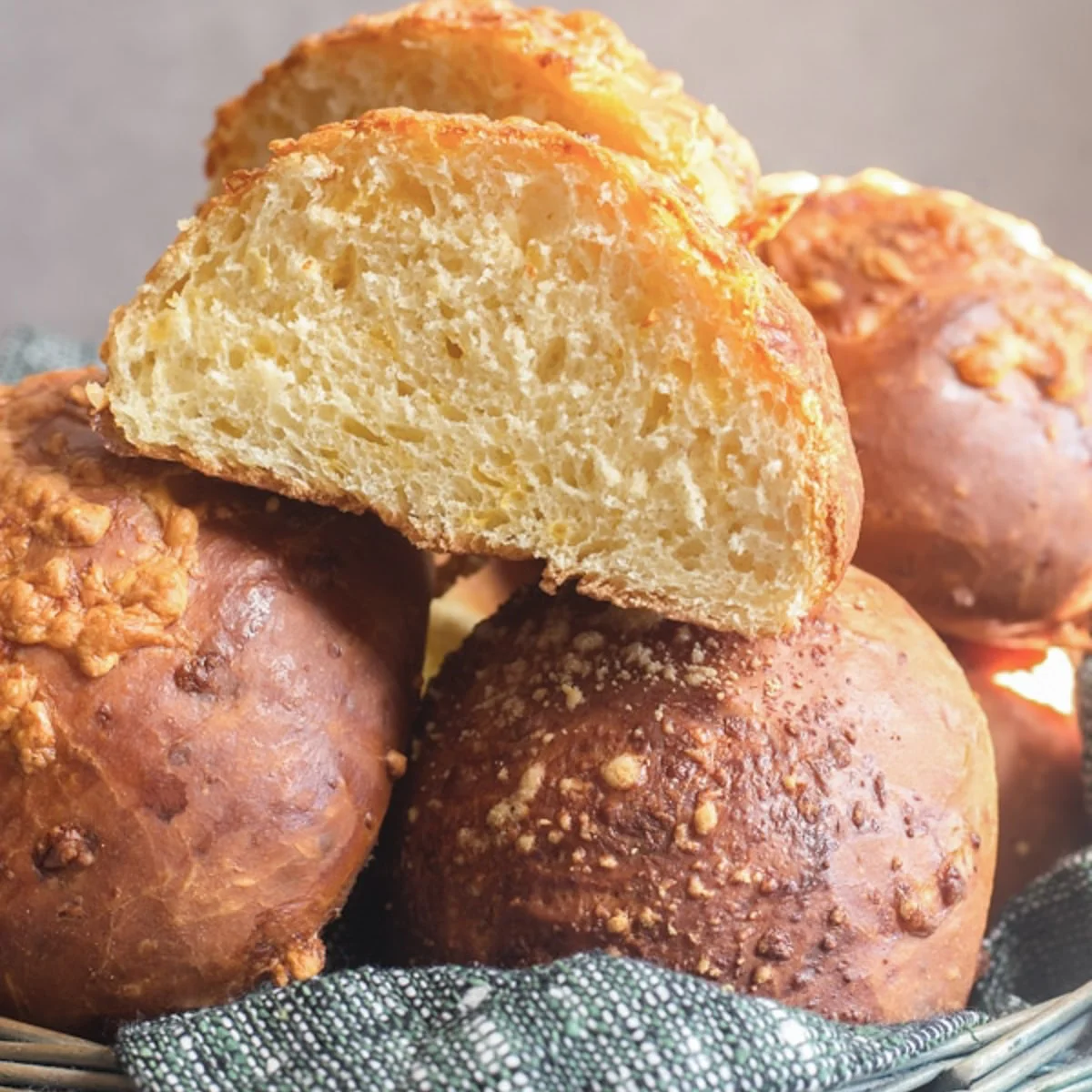
These soft, golden cheese buns are enriched with Parmesan and mild Provolone or Cheddar for savoury flavour throughout. Bake a batch to serve warm alongside soup, or enjoy one as a snack.
Ingredients
- 250 g (2 cups); plus 8–16 g (1–2 tablespoons) if neededplain flour or bread flour
- 1.25 ml (¼ teaspoon)salt
- 5 ml (1 teaspoon)granulated sugar
- 15 ml (1 tablespoon)olive oil
- about 50 g (½ cup), dividedfreshly grated Parmigiano
- about 4.5 g (1½ teaspoons)active dry yeast
- 120 ml (½ cup), divided; plus 8–16 g (1–2 tablespoons) flour if neededwarm water, not hot
- 1 largeegg, beaten
- about 55 g (½ cup)grated mild Provolone or medium Cheddar
- about 25–50 g (¼–½ cup)shredded Parmesan, Cheddar or another cheese
Instructions
- 1
Mix the dry ingredients
In a stand mixer bowl, combine the flour, salt, sugar, olive oil, 3 tablespoons (20 g) of the Parmigiano and the yeast. Add 60 ml (¼ cup) of the water and begin mixing with a fork.
- 2
Bring dough together
Add the beaten egg, the remaining Parmigiano and the Provolone, followed by the remaining water. Mix with a fork just until the dough starts to come together, then fit the dough hook and knead for about 5 minutes, until smooth and elastic. Transfer the dough to a lightly floured surface.
- 3
Let dough rise
Shape the dough into a ball and put it in a lightly oiled medium-sized bowl. Make a couple of slashes in the top with a knife, cover well and leave in a draught-free place for 1–2 hours, or until doubled in size.
- 4
Shape the buns
Turn the dough out onto a lightly floured surface and knead for a couple of minutes. Shape it into 6 buns, score each with a knife and arrange them on a lightly oiled, parchment-lined baking tray. Cover and leave to rise for 1 hour.
- 5
Heat the oven
Preheat the oven to 200°C (400°F).
- 6
Bake the buns
Brush the buns with milk and sprinkle with extra Parmesan or grated Provolone. Bake for about 30 minutes. Leave to cool or serve warm.
- 7
Knead by hand
For hand kneading, put 1 tablespoon of flour on a flat surface and place the dough on top. Knead, adding 2 more tablespoons of flour one at a time as you continue, until the dough is smooth and elastic.
What are cheese buns?
Cheese buns are small, enriched bread rolls with cheese mixed into the dough and often sprinkled over the top. This American-style version pairs grated Parmigiano with mild Provolone or medium Cheddar for a savoury, tender bun.
The method follows the familiar bread-making rhythm of kneading, proofing and baking. Dividing the dough into six makes generous rolls that are especially inviting warm from the oven.
Nutrition and macros by portion
The nutrition label shows one serving as written: 265 calories, 11g protein, 34g carbs, 8g fat.
| Portion | Adjustment | kcal | Protein | Carbs | Fat |
|---|---|---|---|---|---|
| Lighter | Serve with extra salad | 186 kcal | 8g | 24g | 6g |
| This serving | As written | 265 kcal | 11g | 34g | 8g |
| Hungry | Add another bun | 398 kcal | 17g | 51g | 12g |
The flour supplies most of the carbohydrates, while the egg and cheeses contribute protein and the cheeses and olive oil provide much of the fat. Pair a bun with vegetable-rich soup or salad for a more balanced plate.
Choosing the flour and cheese
Flour choice: Plain flour makes a tender bun, while bread flour can give the dough a slightly chewier structure. Add the optional extra flour only if the dough needs it as you work.
Cheese: Freshly grated Parmigiano brings a concentrated savoury note, while Provolone or medium Cheddar gives the dough its softer, milder cheese flavour. Keep the extra shredded cheese for the topping.
Getting the dough right
Initial mixing: Use warm, not hot, water and combine the ingredients only until the dough starts to form before kneading. The dough hook works it for about 5 minutes; by the end it should feel smooth and elastic.
Hand kneading: Work on a lightly floured surface and add the extra flour a tablespoon at a time. Stop once the dough is smooth and elastic rather than continuing to add flour automatically.
Proofing and shaping
First rise: Cover the dough well and leave it somewhere draught-free for 1–2 hours, until doubled in size. The rise may take longer in a cool room, so use the dough's volume as the cue.
Second rise: Shape six buns, score their tops and cover them for another hour. This rest lets the shaped dough puff before it goes into the oven.
Baking cues and timing
Oven: Bake at 200°C for about 30 minutes, after preheating. The buns should look golden when ready; let them cool a little if you prefer a firmer crumb.
Schedule: Allow for both rises as well as the kneading and baking, so the full process takes around 3½ hours. The first rise can vary, so check for a doubled dough rather than relying on the clock alone.
Serving the buns
Warm buns pair well with a bowl of soup or a simple salad. They can also be split and served with a meal in place of plain bread.
For a more pronounced cheese topping, use the listed extra shredded cheese before baking. Serve the buns warm or let them cool before storing.
Recipe notes & tips
- Use water that feels warm rather than hot when mixing it with the yeast.
- Grate the cheese finely so it mixes more evenly through the dough.
- Flour the work surface lightly, adding more only if the dough is difficult to handle.
- Cover the dough well during both rises to keep its surface from drying out.
- Score the buns with a sharp knife before their second rise.
- Check for a golden finish near the end of baking, as ovens can vary.
Variations
- Cheddar version: Use medium Cheddar in place of the Provolone for a fuller cheddar flavour.
- Parmesan topping: Sprinkle the buns with extra Parmesan before baking for a sharper finish.
- Provolone topping: Use grated Provolone on top to echo the cheese inside the dough.
- Mixed cheese: Combine Parmesan and Cheddar for the extra topping.
- Bread flour: Choose bread flour instead of plain flour for a chewier texture.
Common mistakes to avoid
- Hot water: Water that is too hot can hinder the yeast; use warm water instead.
- Too much extra flour: Adding it all at once can make the dough stiff; add it gradually as needed.
- Under-kneading: Dough that is not smooth and elastic needs more kneading before the first rise.
- Rushing the first rise: Shape the dough only once it has doubled in size.
- Uncovered dough: A dry surface can form during proofing; cover the bowl and shaped buns well.
- Skipping the second rise: Give the shaped buns the full hour to rise before baking.
How to store
Once completely cool, store the buns in an airtight container at room temperature and eat within 2 days. Warm them briefly in a low oven before serving; avoid storing them while still warm, as trapped steam can soften the crust.
Frequently asked questions
Can I knead the dough without a stand mixer?
Yes. Knead it by hand on a flat surface, adding the extra flour one tablespoon at a time as directed. Continue until the dough is smooth and elastic.
How do I know when the dough has risen enough?
For the first rise, look for the dough to double in size; this usually takes 1–2 hours. The shaped buns then rise for a further hour.
Can I use Cheddar instead of Provolone?
Yes. The recipe allows medium Cheddar in place of mild Provolone, both in the dough and for the topping.
Why is the dough sticky?
A soft dough can be sticky, so flour the work surface lightly and knead in extra flour gradually if needed. The recipe allows 1–2 tablespoons of additional flour.
Can I serve the buns warm?
Yes. The recipe suggests letting them cool or eating them warm, so you can serve them once they are comfortable to handle.
How long do the buns take to make?
The listed total time is 210 minutes. This includes the rises, kneading and about 30 minutes of baking.
Cook it from the original
This recipe comes from anitalianinmykitchen.com. Their page has the author’s own photos, notes and tips — the best place to cook it from.
Open the recipe on anitalianinmykitchen.com