
Brazilian feijoada
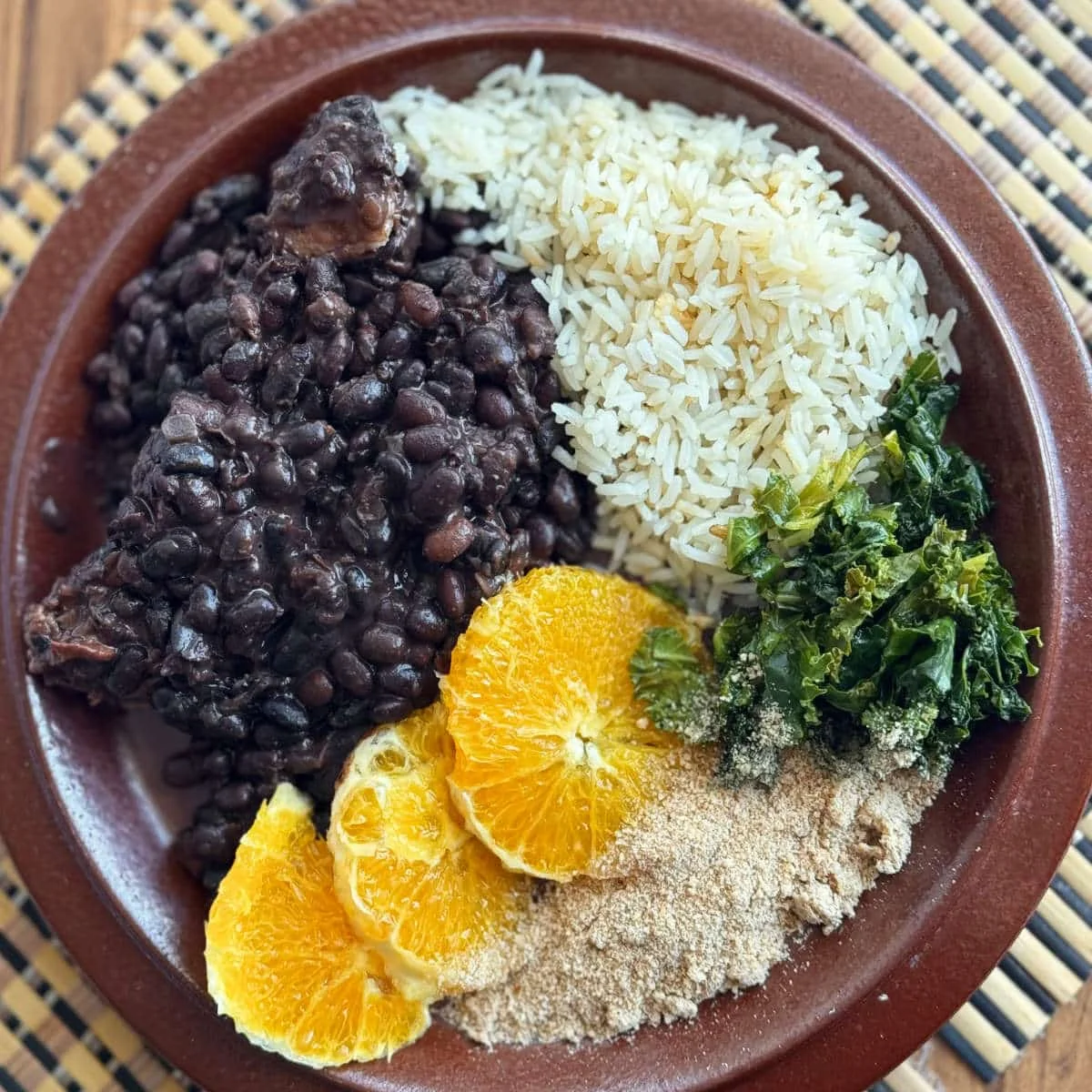
Brazilian feijoada is a slow-cooked stew of black beans with pork, beef and smoked sausage, served with rice, farofa, greens and orange. It is a hearty meal for a table of eight, with several accompaniments to prepare while the beans simmer.
Ingredients
- 1 kgdried black beans
- 4smoked Portuguese sausages (or chorizo)
- 400 gsalted pork ribs
- 250 gsmoked pork belly
- 250 gdried salted beef
- 400 gbeef shank
- 2yellow onions, grated
- 6 clovesgarlic, pressed
- 5bay leaves
- 3 tablespoonsolive oil
- to tastesalt
- to tastefreshly ground black or white pepper
- 3 litreswater
- 700 gcassava flour
- 1/2yellow onion, chopped
- 8 clovesgarlic, chopped
- 120 gsalted butter
- 3green cabbages, finely shredded
- 50 gunsalted butter
- 500 glong-grain white rice
- 3oranges
- to tastesalt
- to tastepepper
Instructions
- 1
Soak overnight
The day before cooking, soak the black beans in cold water. Desalt the pork by soaking it for 12 hours and changing the water regularly.
- 2
Fry the garlic
Heat the olive oil in a small frying pan over a medium heat. Fry the garlic for 1 minute without letting it burn, then set it aside.
- 3
Combine ingredients
Rinse and drain the black beans and pork thoroughly, then put them in a cast-iron or other heavy-based pot.
- 4
Start the stew
Add the remaining feijoada ingredients, except the salt, along with 3 litres of water and the bay leaves. Bring to the boil over a high heat.
- 5
Simmer uncovered
Turn down the heat and simmer uncovered for 1 hour, or until the pork belly and sausages are fully cooked.
- 6
Continue cooking
Take out the pork belly and sausages and set them aside. Cover the pot and cook over a medium-low heat for 2 hours, adding water if needed.
- 7
Finish the feijoada
When the feijoada is ready, stir in the reserved garlic and its oil. Return the sausages and pork belly to the pot.
- 8
Cook the rice
Cook the rice according to the packet instructions.
- 9
Cook the greens
Melt the unsalted butter in a saucepan and fry half the garlic for a few seconds. Add the greens, salt and pepper, then cover and cook over a medium heat for 15 minutes, stirring frequently.
- 10
Make the farofa
Heat the salted butter and garlic in a large, deep frying pan until the garlic is golden. Add the cassava flour; once it starts to turn lightly golden, take the pan off the heat and set aside.
- 11
Slice the oranges
Cut the oranges into thin slices.
- 12
Serve the meal
Serve the feijoada with the rice, greens, farofa and orange slices.
What is Brazilian feijoada?
Feijoada is a Brazilian black bean stew cooked with pork, beef and sausage, traditionally served with accompaniments such as rice and farofa. Its roots are in Portuguese bean-and-meat stews, adapted in Brazil with local ingredients including black beans and cassava flour.
This version layers several salted and smoked meats into the beans, then serves the rich stew with crisp-edged farofa, greens and fresh orange.
Nutrition and macros by portion
The nutrition label shows one serving as written: 1700 calories, 83g protein, 203g carbs, 66g fat.
| Portion | Adjustment | kcal | Protein | Carbs | Fat |
|---|---|---|---|---|---|
| Lighter | Less farofa, more greens | 1190 kcal | 58g | 142g | 46g |
| This serving | As written | 1700 kcal | 83g | 203g | 66g |
| Hungry | Larger rice and stew portions | 2550 kcal | 125g | 305g | 99g |
The dried beans and rice provide most of the carbohydrates, while the pork, sausages and beef contribute protein and much of the fat. Cassava flour and butter add further energy, and the salted meats make the sodium level difficult to pin down precisely. Balance the plate with a generous serving of greens and orange alongside a moderate scoop of farofa.
The long soak
Beans and salted pork: soak them separately the day before, changing the pork's water regularly for the full 12 hours. This gives the beans time to hydrate and helps remove excess salt from the pork.
Planning ahead: the beans need an overnight soak, and the pork needs 12 hours of soaking. Allow the full 270 minutes of cooking time as well.
Building the stew
Meat and beans: the pork ribs, pork belly, dried beef, beef shank and sausages bring different textures and savoury flavours. The beans cook in the same pot, absorbing flavour as the stew simmers.
Garlic: fry it gently in oil for 1 minute, keeping it pale rather than letting it burn. Stir it into the pot at the end, as the recipe directs, to retain its fragrant flavour.
Watch the simmer
First stage: leave the pot uncovered for 1 hour, until the pork belly and sausages are cooked through. Remove those two meats before covering the pot so they do not continue cooking for the full remaining time.
Second stage: cover and cook over a medium-low heat for 2 hours, adding water if necessary. The beans should be tender and the liquid should taste well infused; avoid letting the pot run dry.
Make the accompaniments
Farofa: toast the cassava flour with butter and garlic until it is only lightly golden, then take it off the heat. Keep an eye on it as it can darken quickly.
Greens: cook them covered for 15 minutes over a medium heat, stirring frequently. Cook the rice separately according to its packet instructions so it is ready to serve alongside the stew.
Serve it together
A bowl of feijoada is best served with rice, greens and farofa, which adds a toasted, crumbly contrast to the soft beans. Thin orange slices bring a fresh, bright note to the plate.
Set the accompaniments out with the stew so everyone can choose how much of each to serve.
Recipe notes & tips
- Soak the beans and salted pork in separate containers the day before cooking.
- Change the pork's soaking water regularly throughout its 12-hour desalting period.
- Use a heavy-based pot to help the stew cook steadily over a long simmer.
- Keep the garlic moving in the oil and take it off the heat if it starts to colour too quickly.
- Check the pot during the covered simmer and add water if the beans begin to look dry.
- Slice the oranges shortly before serving for a fresh accompaniment.
Variations
- Use chorizo: replace the smoked Portuguese sausages with chorizo, as suggested in the ingredient list.
- Adjust the farofa: toast the cassava flour only until lightly golden for a softer, milder flavour.
- Serve extra greens: increase the amount of cooked greens on each plate alongside the stew.
- Offer orange separately: serve the orange slices on the side so diners can choose how much to add.
- Cook the rice ahead: prepare it according to the packet and reheat it when the stew is ready.
Common mistakes to avoid
- Skipping the soak: start the beans and salted pork the day before so both are ready for cooking.
- Not changing the pork water: replace it regularly during the 12-hour soak to help desalting.
- Burning the garlic: fry it over a medium heat for 1 minute and keep it from darkening.
- Letting the pot dry out: check during the 2-hour covered simmer and add water if needed.
- Over-toasting the cassava flour: remove the farofa from the heat as soon as it begins to turn lightly golden.
- Forgetting the salt: the recipe excludes added salt when first combining the stew ingredients, so taste and season carefully.
How to store
Cool leftovers promptly and store them covered in the fridge for up to 3 days. Reheat the stew gently in a saucepan until piping hot, adding a little water if it has thickened; reheat the rice and accompaniments separately.
Frequently asked questions
Can I use chorizo instead of Portuguese sausage?
Yes. Chorizo is given as an alternative in the ingredient list, so use it in place of the four smoked Portuguese sausages.
Why does the pork need soaking?
The pork ribs and dried beef are salted, so soaking helps remove some of their salt. The recipe specifies soaking the pork for 12 hours and changing the water regularly.
Can I cook the feijoada ahead?
Yes. Cook the stew ahead and refrigerate it once cooled, then reheat it gently until piping hot. Prepare the rice and accompaniments close to serving if you prefer them freshly made.
How do I know when the beans are ready?
They should be tender after the long simmer, with no hard centre. If they are still firm, continue cooking and add water if needed.
What is farofa?
Farofa is toasted cassava flour, here cooked with salted butter and garlic. It is served alongside the stew and adds a dry, crumbly texture.
What can I serve with feijoada?
This recipe includes long-grain rice, cooked greens, farofa and thinly sliced oranges. Serve them alongside the stew so each diner can combine them as they like.
Cook it from the original
This recipe comes from 196flavors.com. Their page has the author’s own photos, notes and tips — the best place to cook it from.
Open the recipe on 196flavors.com